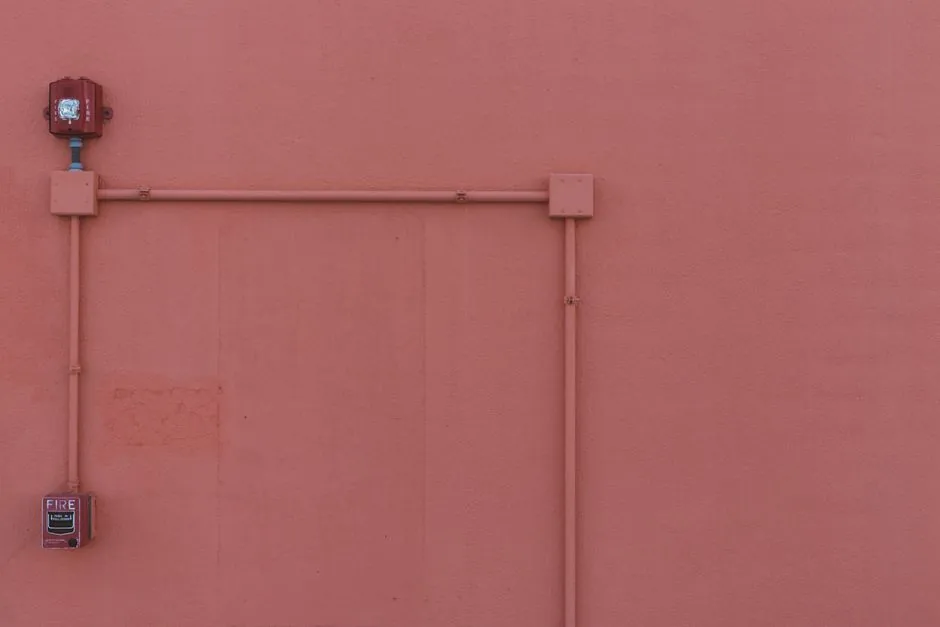
Annual fire alarm control panel maintenance costs generally range from $500 to $2,000 for standard commercial systems, with complex or large installations reaching $2,000–$5,000 or more [S2][S3][S5].
A standard fire alarm agreement for Minot International Airport identifies included equipment, sale and installation charges, and the Subscriber's responsibility for payment according to the agreement.
What Annual Service Contract Pricing Covers
Annual service pricing should cover inspection and functional testing of the fire alarm control panel, initiating devices, notification appliances, backup power and the monitoring communication path [S5]. The typical annual maintenance cost for fire alarm systems ranges from $500 to $2,000, depending on the complexity and scale of the system.
A small commercial building with a basic system was priced at $300–$1,000 annually, while systems in large multi-story buildings, campuses and specialized facilities can cost $1,500–$3,000 or more [S5].
Compare Contract Structures Before Budgeting
Inspection-only contracts minimize recurring charges but leave replacement parts, batteries, call-outs and major repairs with the owner; full-service agreements place more repair responsibility on the contractor, so their annual price is higher [S2][S6]. A 2018 airport maintenance contract assigned the service company responsibility for maintenance and repair costs covering control panels, mini-plex panels and graphics equipment [S6].
Cost Drivers: Devices, Building Layout and System Age
Device count is the strongest inspection cost driver because each smoke detector, heat detector, pull station, horn/strobe, duct detector and waterflow switch may require individual testing [S5]. A 20-device system therefore needs fewer technician hours than a 200-device system, making device quantity a more useful budget driver than a simple building-area estimate [S5].
Building layout also changes labor. Equipment that is accessible from floor level costs less to test than devices above ceilings, inside shafts, behind fixed barriers or within equipment rooms [S5]. Multi-story buildings, campuses and specialized facilities consequently move toward the $1,500–$3,000 annual range, while large commercial and multi-story systems are listed at $2,000–$5,000 or more [S5].
Age and condition affect the annual budget because older systems can require more frequent repairs and component replacement [S2]. This makes the lowest quoted price an incomplete comparison: the fire alarm control panel, batteries, initiating devices and communication interfaces must be checked for replacement or obsolescence risk before the contract term is fixed.
Small, Mid-Size and Large Property Budgets
A fire alarm inspection for a small commercial building with a basic system typically costs between $300 and $1,000 per year. Larger or more complex systems in multi-story buildings, campuses, or specialized facilities can cost $1,500 to $3,000 or more annually.
The final inspection price depends on the number of devices, the building type, equipment accessibility, and whether the local Authority Having Jurisdiction requires testing beyond the standard NFPA 72 schedule.
These are inspection ranges rather than complete life-cycle budgets. Commercial installation work is separate and can run from $1.25 to $12 per square foot, while a basic commercial installation has been priced at $0.50–$1.00 per square foot [S7][S3]. Owners should distinguish installation capital cost from recurring service expenditure rather than treating the panel purchase as the total system commitment.
Monitoring, Frequency and Response Scope
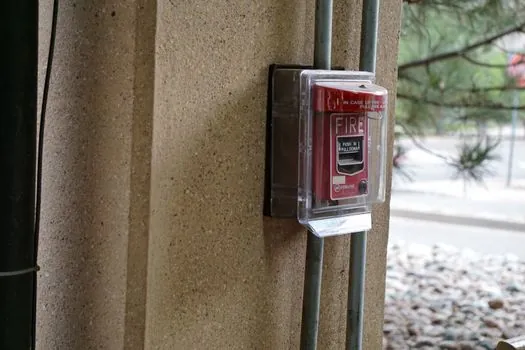
A building that combines monitoring with annual inspection and testing should budget those items separately unless the quotation states that they form one bundled contract.
Inspection frequency can also change the annual total. Some systems require semi-annual, quarterly or monthly component inspections, and each additional visit adds labor and travel cost [S5]. For a fire alarm control panel tied to sprinkler operation, access interfaces and monitoring, the request for proposal should state the number of visits, response time for trouble signals and the parts covered.
That structure shows why ownership of the communications equipment, software access and replacement responsibility must be defined explicitly rather than assumed from the headline service rate.
Scope, Exclusions and Service-Level Requirements
A defensible contract identifies the panel model, every device count, test frequencies, monitoring charges, travel, after-hours work, response time, parts, batteries, repair labor and software administration [S1][S5]. The inspection process described in the 2026 guide includes testing every initiating device, activating every notification appliance, and testing the fire alarm control panel for correct receipt of alarm and supervisory signals.
Interface testing can extend beyond the fire alarm panel to elevator recall, HVAC shutdown, fire door holders and sprinkler connections [S5]. Where those controls are in scope, the fire door and sprinkler system interface responsibilities should be named in the service schedule so that failures are not shifted between trades.
Repair language is equally important. A 2018 airport contract assigned maintenance and repair responsibility for control panels and graphics equipment to the service company [S6]. The 2023 airport agreement separately listed a $1,800 communication system and $1,600 annual inspection service [S1]. Comparing quotations requires matching both dollar value and scope, because a higher price may buy broader repair coverage rather than superior routine testing.
Total Cost and Contract Decision
The purchase decision should compare at least 4 variables: annual service fee, monitoring fee, frequency of visits and responsibility for repairs and replacements [S2][S4][S6]. A $300 inspection-only quote is not cheaper than a $1,600 full-service agreement if the former leaves battery replacement, panel repair and repeated service calls with the owner.
Total cost of ownership therefore includes the annual contract, any monitoring charge, replacement batteries, parts, repair labor, after-hours response and compliance testing beyond routine inspection [S4][S5]. A 2023 airport agreement provides a traceable benchmark of $1,600 per year for inspection service, while the 2026 commercial guide identifies $250–$900 for annual inspection and testing, $600–$1,320 for 24/7 monitoring and separate routine maintenance [S1][S4].
Before renewal, compare the contracted device count with the installed system, confirm the test and monitoring schedule, price exclusions for repairs and parts, and document response-time commitments. For a new installation, obtain the contract structure and installed-cost breakdown alongside the Fire Alarm Control Panel Installed Cost and Programming scope.