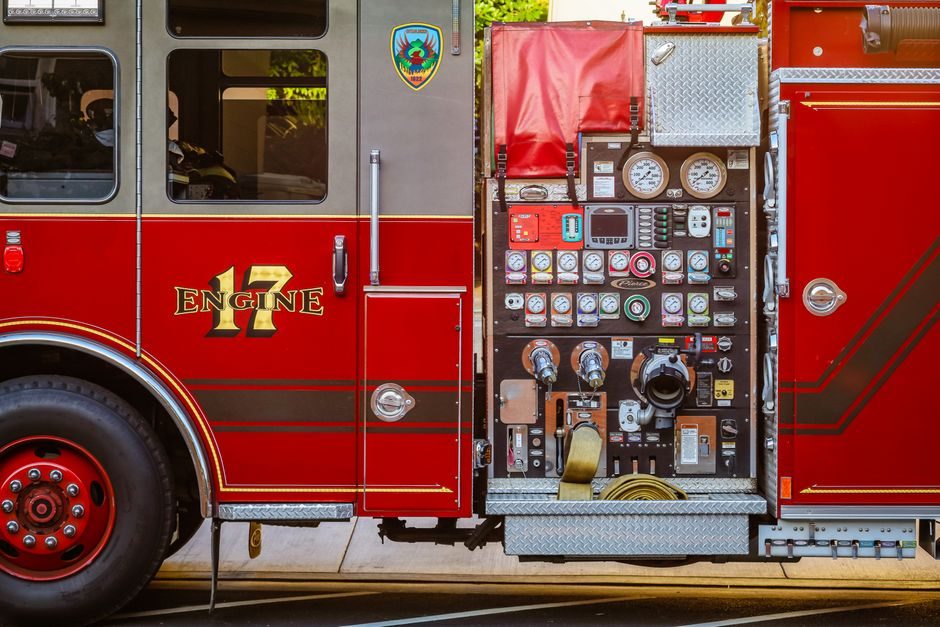
Above-ground DN100 ductile-iron pillar hydrants on the 2026 export market list at roughly US$80–220 FOB China for a 2-way configuration with PN16 flanged ends, while UL 246 / FM 1510-listed dry-barrel fire-service hydrants from same-region OEMs sit in the US$600–1,200 unit-price band, with MOQ tiers of 50–300 sets common on Made-in-China listings [S2][S9].
The global fire hydrant market was valued at US$1,133.3 million in 2020 and is projected to reach US$1,775.1 million by 2030, a 4.3% CAGR over 2021–2030 [S6]. Procurement engineers should treat that growth band as a baseline for budgetary escalation, not a per-unit price forecast — regional variance and certification scope shift the real number more than the headline CAGR does.
Spec-Tier Price Map: Three Equipment Families
Fire hydrants in active B2B trade split into three spec families with non-overlapping price envelopes. Pillar / post hydrants (above-ground, DN100, 2×2.5″ or 2×65 mm outlets, PN16 flanged) list at US$80–220 FOB Ningbo for ductile-iron bodies with epoxy coating [S9]. Indoor / landing-valve assemblies in fire-hydrant cabinet configurations ship with the cabinet, hose, rack and nozzle as a kit, and the cabinet alone from a Guangdong OEM (LESSO) is positioned for high-rise, plant and exhibition-hall fire-fighting service without a published unit price [S5].
Dry-barrel UL 246 / FM 1510 hydrants with breakaway flange, 6″ mechanical-joint shoe and 4.5″ pumper nozzle run US$600–1,200 per unit on OEM quotes; the step-up from pillar to fire-service hydrant is driven by certification, higher test pressure (typically 250 psi / 17.2 bar hydrostatic) and ductile-iron grade rather than by size alone [S9]. Procurement note: a quoted US$150 pillar hydrant is not a substitute for a US$900 UL-listed unit in any AHJ-recognised fire-service line.
Cost Drivers: What Moves the Quoted Number
Four variables move the unit price more than the headline 4.3% market CAGR does. Body material: grey cast iron is the cheapest (US$80–120 tier), ductile iron (QT450-10 / QT500-7) sits in the middle, and stainless or copper-alloy internals push the unit into the US$400+ band [S9]. Pressure rating: PN16 is the default export spec; PN25 / 250 psi-rated fire-service bodies carry a 15–30% premium for heavier wall thickness and higher-test machining.
Outlet configuration: a 2-way DN100 pillar is the commodity SKU, a 3-way with integrated pumper nozzle adds US$40–80, and a thread-standard change (BSRT vs NST vs Storz) usually re-opens the tooling setup fee. For internal fire-door and hydrant-system integration, these certification lines often have to be matched at the cabinet level as well.
Buyer Profile: Who Should Pay for Which Tier

Chinese-domiciled industrial and commercial builds (factories, warehouses, residential mid-rise) typically accept the GB 3445 / GB 4452 pillar-hydrant range and pay the US$80–220 unit price; the relevant reference standard is the national GB code, with body testing to 1.6 MPa and a working pressure of 1.0 MPa on the lower-spec models [S2][S9]. Municipal water-utility buyers and fire-service contractors in the Middle East, Africa and Southeast Asia often spec the AWWA C503 wet-barrel / C502 dry-barrel pattern and sit in the US$300–600 band.
North-American municipal and NFPA 24 fire-service projects are non-negotiable on UL 246 / FM 1510 certification and a 250 psi (17.2 bar) test pressure, which is what drives the US$600–1,200 unit price band and the longer 12–16-week lead time [S6]. Buyers on tight municipal budgets who try to substitute a non-listed hydrant will see the AHJ reject the project — this is the highest-stakes cost-vs-spec decision on the line, and the only category where going cheap is functionally not a choice.
Comparison Grid: Pillar vs Dry-Barrel vs Cabinet-Set
Across the three main procurement categories, the critical decision criteria line up as follows. Body / certification tier: pillar hydrant (cast/ductile iron, GB or CE) at US$80–220, dry-barrel fire-service (UL 246 / FM 1510 ductile iron) at US$600–1,200, and fire-hydrant cabinet kit (LESSO-type indoor assembly, 1.6 MPa body) with cabinet-only published [S2][S5][S9]. Typical outlet count is 2-way (pillar), 2-way + pumper (dry-barrel), and single landing-valve + hose + nozzle (cabinet).
Typical working pressure: 10–16 bar for pillar hydrants, 17.2 bar (250 psi) hydrostatic test on fire-service dry-barrel, 1.0 MPa (10 bar) working on the cabinet assembly's internal hose line [S2][S9]. Lead time on FOB China orders is 30–45 days for pillar hydrants, 60–90 days for dry-barrel, and 20–35 days for cabinet kits. The cabinet kit looks like the cheapest entry on a per-line basis but is functionally a different product (interior hose-station hardware) — it is not interchangeable with either of the exterior hydrant types.
Standards, Failure Modes and Sourcing Constraints

Three failure modes dominate 2026 quality claims on export hydrants. Body porosity in low-grade cast iron is the classic leak path on the US$80–120 tier — a ductile-iron upgrade (QT450-10 minimum) is the standard mitigation [S9]. Corrosion of the operating-rod thread in soft-water regions is the second; stainless 304/316 stems and a fusion-bonded epoxy interior coating at 250 µm minimum are the typical countermeasures. Thread standard mismatch on the outlet coupling is the third — Chinese BSRT, US NST, German Storz and British instantaneous are not field-interchangeable.
Compliance discipline matters here: an AHJ will not accept a CE-marked pillar hydrant in a NFPA 24 wet-barrel line, and a UL/FM fire-service hydrant installed in a CE-only project is over-spec'd and over-priced for no incremental safety benefit [S6]. On the supply side, industrial pump and valve line capacity is concentrated in Anhui, Beijing, Fujian and Guangdong according to OEM directory filters, with R&D-capacity flags (OEM/ODM/own-brand) and ISO 9001:2015 / ISO 14001:2015 management certifications being the practical supplier filter for export-grade orders [S9]. Factory revenue bands on the same listings range from under US$1M to over US$10M annual revenue, which is a useful proxy for engineering depth and not just catalogue size.
Sourcing Levers and 2026 Lead-Time Signals
Two practical levers are still moving 2026 fire-hydrant unit prices. Raw-ductile-iron and brass-copper costs: the global metals index has been choppy through 2025–2026, and OEM quotes on export hydrants typically re-price 60–90 days after the LME / SHFE moves on iron-ore and copper; a buyer locking a quote in Q2 should expect a 4–8% re-quote risk if they don't fix a price-cap clause. Container and inland-truck rates out of Ningbo and Foshan: the 2026 export rate band is back to 2023 baselines for most lanes, but Red-Sea / Cape routing on EU-bound containers is still adding 10–14 days and US$200–400 per 40HQ on European POs [S2][S5][S9].
Verifiable near-term signals: 2026 buyer inquiries on Made-in-China for "buy fire hydrant" skew to DN100 / DN150 pillar hydrants with ANSI 150# flanges for Latin-American and African municipal water-utility projects, with 501–1000 employee factories in Anhui and Guangdong carrying the bulk of the order book [S9]. A 4.3% global market CAGR through 2030 implies roughly 60,000–80,000 incremental unit shipments per year on a 1.7-million-unit installed base, which is the underlying volume that keeps the US$80–220 pillar tier in a tight band and the UL 246 / FM 1510 fire-service tier in a wider US$600–1,200 spread depending on certification scope and order quantity [S6].
For component-level specifications, see linear guide.