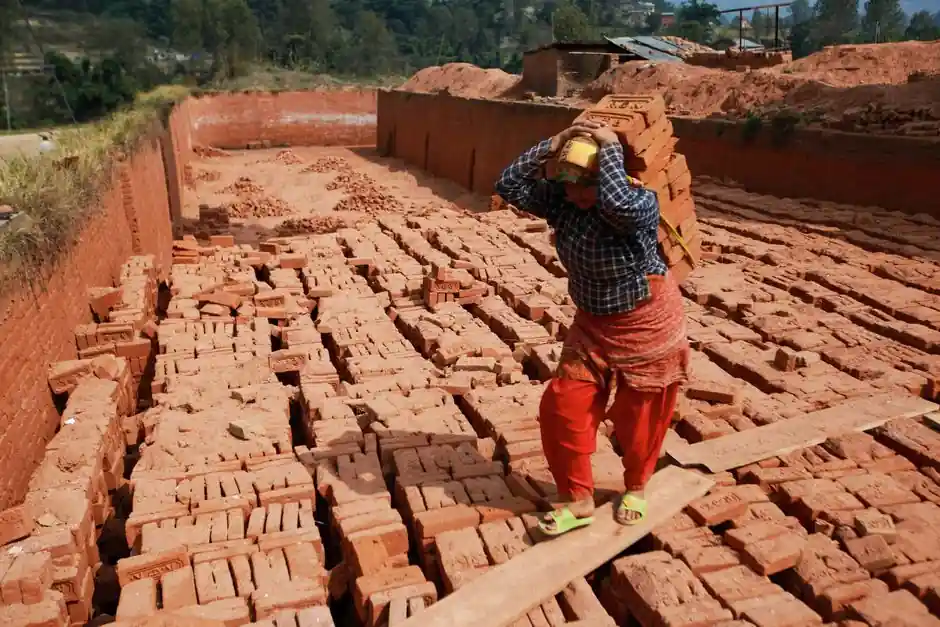
Industrial fired clay bricks are specified inside a tight four-axis window: compressive strength 40-70 MPa, bulk density 1.8-2.2 g/cm³, water absorption 10-20%, and thermal conductivity around 1.2-2.0 W/m·K, with kiln firing between 800°C and 1,300°C depending on product class [S1][S2].
That envelope governs furnace linings, boiler settings, kiln walls, and chemical-plant hot-face service, and the same envelope is also what separates a true refractory-class fired brick from a structural masonry unit dressed up for industrial marketing. The reference fired brick and industrial ceramic families sit on the same mineral base, but the spec window above is what locks a fired clay brick into a process role rather than a wall role.
Spec window: density, absorption, strength, conductivity
Bulk density of 1.8-2.2 g/cm³ is the first filter: below 1.8 g/cm³ the brick tends to be too porous for load-bearing hot-face service, above 2.2 g/cm³ it usually sits in a denser, more conductive class that the engineer must check against thermal-shock limits [S1]. Water absorption of 10-20% pairs directly with that density, and lower absorption within that range correlates with better freeze-thaw durability and chemical attack resistance in process buildings [S1].
Compressive strength for industrial-grade units is documented in the 40-70 MPa band for general refractory service, while the broader fired-brick family runs 15-100 MPa when including structural masonry variants [S1][S2]. Thermal conductivity of 1.2-2.0 W/m·K means a fired clay brick is a moderate insulator, not a high-performance one, so wall-thickness design and hot-face versus cold-face material choice both have to be sized against real heat-loss budgets rather than marketing copy [S1].
Firing temperature and alumina control the class
Industrial fired clay bricks are fired in the 800-1,300°C range, with the lower end covering common clay products and the 1,200-1,300°C window producing denser, more refractory grades [S1][S2]. The sintering and vitrification step happens between 900°C and 1,200°C and is what converts plastic raw clay into a hard, low-solubility material [S2].
Alumina (Al₂O₃) and silica (SiO₂) content are the levers that move a fired clay brick between product classes: higher alumina raises refractoriness toward roughly 1,450°C, while silica content shifts thermal-shock behavior and shrinkage [S3]. A practical procurement line is to ask for the declared Al₂O₃/SiO₂ split and the firing temperature used by the kiln, because the same nominal "fire clay brick" description can hide a 200°C shift in service ceiling if the mineral balance changes [S3].
Fire rating, standards, and what the certificate actually proves
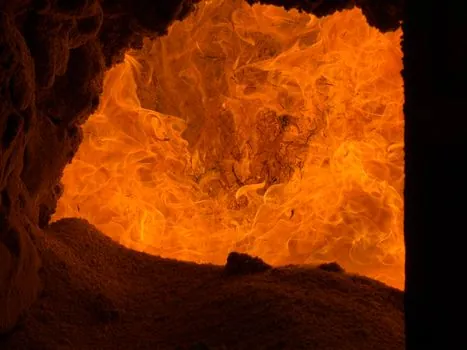
Fire rating for clay bricks is tested under ASTM E119 (US), EN 13501-2 (Europe), and ISO 834 (international) time-temperature curves, and the result is a duration in minutes or hours that a wall or lining can survive standard fire exposure without losing integrity [S3]. A higher alumina formulation, controlled porosity, and consistent firing are the three factors that move a brick up the rating scale [S3].
Two limits engineers should keep in mind: dense bricks carry more heat through the wall because their conductivity is higher, while more porous bricks insulate better but lose load margin, so the fire-rating certificate alone does not select the brick, the lining thickness and load case do [S3]. For comparison work, the industrial adhesive and joint mortar choice has to be matched to the same thermal envelope, or the certificate's duration does not transfer from lab to plant.
Comparison of the main product classes on decision criteria
Four product classes cover most industrial fired-clay-brick buys, and they line up against the same four decision criteria: compressive strength, refractoriness, water absorption, and indicative cost per unit. Common clay fired bricks (15-30 MPa class, firing near 900-1,000°C) are used for non-hot structural walls and partitions. Dense fire-clay bricks (40-70 MPa, firing 1,200-1,300°C) are the workhorse for furnace linings, kiln walls, and boiler settings. High-alumina fire-clay bricks (Al₂O₃-elevated, refractoriness toward 1,450°C) are specified where hot-face temperatures or slag attack rule out standard fire-clay [S1][S3]. Reclaimed or reused bricks appear as a separate line on EN 15804+A2 EPDs, where reusing a single brick avoids roughly 0.5 kg CO₂ versus making a new one [S4].
The trade-off is straightforward: as you move up the strength and refractoriness axis, both firing energy and unit cost rise, and the carbon footprint per declared unit climbs with them under EN 15804+A2 modules A1-A3 [S4]. The selection call is therefore a four-criteria match (strength, temperature, absorption, declared carbon) rather than a single-number buy, and the match is only valid if the declared unit and scope align across bidders [S4]. For façade and partition variants, the broader commercial checklist in specify fired clay brick for commercial façades carries the equivalent criteria for the non-hot-face side of the same building.
Who fired clay bricks are for, and where they are the wrong call
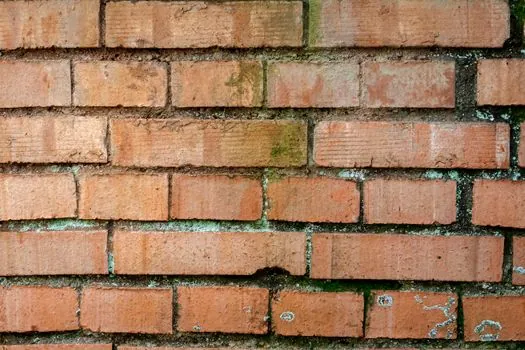
Fired clay bricks fit industrial users who need a hot-face lining, a furnace or kiln shell, a boiler combustion zone, or a chemical plant wall with a known fire-rating certificate, and who can size wall thickness against a conductivity of 1.2-2.0 W/m·K rather than a high-performance microporous board [S1][S3]. They are a poor fit for ultra-high-temperature service above roughly 1,450°C, for thin-wall high-heat-flux sections where microporous or calcium-silicate boards outperform them, and for applications where a single-pass EN 15804+A2 EPD comparison is required with mismatched declared units [S1][S3][S4].
Carbon is a separate gating criterion: brick carbon footprint is dominated by kiln energy and clay transport under modules A1-A3, so a tender that demands low-A1-A3 results may push the spec toward reclaimed units or non-fired alternatives regardless of the brick's mechanical merits [S4]. In those cases the engineer should screen against a declared EN 15804+A2 EPD with matching functional unit, not against a generic "low carbon brick" claim, because scope and functional unit differences are the most common reason brick-versus-brick comparisons fail in audit [S4].
Limitations, failure modes, and traceability
Three failure modes show up repeatedly in industrial fired-brick service. First, thermal-shock spalling on rapid heat-up or cool-down, controlled partly by silica content and porosity [S1][S3]. Second, moisture-driven explosive spalling on first heat-up if a wet brick is commissioned without a dry-out schedule, which is why storage and dry-out discipline belongs in the procurement spec, not just the installer's site memo [S3]. Third, slag or chemical attack at the hot face in reducing atmospheres, where alumina balance and density are the levers, and where EN 15804+A2 EPDs do not predict service life at all [S3][S4].
Traceability is the practical fix: ask for the firing-temperature record, the Al₂O₃/SiO₂ split, the declared porosity or water-absorption band, the compressive-strength test direction (face-bed or edge-bed), and an EN 15804+A2 EPD that states its functional unit and system boundary. Recent Cabané work (2026) on an adapted Barcelona test for tensile strength in solid fired clay bricks gives one more test method to add to that audit list, and points to direct tensile behavior being a separate input from compressive strength when the lining is in bending or thermal-gradient tension [S5].
Selection workflow and next signals to track
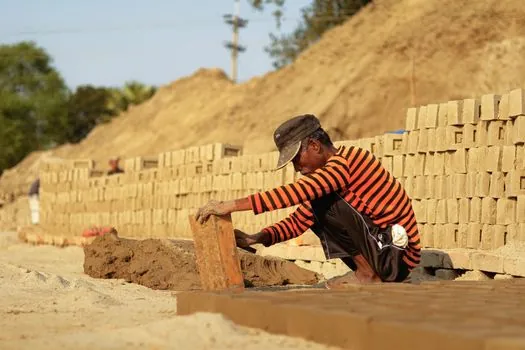
A defensible industrial selection runs in four steps. Step 1, lock the service temperature and atmosphere, then pick the product class (common, dense fire-clay, high-alumina, or reclaimed) from the temperature and chemical-attack envelope. Step 2, write the mechanical spec as compressive strength 40-70 MPa, density 1.8-2.2 g/cm³, absorption 10-20%, with declared firing temperature and Al₂O₃/SiO₂ split on the certificate [S1][S3]. Step 3, add the fire-rating test method (ASTM E119, EN 13501-2, or ISO 834) and the rating duration required for the wall or lining [S3]. Step 4, require an EN 15804+A2 EPD with declared unit, scope, and module D information, and benchmark only against EPDs with matching functional unit and system boundary [S4].
Two trackable signals are worth watching: IBU and other programme operators updating PCRs for clay masonry under EN 15804+A2, which will reshape how cradle-to-gate carbon is declared across bidders, and the spread of direct-tensile test methods such as the Barcelona-test adaptation into routine supplier QA, which would add a bending-and-tension data point that current compressive-only certificates do not capture [S4][S5]. Procurement teams that pin both signals into the next tender will get auditable mechanical and carbon data in the same envelope.