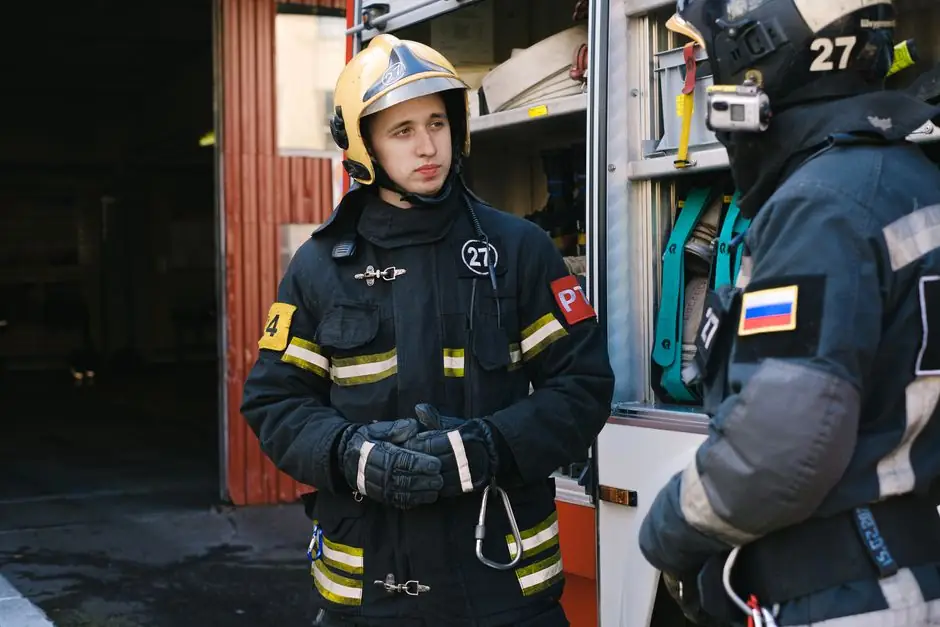
For structural firefighting, eye protection must satisfy ANSI Z87+ as the floor and MIL-PRF-32432 as the preferred ballistic target, per tactical-eyewear guidance published 2026-08 [S3]. The two standards are not equivalent: ANSI Z87+ is a 1.1 J large-steel-ball impact test, while MIL-PRF-32432 raises the impact to a 7.4 J small-diameter steel penetrator and adds UV transmission, chemical resistance, and temperature-stability criteria [S3]. NFPA 1971 (standard on protective ensembles for structural firefighting) specifies the same minimum Z87+ floor for primary eye protection in the hood, helmet, and SCBA interface zone.
Wildland, EMS, and overhaul crews have different thermal and impact profiles, and the goggle-versus-spectacle decision is driven more by heat load and helmet brim clearance than by prescription need [S1][S3]. Off-the-shelf firefighter SKUs on the major PPE retail channels cluster into three families: ESS Rollbar / CDI / 5B sunglasses (USD 101–154), ESS Influx FirePro and FirePro-FS wildland goggles (USD 80–120), and Striketeam / WF rubber strap goggles (USD 58) [S1].
Standards stack: Z87+ floor, MIL-PRF-31013 legacy, MIL-PRF-32432 target
ANSI Z87+ is the minimum impact rating acceptable for any police, fire, or EMS safety eyewear, and it is the explicit baseline cited for first responders in 2026-08 PPE guidance [S3]. The "+" suffix denotes the higher-impact variant: a 1.1 J drop-ball test rather than the 0.86 J pass/fail of plain Z87.1, and the certification requires permanent marking on the frame and lens [S3].
MIL-PRF-31013 is the older US military performance specification, dominated by ballistic and optical-clarity clauses, and sits between Z87+ and MIL-PRF-32432 in stringency [S3]. MIL-PRF-32432 is the current US military standard for both prescription and non-prescription tactical eyewear; it raises the impact event to a 7.4 J small-and-fast steel penetrator and layers in optical quality, UV protection, light-transmission limits, chemical resistance, and temperature stability requirements [S3]. All three military specifications share a clause that prescription lenses must be detachable without tools, a useful procurement checklist item when a department is buying Rx inserts.
Goggle vs. spectacle: form factor drives the choice, not lens tint
Sealed goggles (ESS Influx FirePro, FirePro-FS, Striketeam WF, SJ) carry heat-resistant OpFoam face padding, open-cell vent foam for filtered ventilation, and 3.0 mm high-impact polycarbonate lenses with anti-fog and anti-scratch coatings [S1]. The Influx FirePro uses an Adjustable Ventilation System (AVS) that toggles between fully sealed and open-vent modes, and a Speed-Clip strap system that can be adjusted with gloved hands, a practical requirement for structural attack [S1]. The FirePro-FS wildland variant adds a one-piece wrap strap with Velcro tabs sized to attach directly to a wildland helmet brim, an interface feature that matters more than tint when the call is grass and brush rather than structure [S1].
Spectacles (Rollbar, CDI, 5B) are interchangeable-lens designs with low-drag temple arms that will not interfere with helmet suspension or radio ear-pieces, and they are typically worn for EMS, command, driving, and overhaul where a sealed goggle is overkill [S1][S3]. The CDI carries extra-thick polycarbonate lenses in five color options, the 5B adds polarized variants, and the Rollbar uses an auto-locking Rollbar Lens Gate for tool-free lens swaps [S1]. For a comparison view, see the fire-safety PPE overview for how eye protection slots into the broader ensemble.
Lens material: polycarbonate vs. Trivex, and what "ballistic" actually means
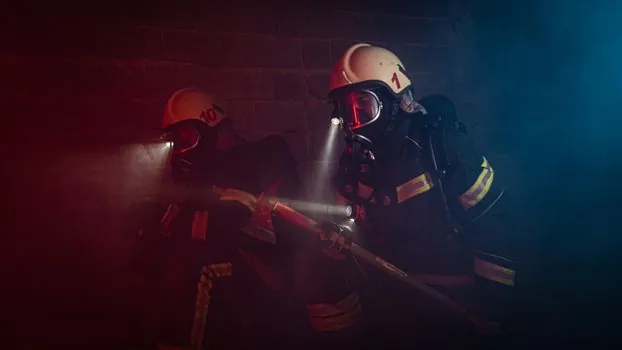
Tactical lens materials split between polycarbonate and Trivex; both are impact-resistant, lightweight, and block UV, with Trivex offering slightly better optical clarity at a small weight penalty [S3]. Frame materials favor Grilamid nylon or T90-type thermoplastics for the same reason: low mass plus chemical and temperature tolerance [S3]. For firefighters specifically, the added constraint is heat resistance, which is why the FirePro and Striketeam goggle families call out heat- and flame-resistant foam and OpFoam face padding in their official SKU descriptions [S1].
"Ballistic" on a retail listing is a marketing shortcut: the only widely recognized ballistic certifications are MIL-PRF-31013 and MIL-PRF-32432, both of which require a small, fast steel penetrator test rather than the large, slow ball used in Z87+ [S3]. If a goggle box only cites Z87+ and "ballistic" with no MIL-PRF number, treat the ballistic claim as unsupported and weight the purchase toward the Z87+ certificate alone, then escalate to MIL-PRF-32432 for any structural or USAR assignment. For general safety glasses use outside fire service, the same Z87+ floor applies but the MIL-PRF requirement is uncommon.
Prescription insert vs. Rx-direct: the procurement trade
Optics Outfitter's firefighter collection, with a parallel Rx lens program covering adult narrow, average, and wide fits, illustrates the two paths: prescription inserts worn behind the goggle, or a fully Rx-lensed spectacle that is itself safety-rated [S2]. The MIL-PRF family explicitly allows both, with the rule that Rx lenses must be detachable without tools, and inserts behind a Z87+ goggle are typically the cheaper path for departments that already own a goggle fleet [S3].
The trade is cost vs. weight and field of view: an insert behind a 3.0 mm polycarbonate goggle lens stacks two optical surfaces and adds fog risk, while an Rx-direct MIL-PRF-32432 spectacle (CDI, 5B, Rollbar families) eliminates the insert but locks the wearer to that frame SKU for the life of the prescription [S1][S3]. For a 2026 procurement cycle, the rule of thumb is: wildland and brush crews stay on goggle + insert, structural attack crews go Rx-direct MIL-PRF-32432, and EMS / command use Z87+ spectacles with an optional Rx program through channels like Optics Outfitter [S1][S2][S3].
Anti-fog, ventilation, and the helmet-brim interface
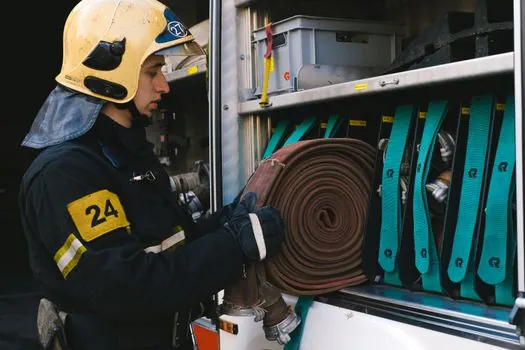
Fogging is the single most common field complaint, and three of the in-line ESS fire SKUs address it differently: ClearZone FlowCoat on the Influx FirePro (anti-fog inside, anti-scratch outside), open-cell vent foam on the Striketeam SJ (filtered ventilation that lets humid air escape but blocks particulates), and full-perimeter ventilation plus filtration on the FirePro-FS wildland goggle [S1]. Each approach changes the dust/particle ingress profile, so the choice is environment-driven: overhaul and post-knockdown favor the open-cell foam (SJ), while active structural attack favors the sealable AVS (FirePro) [S1].
Helmet compatibility is a separate specification: the FirePro-FS ships with Velcro tabs engineered for wildland helmet brims, and the Influx FirePro is described as low-profile to clear structural helmet ear covers [S1]. A goggle that collides with the brim or the SCBA facepiece strap is a goggle that ends up on the helmet crown instead of on the face, which is functionally the same as wearing no eye protection. Departments should fit-check every goggle SKU against every helmet in service, a step that costs nothing and resolves most field returns.
Sourcing and what to verify on the certificate
Authoritative sourcing for firefighter eye protection runs through three channels: the manufacturer (ESS, Sellstrom, Pyramex, Oakley SI), the PPE retail catalog (nationalfirefighter.com lists 23 SKUs in the goggles-and-safety-glasses category as of 2026-09 [S1]), and the prescription outfitter channel for Rx programs (Optics Outfitter's firefighter collection) [S1][S2]. For selection logic and standards cross-references, the machine-safety eye protection page covers the ANSI Z87+ markings in more detail.
Verify four things on every shipment: (1) the Z87+ permanent marking on lens and frame, (2) the MIL-PRF-32432 or 31013 certificate if a ballistic rating is claimed, (3) the lens and foam material callouts (polycarbonate, Trivex, OpFoam) for heat and chemical resistance, and (4) helmet-brim and SCBA-strap clearance on a live fit check. For broader procurement context, see the safety certification reference and the Welding Safety Shoes spec workflow for a parallel spec-driven PPE selection walkthrough. A 2026-09 watch item is the slow rollout of MIL-PRF-32432-compliant Rx-direct frames, which should replace legacy Z87+ spectacle purchases on the next department order cycle.