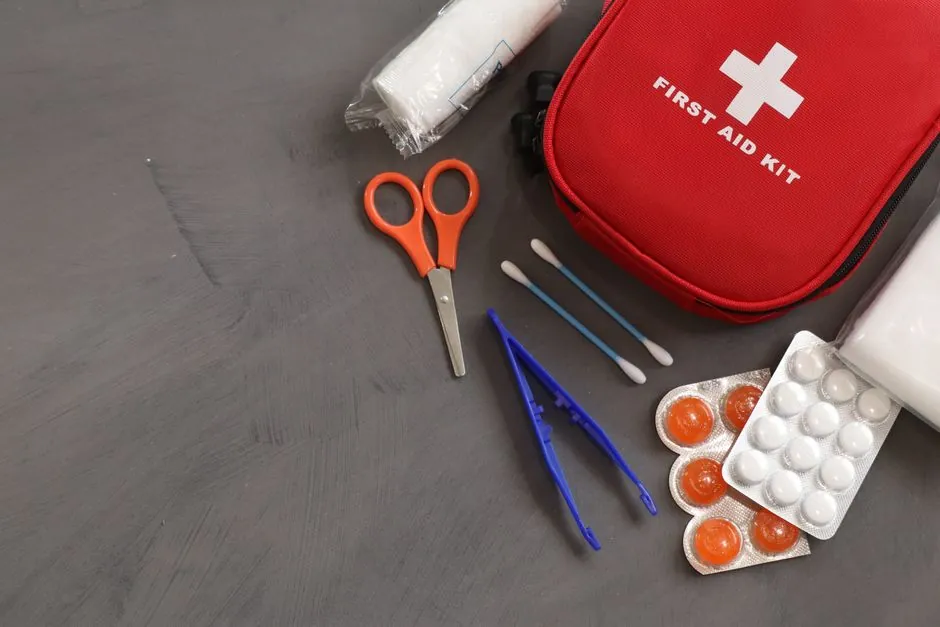
Choose a wall-mounted cabinet when the kit must stay visible, organized, and immediately accessible, with greater storage capacity than a portable soft-sided case [S3][S4].
A soft-sided first aid bag is the better fit for vehicles, mobile crews, field work, and temporary response points because it can be carried directly to the casualty [S1][S3].
Decision factors: mounting, contents, mobility, and protection
ANSI/ISEA Z308.1 separates kit contents from container use: Class A covers common workplace injuries, while Class B includes a broader range and quantity of supplies for complex or high-risk environments; Types I through IV describe the work environment and intended use [S5]. A permanently mounted indoor kit corresponds to Type I, while outdoor Type IV kits must pass corrosion, moisture, and impact-resistance tests [S5].
The practical comparison is clear: a cabinet provides fixed storage, visibility, organized compartments, easier inspection and restocking, and lower risk of supplies being carried away [S3][S4]. A soft-sided bag provides mobility, compact handling, and fewer fixed installation requirements, but its capacity is more limited and its contents are easier to remove or misplace [S1][S3].
For a fixed workplace, pair the enclosure with first aid signs, but do not treat signage as a substitute for suitable contents, inspection, or restocking [S7].
Wall-mounted cabinet: fixed capacity and response control
Wall-mounted first aid cabinets offer storage advantages over portable kits, including organized compartments that facilitate inspections and restocking [S4]. Metal models use durable box construction that withstands harsh environments, and rear hooks make them easy to mount on a wall [S2].
For low-risk offices and administrative spaces, a Class A cabinet can cover cuts, abrasions, burns, sprains, and common minor injuries [S4][S5]. For warehouses, manufacturing, construction, and other industrial areas, Class B is the more defensible specification because it supports larger wounds and more complex workplace hazards with a broader inventory [S4][S5].
Placement should make the cabinet easy to see and reach, with clear identification of the location [S7]. These are planning heuristics, not universal code minimums.
Soft-sided bag: mobility for vehicles and field teams
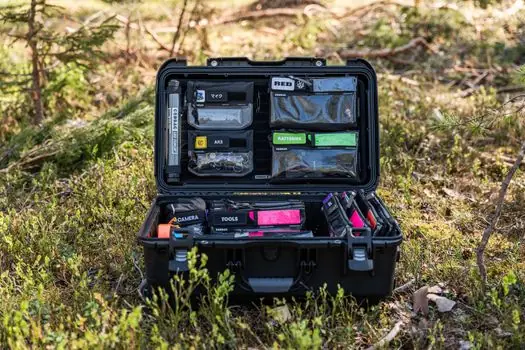
Soft-sided medical bags are portable containers intended to bring basic supplies directly to the injury, including bandages, gauze, antiseptic wipes, tape, scissors, tweezers, gloves, and pain relief [S3]. Their practical advantage is that the response equipment moves with the user rather than remaining at a fixed station [S1][S3].
Available catalog examples include an empty trauma first responder bag, an EMT-style major trauma bag, and a Life Saver Plus first responder bag, showing that bag formats range from general use to trauma-response roles [S1]. A 95-piece fabric soft-sided kit is also listed as a wall-mountable product format, demonstrating that portability and fixed mounting are not always mutually exclusive [S6].
A bag is the better choice for mobile maintenance crews, delivery vehicles, sports fields, outdoor events, and off-site work where responders need to carry treatment supplies beyond arm's reach. It is less suitable as the sole response point at a large, fixed industrial site because staff must locate and carry it before treatment begins [S3][S4].
Protection and environment: compare enclosure capability
Metal cabinets use durable box construction, while soft-sided cases are portable [S1][S2][S3].
Do not assign outdoor suitability from the word “waterproof” alone. ANSI/ISEA Z308.1 Type IV is the designation for outdoor kits that must pass corrosion, moisture, and impact-resistance testing [S5]. For exposed or rough-handling locations, verify the product label, material, closure, mounting method, and environmental test evidence rather than relying on appearance.
These are catalog observations, not universal totals, and refill costs and contents must be added for a like-for-like budget comparison.
Use-case recommendations and unsuitable applications
Use a wall-mounted Class A cabinet in offices and similar low-risk workplaces, preferably on a central floor or corridor. Class B kits are suited to higher-risk workplaces because they include a broader inventory and greater quantity of supplies [S4][S5].
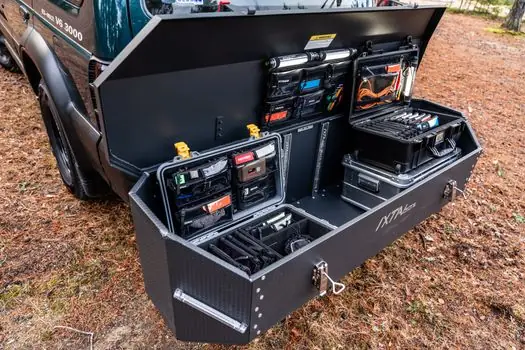
Use soft-sided bags in vehicles, field-service kits, mobile response kits, and outdoor activities where responders must bring the entire kit to the patient. Use rigid cases when the kit must survive handling or moisture but must also be transported. Portable first aid kits are compact containers designed for portability and easy transport, whereas wall-mounted cabinets provide fixed storage that improves visibility and accessibility [S3][S4].
For facilities that lack an infirmary or nearby clinic, the OSHA requirement is that “Adequate first aid supplies shall be readily available,” with personnel adequately trained to render first aid; 29 CFR 1910.151(b) does not prescribe a wall cabinet or a specific container [S5]. A defensible selection follows the hazard assessment, required contents, workplace accessibility, and local rules rather than container shape alone [S3][S5].
Installation, inspection, and resupply controls
Mount cabinets high enough for practical access while avoiding locations blocked by doors, stored goods, vehicles, or equipment [S7]. Use a clear sign and keep the approach route unobstructed. Wall-mounted cabinets simplify periodic inspection and restocking because the kit remains in a known location [S4].
Soft-sided bags require a different control: assign responsibility for the bag, keep it with the crew or vehicle, inspect it after use, and account for every missing item during resupply. Neither enclosure preserves the usability of expired adhesive, contaminated dressings, or damaged packaging, so check seals, inventory quantity, expiration dates, and product condition at a defined frequency [S5].
For purchase planning beyond the enclosure, the first aid kit maintenance subscription cost guide provides a focused comparison of ongoing replenishment and inspection costs.
Procurement specification that avoids false equivalency

Specify four fields: ANSI/ISEA Z308.1 Class for contents, Type for use environment, mounting status, and enclosure material [S5]. For example, “Class B, Type I, wall-mounted metal cabinet” and “Class B portable soft-sided trauma bag” describe materially different deployments even if both carry the same broad first-aid function.
For fixed sites, include the required Class A or Class B inventory, wall location, locking or tamper-control requirement, inspection interval, resupply method, and signage [S3][S4][S7]. For mobile use, specify the role of the user, transport method, weather exposure, required contents, and whether the bag must also support wall storage [S1][S6].
The final acceptance check is functional: a responder must find the correct kit, reach it without tools, identify its contents, and take it to the casualty with no missing consumables. If those conditions cannot be demonstrated, neither a more expensive cabinet nor a larger bag resolves the deployment problem [S3][S5].