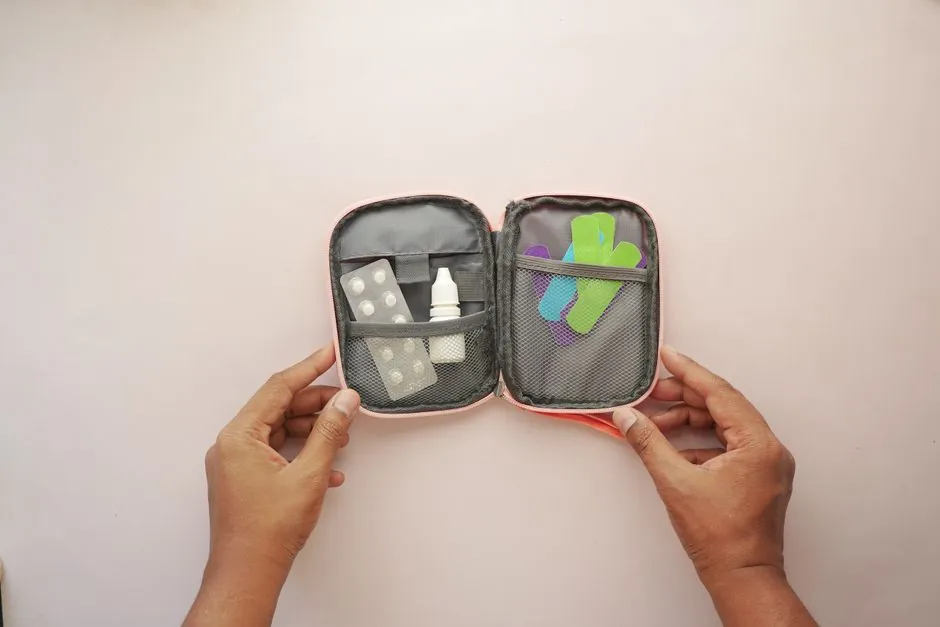
Metal first-aid cabinets offer greater fire resistance than plastic, and one metal case includes hangers for wall mounting.
Plastic first aid cases weigh less, cost less, and resist rust, while metal models suit fixed industrial locations where puncture, fire, tampering, or theft is a greater concern.
Durability differences that drive the selection
Metal is inherently more fire-resistant than plastic and can provide a longer service life in demanding fixed installations [S2]. Metal cabinets also protect supplies from punctures and misuse better than thin molded cases, making them practical for construction areas, manufacturing plants, loading bays, and other work zones.
One listed metal model measures 10 x 10 x 2.5 inches and includes a rust-resistant hinge pin, sturdy clasp, shelf divider, carrying handle, and wall-mounting hangers [S7]. Those features show why metal cases are not merely stronger containers: hinges, closures, dividers, and mounting hardware determine whether a cabinet remains usable.
Metal cabinets versus plastic cases by decision criteria
Against impact and fire exposure, metal cabinets score better because metal provides greater puncture resistance and inherent fire resistance than plastic [S2]. Against rust and moisture, plastic has the advantage because it does not undergo metallic corrosion; metal cases need a suitable finish or corrosion protection.
One metal case measures 10 x 10 x 2.5 inches and includes a carrying handle and hangers for wall mounting.
Against mounting security, metal products include wall hangers and are available as fixed cabinets, whereas portable plastic cases are optimized for movement.
Choose metal for fixed industrial and high-risk positions
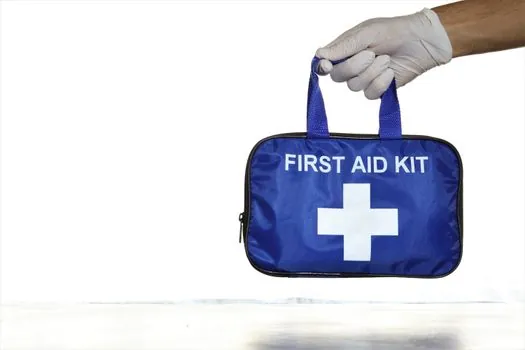
One metal case includes a sturdy clasp and hangers for wall mounting.
A complete station design should therefore consider the first aid kit, storage environment, access route, and inspection process together.
Metal is not the universal answer.
Choose plastic for mobility and low-abuse handling
Plastic cases fit crews that carry kits between vehicles, work areas, and incident sites.
A tested case is described as durable and water-resistant with sealed zippers, whereas a bag in the same comparison was rated only moderately weatherproof.
Weather resistance, corrosion, and mounting details

For a stationary cabinet, confirm door swing, shelf clearance, latch security, visible labeling, and wall attachment. The 10 x 10 x 2.5 inch configuration carries wall hangers and a shelf divider [S7], but dimensions alone do not establish suitability. Check the available wall area and ensure the cabinet does not obstruct emergency equipment, access routes, or required signage.
Color and labeling can affect usability. A wall-mounted warning sign can identify the station from a distance, while clear labeling on the cabinet or compartment helps responders find dressings, gloves, and other supplies without opening every item. For facilities with chemical splash risk, confirm whether separate eye wash station provisions are required rather than treating the first aid case as a substitute.
Size the kit to the workforce and exposure
OSHA 29 CFR 1910.266 Appendix A states that the listed first-aid kit contents should be adequate for small work sites with approximately 2 to 3 employees, with larger operations requiring additional supplies [S1]. The regulation addresses kit adequacy, not whether its container should be metal or plastic, so enclosure selection must follow separately from contents sizing and workplace-specific hazards [S1].
For 2 to 3 workers in a low-risk setting, a compact plastic case may provide adequate portability and simplify storage. For a larger industrial operation, use a wall-mounted metal cabinet with enough shelf space for the required supplies, organized compartments, and a controlled refill process. Vehicle-mounted industrial work, remote access points, and areas near moving equipment increase the value of metal even where a portable plastic case was originally contemplated.
Do not select a cabinet by appearance alone. Record the intended mounting point, exposure to water and chemicals, heat and ignition sources, impact risk, required access time, expected relocation frequency, and whether the case must be carried by one person. Those six variables produce a defensible material decision.
Maintenance determines whether durability matters
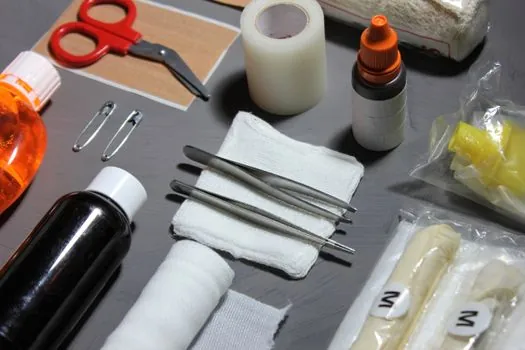
A metal cabinet can still fail through a loose hinge pin, failed clasp, corroded shelf, or missing gasket, while a plastic case can fail through a cracked latch, torn zipper, or separated lid. Inspect the enclosure at defined intervals, confirm that the door latches fully, and verify that mounted hardware remains secure. [S7]
Replace damaged metal components with compatible parts where available, and treat deep corrosion, exposed sharp metal, or a compromised hinge as end-of-life conditions rather than cosmetic defects [S2][S7]. For plastic, reject cases with cracked seams, distorted latches, or degraded seals because these conditions can compromise both access and contamination control.
Track restocking separately from enclosure condition. OSHA refers to kit contents being adequate for the operation, including larger sites [S1], while empty-case suppliers offer both metal and plastic products with organized compartments and clear labeling for custom compliance [S3]. A durable container that is empty is not functional emergency equipment.
Final specification and purchasing checks
Specify “metal” for fixed industrial cabinets, vehicle-filling stations, high-abuse areas, fire-sensitive locations, and installations requiring a lock; specify “plastic” for mobile, temporary, low-abuse, or moisture-prone use where weight and rust resistance dominate [S2][S3]. Add a rubber gasket and verified corrosion-resistant finish where weather exposure exists [S4].
Before purchase, require the external dimensions, empty weight, gauge or material grade, finish system, latch and hinge type, shelf arrangement, wall-mounting hardware, gasket availability, labeling method, and replacement-part policy. The example 10 x 10 x 2.5 inch metal case demonstrates why hinge, clasp, divider, handle, and hanger details belong in the purchase specification rather than being left as catalog assumptions [S7].
Track the next physical inspection of the chosen kit and record any corrosion, hinge play, latch slip, gasket compression, zipper leakage, or wall-anchor movement. These are the practical signals that distinguish a case still protecting its contents from one that has become an emergency-equipment liability.