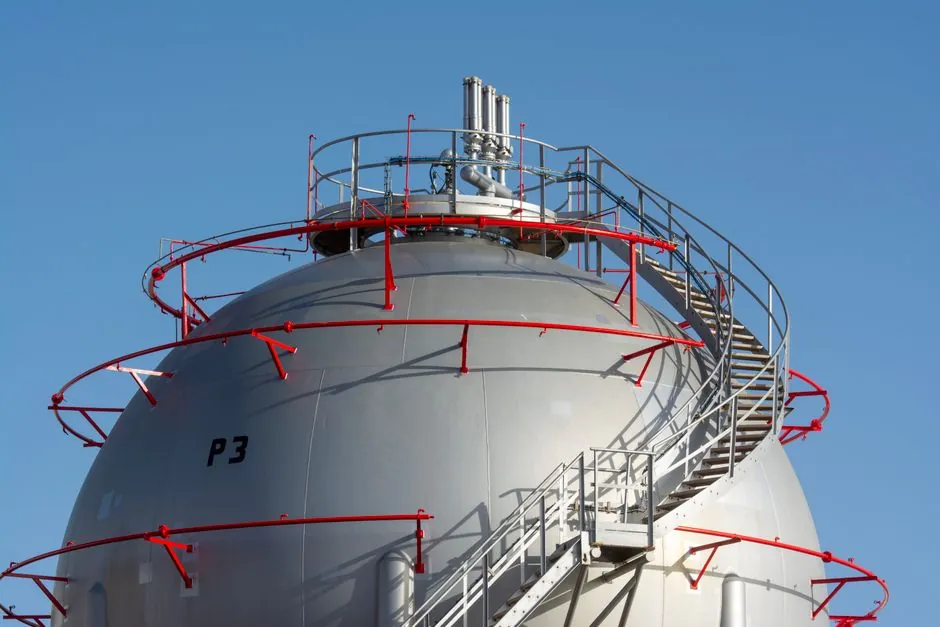
Rotary jet heads can drastically save time, water, and chemicals compared with static spray balls, while static spray balls may be adequate for easy-to-clean applications [S5].
Fixed spray balls discharge through fixed holes; retractable rotary heads deploy a spinning nozzle that concentrates cleaning medium into 2–4 fan jets for 360° coverage [S1][S3][S5].
How the two mounting approaches differ
A fixed spray ball discharges wash liquid through permanently drilled openings, using total flow, cascading liquid, and distributed jets to wet the vessel surface [S1][S5]. A retractable rotary head remains below the tank surface or inside a flush housing until flow initiates deployment, after which fluid reaction rotates the cleaning head and its fan-shaped jets sweep the vessel [S1][S3].
The comparison is not simply fixed versus rotating. The practical split is a permanently mounted static ball against a retractable rotary assembly that changes position during the cycle. Rotary heads can use 2–4 concentrated nozzles, compared with the multiple small holes of a static ball, increasing local impingement while maintaining full-pattern coverage [S5]. Rotary heads are also fluid-driven and require no external power source [S3].
Selection criteria and measured differences
Alfa Laval states that rotary spray heads improve tank-cleaning efficiency, use less water, energy, and cleaning media than static spray balls, reduce total cost of ownership, and speed the cleaning process [S2]. Rotary spray heads increase impingement action while generally requiring a lower flow rate than static spray balls, and they rotate in a repeatable 360-degree pattern to provide full coverage inside the tank [S4].
On installation effort, fixed heads require permanent tank penetration and leave the cleaner exposed during production. Retractable heads need an appropriate installation point and deployment clearance, but they can withdraw into a protected or flush-mounted location.
On operating compatibility, rotary heads can operate at pressure and flow requirements similar to those of static spray balls, which supports retrofit without changing CIP skid settings in suitable installations [S2][S4]. That claim is not universal: the rotary unit still needs adequate flow to rotate and reach its intended coverage, and the selected pattern must match the vessel geometry.
Decision matrix by application
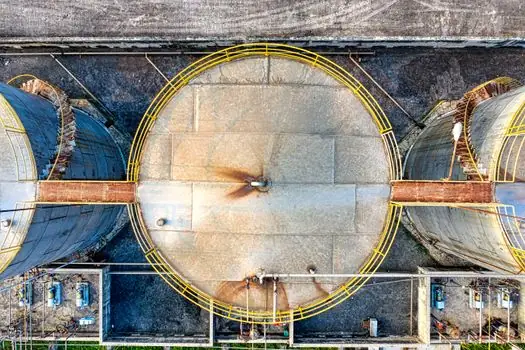
For a small tank with easy-to-clean residue, a fixed spray ball usually wins on first cost and mechanical simplicity because it has no rotary drive, rotating seals, or deployment mechanism. For difficult residues, choose a rotary head because 2–4 concentrated jets provide greater impingement than a drill pattern whose per-hole flow is reduced by the number of openings [S5].
For retrofit of an existing static-ball tank, choose a rotary unit only where the existing pressure and flow can sustain rotation, the connection geometry permits installation, and the required pattern covers the vessel. Fixed equipment wins when retrofitting would require major piping changes or when a flush, stationary installation is a process requirement [S2][S4].
For very sticky, burnt-on, or chemically resistant soil, neither mounting style guarantees removal. Rotary spray balls concentrate momentum into three fan sprays, but the impact remains less suitable for very tough residues than a purpose-built rotary jet cleaner [S3]. For tanks much larger than 5 m in diameter, rotary spray balls can struggle with effective coverage and may require long cleaning cycles or a different cleaning technology [S3].
Retractable mounting: benefits and constraints
Retractable mounting is most valuable where tank access, hygiene, or maintenance favors withdrawing the active head between cycles. These options matter because a rotary head can be mechanically capable of good coverage and still be unsuitable if its pattern, drainability, or material does not match the process.
The cleaning system must also satisfy the vessel's geometry. Rotary heads should be self-draining and self-cleaning inside and out, and the spray pattern must account for agitators, shafts, baffles, and other obstructions [S4]. A single fixed ball may leave an area behind an agitator shaft poorly washed, while two rotary devices can improve coverage without changing the stated CIP pressure and flow conditions [S4]. This makes quantity and pattern part of the engineering decision, not accessory details.
Retractable units introduce mechanical constraints absent from a simple fixed ball: moving components, sealing surfaces, bearings or bushings, spring or pressure deployment, and a defined travel envelope. The supplied research establishes self-cleaning and self-draining design expectations but does not provide universal pressure, temperature, or life ratings for every retractable model, so those values must be taken from the selected manufacturer's datasheet rather than inferred from the general product category [S2][S4].
Materials, cleaning media, and service life
Stainless steel is a normal construction basis for sanitary rotary heads, but the wetted assembly must be selected as a set for the cleaning chemistry, temperature, and cleanability requirements [S1][S3].
Bearing and seal material can govern service life more than the spray-head body. A stated rotary model includes zirconia ceramic bearings for chemical resistance and long service life, but that performance is model-specific and must not be generalized to all rotary heads [S3]. The 316L body with PTFE seals material decision provides a focused comparison of the common body and seal pairing.
Cleaning-media concentration also affects selection. Rotary heads reduce the volume of water and cleaning media used in the cited applications, but the residual type determines whether rotational impingement is sufficient [S2][S5]. Confirm nozzle insert material, bearing or bushing compatibility, seal exposure, maximum temperature, pressure range, flow range, and chemical concentration against the selected model datasheet before replacing a fixed ball.
Pressure, coverage, and sizing checks
Published rotary-head examples use approximately 30 psi for small tanks from 0.05 to 10 m³ and mid-sized tanks from 5 to 50 m³, with 30–45 psi shown for a 50–350 m³ example [S4]. The same table lists a maximum working temperature of 203°F for those examples and patterns including 360° down, 180°, and 270° up [S4]. These values illustrate a model-specific selection guide, not universal ratings for all rotary heads.
Check four dimensions before choosing a mount: vessel diameter and height, liquid volume, obstruction layout, and required spray pattern. Rotary spray balls with a slim profile can pass through an opening as small as 17 mm, which simplifies installation in restricted vessels [S3]. For larger vessels, size the head and pattern to the geometry rather than assuming that nominal 360° rotation guarantees complete coverage [S3].
For a fixed ball, verify hole distribution, flow rate, and circulation behavior across the whole vessel. For a retractable rotary head, also verify available flow, deployment pressure, minimum operating pressure, rotation at the lowest permitted flow, drainability, and withdrawal clearance. The fixed arrangement has fewer failure modes, while the retractable arrangement has greater coverage and service flexibility when correctly engineered [S1][S2][S4].
Purchase specification and acceptance tests
Specify the device by duty, not only by tank volume. The purchase schedule should identify fixed or retractable mounting, 180°, 270°, or 360° coverage, orientation, connection, flow range, supply-pressure range, maximum working temperature, wetted materials, seals, bearings or bushings, cleaning-media compatibility, ATEX status where required, and documentation requirements [S2][S3][S4].
Factory acceptance should verify rotation at minimum specified flow, repeatable spray coverage, full deployment and withdrawal, drainage after the cycle, and absence of product carryover in concealed parts. Commissioning should confirm tank coverage under actual CIP conditions, including agitator shadows, baffles, nozzles, and vessel welds. The measurable acceptance target should come from a validated residue limit or a qualified cleaning-time and chemical-consumption baseline.
Choose a fixed spray ball when simple geometry, easy cleaning, low mechanical complexity, and minimum first cost dominate the decision. Choose a retractable rotary head when difficult soil, obstructed vessels, mechanical impingement, protected retraction, or demonstrated reductions in cycle time and utility consumption justify added complexity [S2][S4][S5]. Before ordering, obtain the selected model's certified datasheet and confirm every pressure, temperature, flow, material, and dimensional limit against it.