Flame arresters and seamless steel pipe serve fundamentally different roles on a vapor-recovery or tank-vent skid, and confusing the two during procurement is one of the fastest ways to fail an API 2028 review or a PED/ATEX audit [S1].
A flame arrester is a passive, no-moving-parts device that quenches a flame front by stripping heat as the flame tries to pass through a tortuous metal matrix — a "flame cell" — usually 304SS or 316SS [S1]. A seamless steel pipe, by contrast, is a hollow pressure-containing tube made by piercing a solid billet; it carries the gas or vapor but has no flame-quenching geometry at all [S8]. Specifying one where the other is required produces either a non-functional vent (pipe only) or a dangerously undersized pressure path (arrester only).
Scope, Definition and Governing Documents
API 2028 governs the flame-arrester selection logic: clause 5.3 ("Potential Effects of Installation Geometry") explicitly states that the geometry, size, and length of connected piping may generate enough turbulence to render an arrester incapable of quenching a flame front, and that a correlation between arrester performance and piping size is "not always possible" [S1]. That single clause is the engineering reason why a steel pipe upstream of an arrester cannot be sized by gut feel — the piping system is part of the flame-arrester test envelope.
Seamless steel pipe as a commodity is covered by standards such as ASTM A106 (carbon steel high-temperature service), ASTM A53 (general purpose), ASTM A312 (stainless), ASTM A213 (boiler tube), ASTM A269 and ASTM A789 (stainless tubes), plus DIN 17456 / 17457 and EN 10216 for European projects [S5]. The end product of a seamless line is simply a uniform hollow cylinder without a longitudinal weld seam, produced by hot piercing, hot rolling, or cold drawing a solid billet over a piercing rod [S8].
Selection Criteria: What Decides Each Pick
For the arrester, the decision tree runs: gas group (IIA/IIB/IIC), deflagration vs detonation, end-of-line vs in-line, and run-up distance from the ignition source. Paradox IP, a US-developed manufacturer of USCG-approved arresters, sizes its Series "B" HP Deflagration units in pipe diameters 2", 3", 4", 6", 8", 10" and 12", each tested against a 60 ft simulated flare stack with a 90° bottom bend — a configuration that mirrors a real vent-pipe geometry [S1].
For the seamless pipe, the decision tree is almost orthogonal: material grade (carbon vs stainless vs alloy), OD × wall schedule (ASME B36.10), design pressure/temperature, and the medium's corrosivity. Indian and Chinese stockists list seamless line in ASTM A213, A312, A269, A778, A789, DIN 17456, DIN 17457 and EN 10216, with stainless seamless from OD 3 mm to 2500 mm and wall thickness 1.0–150 mm in standard 5.8/6/11.8/12 m lengths [S5][S6]. A buyer who locks the pipe spec before locking the arrester run-up length is doing the engineering backwards.
Criteria-Based Comparison: Arrester vs Pipe
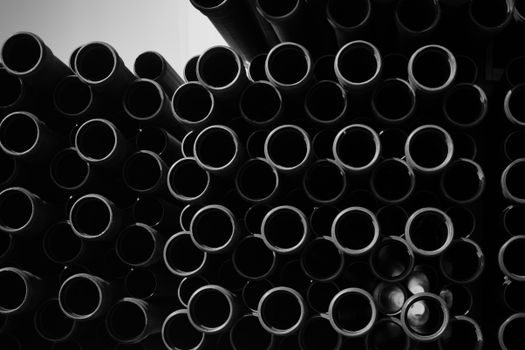
Side by side, the two products do not share a single decision axis except material of construction: [S1]
Function: arrester = stops flame propagation by heat extraction through a metal-matrix element; pipe = pressure containment with no flame-quenching geometry [S1][S8]. Failure mode: arrester failure = flame breakthrough if element fouled, corroded, or under-sized for run-up length; pipe failure = rupture, leak, or fatigue crack, no flame-stopping capability. Standards: arrester = API 2028, USCG 46 CFR, ISO 16852 (EN 12874); pipe = ASTM A53/A106/A312, ASME B36.10, EN 10216. Material overlap: both commonly use 304SS or 316SS, but pipe is typically ASTM A312 stainless, arrester body is generally ASME B16.5 flanged 304/316 stainless [S1][S5]. Lead time: pipe is a stocked commodity in 5.8/6/11.8/12 m cut lengths [S5]; a USCG-approved detonation arrester is built-to-order with a defined run-up test, so lead time is weeks to months.
Where Each Is Required, and Where Neither Helps
End-of-line on a fixed-roof atmospheric tank storing a Class I liquid: a Group D (or IIA equivalent) end-of-line arrester on a short run of seamless pipe — API 2028 limits unprotected end-of-line runs to roughly 10 ft of pipe between arrester and ignition source [S1]. In-line detonation protection on a marine vapor-combustion manifold: a USCG-approved detonation arrester, with the surrounding seamless pipe sized only after the arrester's run-up envelope is fixed [S1].
A PE pipe or a steel-plastic composite pipe has no role here — both are buried-water/utility products and will not handle flammable-vapor service. A welded steel pipe (ERW or SSAW) is also the wrong default for hydrocarbon vapor: the seam is a known weak point under thermal cycling, and the seamless variant is the conservative pick [S8]. For routine low-pressure air or nitrogen, a pipe clamp on a welded line is fine; that is not a flame-arrester scenario.
Material, Manufacturing and Cost Boundaries
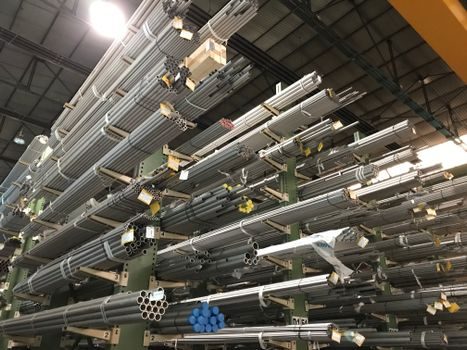
Seamless pipe is made by drawing a solid billet over a piercing rod and round bars, so the resulting shell has no weld seam and uniform wall thickness — that is the property engineers pay for in high-pressure and high-temperature service [S8]. Stocking distributors in India and China carry carbon steel seamless to ASTM A213 / A192 / A106, alloy steel seamless to DIN 17175, and CDS tubing to DIN 2391, in addition to chrome-moly boiler tubes [S6].
Arrester bodies are machined or fabricated from 316SS or 304SS plate and fitted with the crimped or woven flame-element pack inside, then assembled between ANSI-rated flanges. Paradox's published guidance is blunt: end sections cast off-shore to save cost have been reported to fail in the field during element-replacement bolt-up, so the OEM deliberately uses ANSI-certified components and 316SS in standard product lines like the A-16C-GD-S1-S1-TD [S1]. For aggressive sour service, neither standard 304 nor 316 is enough; NACE MR0175-compliant materials are required, and that is a separate sourcing track from the standard stainless pipe catalog.
Standards, Sourcing and Audit Trail
API 2028 clause 5.3 is the load-bearing text on geometry: "It is possible that the level of turbulence generated by combinations of these factors may render a flame arrester incapable of quenching a flame front … It may be necessary to have tests performed for the particular size of flame arrester proposed for use" [S1]. That sentence is what an inspector will quote back at you if you try to use a standard Sch 40 pipe run and a stock arrester without a documented run-up test.
On the pipe side, third-party inspection is the norm rather than the exception: large Chinese mills hold ISO 9001 / 14001 / 45001 plus CE and GOST, and their material is routinely released against SGS, BV, TUV, and DNV witness reports for oil & gas, refinery, port, and power-plant orders [S2]. Domestic Chinese stockists at the same tier carry ISO 9001:2008 and ship from port-adjacent yards to keep lead time short [S3]. For deeper engineering selection logic on the arrester side, the flame arrester selection criteria reference covers burn velocity, MESG, and the end-of-line vs in-line decision; on the pipe side, the corrugated-metal cost guide and the air pollution control system selection reference both touch adjacent vent-stack and ductwork economics. For sight-glass and flexible-hose vent terminations that sometimes sit downstream of an arrester, the sight glass vs industrial hose piece is the next read.
Final engineering check before sign-off: confirm the arrester is approved for the gas group, has a documented run-up test that matches the actual pipe geometry (per API 2028 5.3), and is mated to ASTM A312 or A106 seamless pipe of the correct schedule — anything else is a paperwork defense, not a real one.