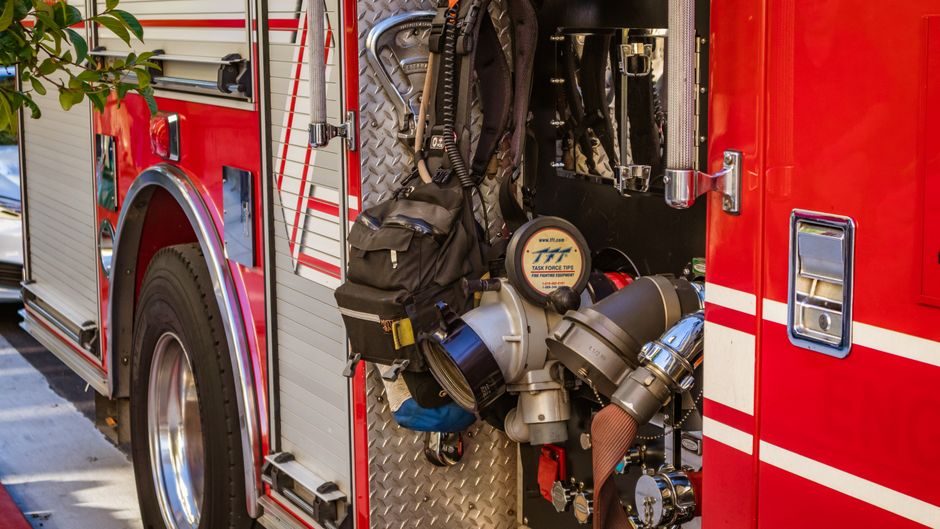
A sight glass is a static observation window — borosilicate or soda-lime glass sealed into a flanged, weld-on, threaded or sanitary body — rated for a defined DN, pressure, and temperature window; an industrial hose is a flexible reinforced conduit whose reinforcement, liner, and end fitting define the same envelope while absorbing vibration, misalignment, and motion. Choosing one over the other is not a quality judgement; it is a process-fit question, and the public spec catalogues circulating on 2026-07-11 make the boundaries visible.
DirectIndustry's 2026-05-30 flange sight glass page lists 27 manufacturers with 89 products, with common ratings clustering at DN15–DN200, 16–40 bar, and 150–280 °C on stainless or cast iron bodies [S1]. A separate industrial sight glass index from 2026-05-20 returns 40 manufacturers and 134 products, with specialty variants pushing temperature from -200 °C to +860 °C on vacuum-chamber-grade soda-lime windows [S3]. On the hose side, Aseptconn AG's pharmaceutical 132.A sight glass anchors the high-purity weld-on niche at DN25/DN50.5/DN64, 150 °C, ASME BPE / BS 4825 dimensions, 1.4435 BN2 stainless, and USP Class VI elastomers [S2].
Definition and Operating Envelope
A sight glass is a fixed viewing point: a glass disc or tubular element clamped between body flanges, welded into a spool, or set into a vessel wall, designed for direct visual confirmation of fluid colour, phase, level, or flow direction. Spec sheets on the 2026-05-30 catalogue show the typical operating envelope sitting at DN15–DN300, 1–40 bar, and 0–200 °C for general process use [S1], with low-temperature cryogenic inspection windows extending down to -200 °C and high-temperature variants rated to 860 °C on soda-lime or borosilicate bodies [S3]. An industrial hose, by contrast, is a flexible composite — inner liner, reinforcement braid or helix, outer cover — terminated with crimped or reusable fittings, and its envelope is defined by liner chemistry (EPDM, PTFE, NBR, silicone), reinforcement count, and bend radius rather than by a fixed spool dimension.
Pressure Products Company (PPC) and Hengshui Aohong both list complete 2026-July sight glass lines covering reflex, transparent, and sight flow indicators with companion process lights — confirming that the category continues to ship as a static, flange-or-weld mounted assembly rather than a flexible component [S5][S6]. That distinction is the foundation of every downstream selection rule.
Selection Criteria: When the Line Demands a Window, Not a Flex
Specify a sight glass when the operator must visually verify what is inside a pipe or vessel — colour, clarity, foam, level, slug flow, or direction — at a defined station. DirectIndustry's flow-indicator subset (Sight Flow series, FS-Series, T-Series) is built around a spring paddle or drip tube, with operating pressure typically 10–16 bar and temperature 0–150 °C on stainless or ductile-iron bodies [S3]. Sanitary SG-Series units drop to 0–150 psi with hygienic tri-clamp or sterile fittings for high-purity fluids [S3].
Specify an industrial hose when the connection must absorb motion, vibration, thermal expansion, misalignment, or repeated flexing. The liner and reinforcement selection then takes over: PTFE-lined stainless-braided hose for aggressive chemistry, EPDM rubber hose for steam and hot water, UHMWPE chemical hose for tanker transfer. Pressure Products Company explicitly distinguishes its static sight glass and gauge glass line from any flexible hose offering [S5], which is a useful sanity check — these are two separate product trees, not substitutes.
Who It Is For — and Who It Is Not For
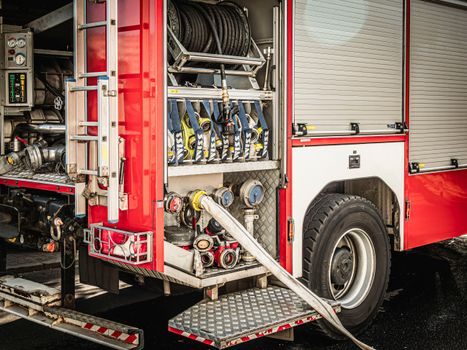
Sight glass is for: process operators who need an in-line visual on a fixed DN at a fixed elevation, skids where the engineer wants a permanent leak-and-flow witness point, and hygienic skids that must meet ASME BPE / BS 4825 dimensional and surface-finish rules (Ra internal < 0.4 µm on the 132.A series is a real published figure) [S2]. Sight glass is NOT for: lines that move, lines that flex, or any spool where vibration or thermal growth would crack a glass disc. China-made cross sight glass listings on Made-in-China price from US$75 to US$510 per piece at 1-piece MOQ for DN15–DN100 weld-on bodies [S4], which is the same economy tier the static category has always occupied.
Industrial hose is for: compressor discharge lines, chemical transfer reels, steam supply to a moving manifold, food-grade tank truck loading, any routing that must follow equipment motion. Industrial hose is NOT for: a long, fixed, code-stamped process line where a flange-on sight glass gives a permanent inspection point and a documented pressure-temperature envelope. For process piping that needs both — a moving run plus a viewing point — the engineer typically installs a hose section plus a fixed sight glass upstream or downstream, never one in place of the other.
Criteria-Based Comparison: Sight Glass vs Industrial Hose
Lining the two up against the same decision grid makes the gap obvious. (1) Function: sight glass = direct visual inspection of a fixed spool; industrial hose = flexible media transfer between two points that may move. (2) Mounting: sight glass is flanged, weld-on, threaded, or sanitary-clamp; industrial hose is crimped, reusable, or cam-lock. (3) Pressure/temperature envelope: a typical flange sight glass lands at 16–40 bar, 150–280 °C on the 2026-05-30 catalogue [S1]; a stainless-braided PTFE hose can match or exceed 40 bar with a far lower minimum bend radius, but the failure mode is different (hose burst vs glass crack). (4) Hygiene: weld-on sanitary sight glasses ship to ASME BPE / BS 4825 with documented Ra and USP Class VI elastomers [S2]; sanitary hose lines ship to similar 3-A or FDA-21 CFR 177.2600 standards but require different cleaning validation. (5) Motion tolerance: sight glass is zero; industrial hose is the entire reason for the product.
The two products share no overlap in a correctly engineered line. The cross sight glass category on Made-in-China (US$75–US$510, 1-piece MOQ) [S4] and Aseptconn's 132.A weld-on sanitary unit [S2] are both static, weld-anchored components; neither competes with a flexible hose on flexibility, and neither competes with a rigid steel spool on permanent fixed-line service.
Real Use Cases and Field Constraints
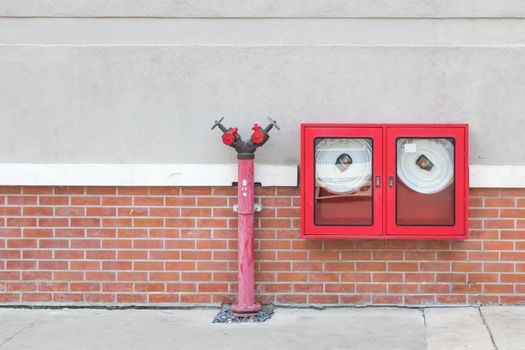
A low-pressure steam or hot-water skid in a food plant will use a transparent sight glass at the pump discharge to confirm flow, then a flexible EPDM steam hose to reach a clean-in-place manifold. A pharmaceutical bioreactor loop will use a 132.A-style sanitary sight glass at every filter housing and a platinum-cured silicone hose on the peristaltic pump head — the silicone hose on Aseptconn's adjacent catalogue runs in the same USP Class VI / FDA-21 CFR 177.2600 regulatory frame as the sight glass [S2], which is why they ship together on the same skid. A chemical tanker will use a PTFE-lined stainless-braided chemical hose for the full transfer run, with no sight glass in line — visual confirmation is done at the manway of the receiver, not through a flexible hose.
Common failure modes reinforce the split. Sight glasses fail by thermal shock, over-pressure, or gasket set-out; documented ratings on the DirectIndustry index show DN15–DN200 standard sight glasses on stainless bodies capped at 16–40 bar [S1], and a Hex-Duty oil sight glass from the same index runs -40 °C to +93 °C at 0–28 bar [S3]. Industrial hoses fail by abrasion, over-bend, chemical attack on the liner, or coupling blow-off; the failure path is mechanical, not optical, and the visual inspection of a hose is done externally (looking for cover damage), not through it.
Sourcing and Specification Anchors
Buyers searching in July 2026 have three credible public indexes to anchor spec work: DirectIndustry's flange sight glass (27 manufacturers, 89 products, 2026-05-30) [S1] and industrial sight glass (40 manufacturers, 134 products, 2026-05-20) [S3] pages, and Made-in-China's cross sight glass category (US$75–US$510, 1-piece MOQ, 2026-05-08) [S4]. For sanitary skid work, Aseptconn's 132.A spec sheet on DirectIndustry pins the build to ASME BPE / BS 4825 with 1.4435 BN2 stainless, EN 10088-1 reference, Ra internal < 0.4 µm, EN 10204-3.1 certification, FDA-21 CFR 177.2600 elastomers, USP Class VI, and RoHS / REACH compliance [S2]. PPC's 2026-07-11 catalogue frames the broader safety-sight-glass category — reflex, transparent, flow indicators, process lights — under one roof, useful for buyers consolidating a static-window BOM [S5], while Hengshui Aohong's 2026-07-10 page covers reflex and transparent gauge glass for liquid-level observation in the China export channel [S6].
Specifying engineers should re-pull these pages on the day of issue rather than rely on cached summaries.
For component-level specifications, see glass fiber.
For related coverage, see Expansion Joint vs Pipe Fitting: Function, Spec Boundaries and Selection.