
Flame arrester selection is decided by five engineering variables — gas Explosion Group, deflagration versus detonation regime, operating pressure/temperature envelope, installation position (end-of-line vs in-line), and the certification scheme the plant is licensed under [S1][S2].
For routine atmospheric service, ISO 16852:2016 covered pressures of 80–160 kPa and temperatures of −20 °C to +150 °C; that document was withdrawn and superseded by ISO/IEC 80079-49:2024, which is now the active international reference for performance requirements, test methods and use limits [S1]. The U.S. complement is ASTM F1273, which covers two design types (Type I and Type II) of tank-vent flame arrester for flammable-liquid vapours at specified vapour temperatures. For storage tanks in particular, end-of-line conservation vents combined with a flame-trim element are usually chosen per API 2028 guidance [S3][S5].
Deflagration vs Detonation: The First Decision Split
Burn velocity separates the application: deflagrations are sub-sonic flame fronts handled by a deflagration arrester, while stable detonations (front velocity > Mach 1 with a coupled shock) require a detonation arrester with a larger housing length and often a flame arrester integrated into an in-line flow meter or pipe run [S1][S2]. KITO Armaturen's FDN-Det4-IIA-... model, for example, is approved as a detonation arrester type 4 for Explosion Group IIA1 to IIA substances [S2].
A deflagration arrester fits when the flame-run distance L and vessel volume stay inside the limits set in the test gas; if L/V exceeds the arrester's certified envelope, the flame can accelerate into a detonation inside the element and the protection fails — so length-of-pipe run from the ignition source is the first number a process engineer should pull [S1]. PROTEGO's DA-SB in-line detonation arresters are explicitly designed on fluid-dynamic and explosion-dynamics calculation for that higher-energy regime [S2].
Explosion Group and MESG: Picking the Right Element
Each gas family is assigned an Explosion Group (IIA, IIB, IIC) based on Maximum Experimental Safe Gap (MESG); a smaller MESG needs tighter crimped-ribbon or perforated-plate element geometry to quench the flame [S2]. The reference fitment for hydrogen (IIC, MESG ≈ 0.29 mm) is fundamentally different from propane (IIA, MESG ≈ 0.92 mm), and a IIA element must never be substituted on a hydrogen service [S1][S2].
Element construction itself is one of three families: crimped metal ribbon (most common for atmospheric storage and vent stacks), perforated-plate (used for low MESG gases and dirty service), and sintered metal or gauze packs (for high-temperature or short-time-burning flame fronts) [S2][S6]. All three rely on the same physics — absorbing heat from the flame front through narrow passages until the gas drops below its auto-ignition temperature — but the passage geometry, pressure drop and cleanability differ enough that element type is selected alongside gas group, not after it [S6].
Pressure, Temperature and Material Constraints
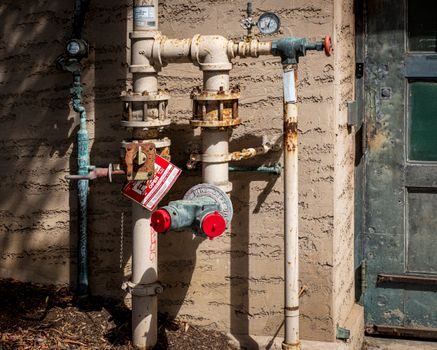
ISO 16852's classic validity window — 80–160 kPa and −20 °C to +150 °C — is the easy case; the moment an application sits outside it, the standard explicitly says additional testing specific to the intended condition is advisable, and the test mixtures may need modification [S1]. High-temperature flares, cryogenic LNG vaporiser vents and high-pressure petrochemical reactors all fall outside that envelope and need a manufacturer-specific test certificate, not a generic ISO compliance stamp [S1].
Stainless steel (typically 304/316) is the default body and element material for chemical and offshore service; aluminium is restricted because of its low melt point and the spark risk on impact; carbon steel is acceptable for dry gas service where corrosion and ignition-by-friction are both controlled [S2][S6]. A corrugated flame-trap element (anti-explosion corrugated tray) is typically supplied as a replacement spare so that a corroded or damaged core can be swapped without scrapping the housing.
End-of-Line vs In-Line: Position Changes the Spec
End-of-line (EOL) arresters sit on a vent stack or tank nozzle and see atmospheric pressure on one side; in-line arresters are mounted in a pipe between two flammable sections and must contain a flame approaching from either direction [S3]. An EOL conservation vent from BS&B (FlameSaf) is sized for breathing losses of a storage tank, while an in-line detonation arrester on a vapour return line is sized for stable detonation length and MESG simultaneously [S3][S5].
Because in-line service can see a flame coming from either side, bi-directional housings are typical and the element-to-housing length is longer; this also affects the connected industrial valve train, since the upstream ESDV and block valves must close quickly enough to prevent flame re-initiation after the arrester has quenched the front [S1][S2]. For EOL tank service, weather hoods and bimetal strips are part of the certified assembly — they are allowed to melt or bend to relieve overpressure, and ISO 16852 specifically keeps those intentional fail-safe parts inside its scope [S1].
Standards Map: ISO 16852, ISO/IEC 80079-49, ASTM F1273, API 2028
ISO 16852:2016 (withdrawn) → ISO/IEC 80079-49:2024 is the headline shift in 2024–2026: the international flame-arrester standard has been re-issued under the 80079-x explosion-protection family [S1]. For U.S. tank vents, ASTM F1273 (Type I and Type II) remains the cited specification; for marine service, IMO MSC/Circ. 677 is the additional document referenced inside ISO 16852's own notes [S1].
API 2028 is the American Petroleum Institute's standard for flame arresters and tank venting on onshore storage tanks, and is the document under which Paradox IP's anti-flashback burners and a number of US-sold arresters are quoted as "Approved" by the United States Coast Guard [S5]. Process engineers should treat the standards map as a layered requirement: ISO/IEC 80079-49 (international, performance and tests), ASTM F1273 (U.S., tank-vent design and tests), API 2028 (U.S., storage tank and venting practice), and ATEX 2014/34/EU plus IEC 60079-0 / IEC 60079-15 for the European hazardous-area certification of the housing and any associated pressure transmitter or flame sensor fitted to it [S1][S5].
Selection Criteria Comparison: End-of-Line vs In-Line Deflagration vs In-Line Detonation
Three selections dominate plant practice. (1) End-of-line deflagration arrester on an atmospheric storage tank — low cost, single direction, sized to breathing flow, certified to ASTM F1273 Type I/II or ISO 16852 (legacy) [S1][S3]. (2) In-line deflagration arrester on a vapour line or pressure sensor manifold — bi-directional, longer element, higher pressure drop, certified to ISO 16852 / ISO/IEC 80079-49 [S1][S2]. (3) In-line detonation arrester on a long pipe run with hydrogen or ethylene — detonation-typed housing (Type 4), Explosion Group IIA/IIB/IIC-specific element, project-specific test certificate because most operating points sit outside the 80–160 kPa / −20 to +150 °C window [S1][S2].
Decision matrix against four criteria: cost-per-line-size (EOL < in-line deflagration < detonation); pressure drop (EOL lowest, detonation highest); MESG coverage (wider group coverage for detonation arresters, but must match the actual service); testing depth (EOL = standard tests, detonation = project-specific extended testing) [S1][S2]. For tank farms, a PLC-supervised conservation vent with end-of-line arrester is the cheapest fit; for hydrogen compressor discharge, only a detonation-typed, IIA1–IIC element with a documented test certificate is acceptable [S1][S2][S3].
Who Should Use a Flame Arrester — and When It Is the Wrong Equipment
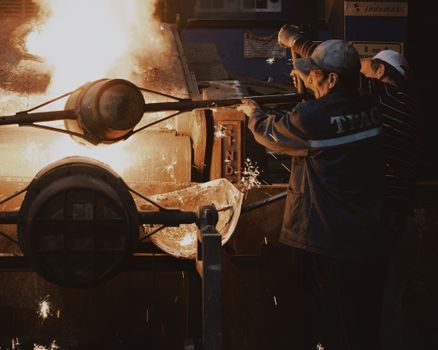
Use a flame arrester on any vent, pipe or tank nozzle handling a flammable gas or vapour where the ignition source could reach the mixture: storage-tank breather vents, vapour-return lines, biogas piping, LNG/LPG vaporisers, and compressor suction/discharge headers [S1][S2][S3]. In coal-mine ventilation air methane (VAM) systems, a correctly selected arrester is one of the practical mitigations for fugitive methane deflagration on the oxidiser inlet.
Do not use a flame arrester on acetylene (self-decomposing), carbon disulphide (special properties), or on any mixture with an oxygen-enriched or non-air oxidant — these are explicitly excluded from ISO 16852 and need alternative protection, typically a fast-acting valve, an extinguishing system or an explosion-isolation device instead of a passive arrester [S1]. For internal-combustion engine intakes the test procedures are out of scope as well, and arrester selection should be made against the engine-maker's spec rather than ISO/IEC 80079-49 [S1].
Sourcing, Spare Parts and Audit Trail
Auditable documentation is what separates a defensible arrester from a generic one: a test certificate referencing the exact MESG/Explosion Group, the deflagration or detonation type, the pressure/temperature envelope, the housing material, and the element-cleaning interval [S1][S2]. Major vendors (PROTEGO, KITO, BS&B, EFS, Prosave, Fitzer, Assentech) all publish the explosion group, housing size and MESG on the product datasheet; the flame arrester buy should always start from that datasheet and only then move to commercial terms [S2][S3][S5][S6].
Trackable signals to watch through 2026: (a) full migration of manufacturer nameplates from ISO 16852:2016 to ISO/IEC 80079-49:2024, (b) growth of in-line detonation arrester demand from hydrogen refuelling and electrolysis projects (where Explosion Group IIC is mandatory), and (c) consolidation of US/EU dual-certification offers for storage-tank vents, where a single part number must satisfy both API 2028 and ATEX 2014/34/EU. Related reference material on hardware selection beyond flame arresters is in the Pipe Clamp Buying Guide 2026: Diameter, Material, Standard and Sourcing walkthrough, which covers the same standards-and-datasheet logic applied to a different component family.