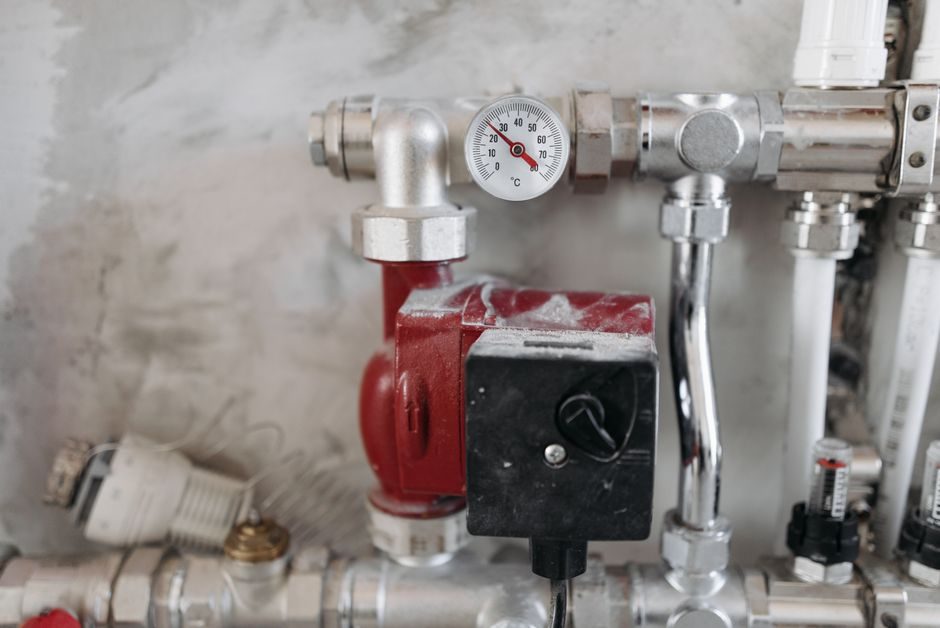
Selection of an industrial flow sensor in mid-2026 still resolves to a handful of hard gates: fluid state (gas vs liquid vs steam), line size, minimum and maximum flow rate, required accuracy class, output protocol, and the explosion-protection or sanitary rating the plant demands [S1][S2].
Across the DirectIndustry manufacturer index dated 2026-07-16, 103 companies list 283 distinct flow-sensor products, with thermal (73 SKUs) and ultrasonic (67 SKUs) technologies leading the catalogue count, followed by turbine (19 SKUs) and positive-displacement variants [S1]. The breadth is the point: a buyer who walks in with only a brand preference usually leaves with the wrong device, while a buyer who walks in with fluid, flow range, and accuracy class usually narrows to two or three candidates on the first pass.
Fluid Phase, Conductivity, and Line Size: The First Hard Gate
The first filter on any selection is whether the medium is a clean or dirty liquid, a conductive or non-conductive liquid, a gas, or steam — because the sensing principle is set by the physics of the medium [S1]. Electromagnetic flowmeters require a conductive liquid (typically ≥5 µS/cm) and a fully flooded pipe; they cannot read hydrocarbons, oils, or deionized water, and they fail in gas or two-phase flow.
For compressed-air and inert-gas duty up to about 0.75 MPa, thermal-mass units such as the Omron D6FZ-FGT200 and D6FZ-FGT500 are specified, with a published flow accuracy window that places them firmly in the leak-detection and sub-DN50 branch-line category [S4]. On water skids, a DN40/DN50 Hall-effect turbine such as the YF-B1/B2/B3/B7 (1–25 L/min, ±3 % accuracy, DC 5–15 V supply, MAX 1.75 MPa working pressure, F = 11 × Q pulse output) is the default low-cost pick [S10].
Technology-to-Duty Mapping: Which Principle Fits Where
Coriolis flowmeters remain the only technology that simultaneously delivers mass flow, density, and temperature on a single primary, and they do it independent of Reynolds number, profile, or conductivity — which is why they dominate custody transfer, chemical batching, and any skid where net oil or net water is sold or invoiced. Vortex flowmeters hold the steam and saturated-gas band, where they deliver ±1 % of rate at a price point ultrasonic cannot match below DN300. [S1]
Ultrasonic flowmeters split into two camps: inline (wetted transducers) and clamp-on (non-intrusive). Clamp-on units are the right answer for retrofit on existing carbon-steel water mains, for acids and caustics where wetted sensors would corrode, and for any service where a hot-tap installation is unacceptable. Inline ultrasonic is the standard for large-bore custody water (≥DN300) and for district cooling where the bidirectional turndown ratio of a transit-time meter outperforms a mechanical turbine.
Turbine, positive-displacement, and oval-gear units cover the clean-light-hydrocarbon and water-injection band where accuracy and price beat every other option — turbines for low-viscosity clean liquids below about 6 cSt, oval gear for higher-viscosity oils and resins where slip error would wreck a turbine. Thermal mass, despite being the largest single category on the DirectIndustry index at 73 SKUs [S1], is essentially a clean-dry-gas technology; it is the wrong pick for wet gas, dirty gas, or any liquid.
Accuracy, Turndown, and the Cost-to-Performance Curve
Industrial accuracy for a Coriolis meter is typically ±0.1 % of mass flow, and ±0.05 % is now standard on the high-end Custody Transfer units. Electromagnetic sits at ±0.3 % to ±0.5 % of rate when properly installed with adequate straight-pipe run. Vortex and ultrasonic commonly publish ±1 % of rate as a baseline. A DN40/DN50 Hall-effect turbine such as the YF-B series ships at ±3 % of reading, which is acceptable for a leak-detection branch or a low-cost skidded water-treatment package but unacceptable for any dosing or billing duty [S10].
Turndown ratio separates the technologies as sharply as accuracy: thermal mass typically offers 100:1, vortex around 20:1 to 30:1, Coriolis 50:1 to 100:1, and a magnetic pickup turbine closer to 10:1. A buyer who specifies only nominal flow without the minimum night flow will pick a meter that under-reads or stalls when the plant throttles back — the failure mode that lands in service-call tickets more often than any other single cause.
Output Protocols, Wiring, and Integration Risk
4–20 mA HART remains the dominant industrial output in 2026 because it overlays digital data on a single two-wire loop and integrates with every DCS and SCADA in service. FOUNDATION Fieldbus and PROFIBUS PA are the chosen digital plant protocols in greenfield refinery and chemical builds, but they are digital-only and they do not interoperate with HART, so a buyer who needs both 4–20 mA and digital diagnostics must pick a dual-output device rather than assume interchangeability. [S3]
On lower-cost and OEM skid duty, pulse/frequency output is still the workhorse — the YF-B water sensor publishes a clean F = 11 × Q pulse characteristic with >DC 4.7 V high level and 0 V low level, which a PLC counter card can read directly [S10]. For hazardous-area and battery-powered remote telemetry, IO-Link and wireless Hart are increasingly specified, and Modbus RTU over RS-485 still shows up on package skids where the integrator wants a simple multi-drop poll.
Hazardous Area, Sanitary, and Materials Compliance

European chemical-plant builds default to ATEX 2014/34/EU for Zone 1/Zone 2 gas and Zone 21 dust; IECEx is the parallel scheme accepted across most non-EU jurisdictions; and North American chemical and pharmaceutical sites add NEC Class I Div 1/Class I Div 2 ratings through cULus or FM. A buyer who omits the zone classification until after the PO typically ends up with a meter that is legal to install but blocked at commissioning because the certification on the nameplate does not match the area classification drawing. [S9]
On hygienic and pharmaceutical duty, the gate is 3-A Sanitary Standards and EHEDG certification, plus 316L stainless wetted parts with surface finish ≤Ra 0.8 µm. For offshore and sour service, NACE MR0175 metallurgical compliance is the gate; on water-for-injection and clean steam, ASME BPE is the gate; on potable water, NSF/ANSI 61 and WRAS are the relevant certifications. Each of these is a hard fail if missed, and none of them is retroactive — a meter that does not carry the certification on the nameplate cannot be re-certified in the field.
Who Should NOT Pick the Mainstream Option
A buyer who needs to measure deionized water, hydrocarbons, or any non-conductive liquid should not pick an electromagnetic meter even though it is the most heavily stocked technology in the catalogue — the principle will not work. A buyer who needs a clean-gas measurement at line sizes below DN15 should not pick an ultrasonic meter — the transducer geometry will not fit and the cost-to-benefit ratio is upside-down. A buyer who needs to measure wet biogas, digester gas, or any two-phase flow should not pick a thermal mass meter — the wetness contaminates the sensor and the drift will exceed the spec within weeks. [S6]
A buyer who needs custody-transfer accuracy below ±0.1 % on a viscous oil or a slurry should not pick a vortex or ultrasonic meter — only Coriolis, or in some narrow cases positive-displacement, will hold the spec. A buyer on a tight budget who is specifying a high-temperature or superheated-steam service above about 380 °C should not pick a clamp-on ultrasonic — the transducer couplant and housing rating will fail; an inline vortex or differential-pressure element is the right call.
Shortlist Logic: From Specification to One P.O. Line

The cleanest selection path in mid-2026 is to write down five fields before touching a vendor list: fluid (with conductivity, viscosity, and cleanliness), flow range (minimum night flow AND maximum peak), required accuracy class, line size and pressure class, and the hazardous-area or sanitary rating [S1][S2].
Final selection then pivots on three softer gates: total cost of ownership over a 10-year window (which usually picks the OEM with the local service footprint over the lowest first-cost quote), spare-parts commonality with adjacent skids in the same plant, and the availability of a digital twin or FDI/EDD device package for the plant's asset-management system. For more on spec-driven selection in adjacent measurement categories, the load cell module selection map and the laser distance sensor selection guide follow the same gate-first discipline. Two trackable signals for the next six months: IECEx 60079-0 alignment on new-generation smart flow transmitters carrying firmware 3.x, and incremental price compression on inline DN50–DN150 Coriolis as Chinese OEMs such as the listed Shanghai, Jiangsu, and Wuhan manufacturers reach the western distributor channels [S1].