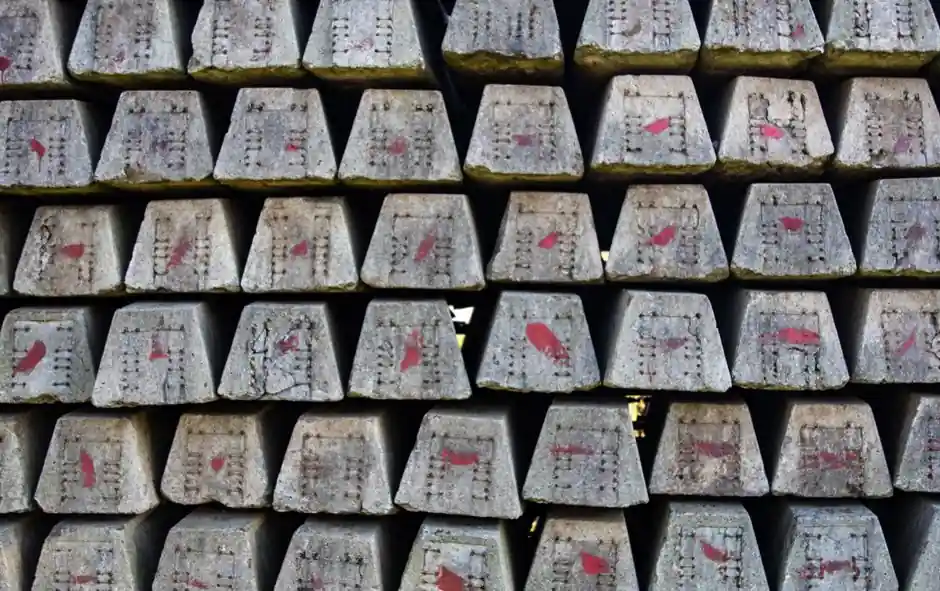
Foamed cement cores and EPS-bead cement cores both target the same lightweight partition market, but the binder-to-filler ratio, density window, and mechanical envelope diverge enough that the wrong pick costs you a redesign. A 2025 RSM-optimized EPS concrete mix landed at 1000–1100 kg/m³ using 2.5% small (0.71–1 mm) and 2% large (1–1.66 mm) EPS beads by volume, hitting 75% of brick compressive strength with 47% lower thermal conductivity and 50% lower water absorption [S1].
Foamed cement panels, by contrast, drop to 60–90 kg/m² panel weight with 3.5–7.5 MPa compressive strength, and ship in standardized 60/90/100/120/150/200 mm thicknesses at 2440–3000 mm lengths [S4]. EPS-bead concrete was already specified as a composite wall-panel core using cement, sand, and fly ash by 2017, and the formulation logic has not changed since, only the statistical mix-optimization [S2].
Density, Compressive Strength, and Thermal Conductivity Side-by-Side
EPS-bead cement core panels at 1000–1100 kg/m³ deliver 47% lower thermal conductivity and 60–70% lower permeability than fired-clay brick, while retaining 75% of brick's compressive strength at 43–48% lower density [S1]. Foamed cement panels run much lighter at 60–90 kg/m² (the per-area value typical of 60–100 mm partitions), with 3.5–7.5 MPa cube compressive strength, a band that suits non-load-bearing interior partitions and light exterior walls in cold, severe, and extremely cold climate zones [S4].
On the thermal axis, both cores outperform solid masonry, but EPS-bead concrete carries a bead-size lever (0.71–1 mm fine vs 1–1.66 mm coarse) that lets mix designers tune stiffness versus insulation [S1][S8]. Foamed cement cores have no such lever; their thermal performance is set by the foam-agent dosage and the resulting closed-cell air-void structure, which the production line calibrates at the core machine stage. For spec-writing purposes, treat the 3.5–7.5 MPa number as the foamed-cement ceiling and the 1000–1100 kg/m³, 75%-of-brick envelope as the EPS-bead ceiling.
Seismic Dead Load and Diagonal Shear Behaviour
EPS-bead panels exhibit roughly 30% greater diagonal force stability than conventional brick masonry infill, on top of 43–48% density reduction, which directly cuts the seismic mass a frame has to resist [S1]. The same study notes that non-structural component failure accounts for ~62% of repair cost in offices, 70% in hotels, and 48% in hospitals, framing infill weight as a financial risk, not just a structural one [S1].
Foamed cement panels benefit from the same mass reduction but their shear performance is governed by the cement-skin bond and the closed-cell foam geometry, not by bead packing. For high-seismic zones, EPS-bead formulations with optimized bead-size blends are the more documented choice; foamed-cement selection should be cross-checked against project-specific shear tests, since standardized diagonal-shear data for foamed-cement partitions is less prevalent in the public literature. To produce either panel type at scale, the shell core machine class and the cold-box core machine class define the moulding step; mixing upstream happens in a core machine.
Mix Design, Raw Materials, and Production Line Logic
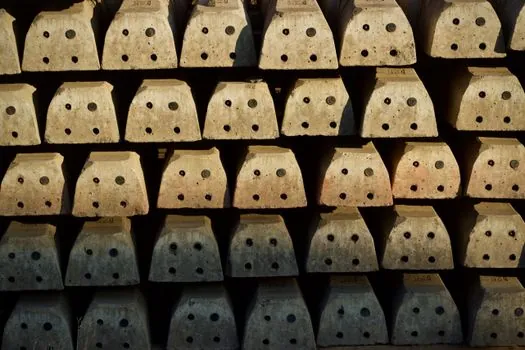
EPS-bead concrete uses Ordinary Portland Cement (OPC), densified silica fume, EPS beads graded into 0.71–1 mm and 1–1.66 mm cuts, and water, with 2.5% small and 2% large bead fractions by volume emerging as the RSM optimum for 1000–1100 kg/m³ panels [S1][S8]. Foam concrete substitutes a chemical foaming agent (or pre-foamed protein/synthetic foam) for the beads, yielding the 60–90 kg/m² lightweight class without polymer aggregate [S4].
Production-wise, EPS-bead panels need a bead pre-mix stage, a cement slurry stage, and a mould-pour stage with controlled vibration to avoid bead flotation. Foamed cement panels need a foam generator, a foam-cement slurry mixer, and a pour-into-mould step that requires faster setting because the air-void structure collapses if the mix stays fluid too long. For a 30–200 m³/day plant footprint, equipment selection pivots on whether you need bead-handling hoppers or a foam generator, with 30, 50, 100, and 200 m³/day plant capacities as the standard sizing ladder [S4].
Fire, Termite, Water, and Long-Term Durability
Foamed cement and EPS-bead cement cores are both inorganic-mineral-dominant, so neither fuels combustion the way pure EPS board does, but the EPS-bead variant still contains a combustible fraction that needs a cover layer or fire-rated skim coat for code compliance in many jurisdictions. The cement skin in 3D cementitious sandwich panels, sometimes called EPS sandwich wiremesh panels, is specifically positioned as better than ICF for fire, termite, and water resistance, because the cement layer fully encapsulates the foam [S7].
Water absorption is the more concrete differentiator: EPS-bead panels show 50% lower water absorption than brick at the same time as 60–70% lower permeability [S1]. Foamed cement panels perform well on water resistance as long as the foam-cell network stays closed, but if the foam-agent dose is off, the open-cell fraction will wick moisture. EPS board itself is used in some architectural quoin applications as a cement-coated foam core that mimics stone, GFRC, and stucco shapes, showing the same cement-over-foil durability logic at a smaller scale [S3].
Use-Case Fit: Which Panel Goes Where
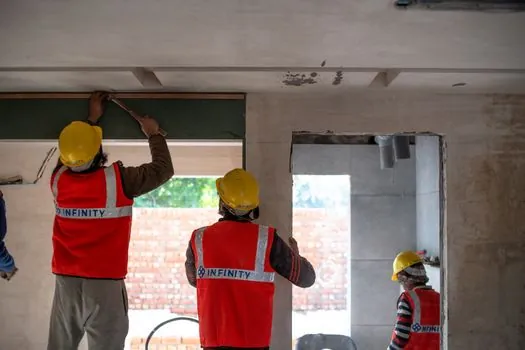
For non-load-bearing interior partitions where 60–100 mm thickness, 60–90 kg/m² weight, and 3.5–7.5 MPa strength are enough, foamed cement panels are the cost-default, especially when fire rating trumps acoustic mass [S4]. For exterior walls, severe-cold-zone envelopes, and seismic-zone infill where diagonal shear and thermal performance matter, EPS-bead concrete at 1000–1100 kg/m³ is the better-fit choice, and the RSM-optimized 2.5% / 2% bead split is a defensible starting formulation [S1][S4].
For projects chasing cement-sector carbon signals, both cores let you substitute fly ash for a portion of OPC, and EPS-bead mixes in the published literature already include fly ash as a baseline component, while foam-cement mixes scale fly-ash substitution mainly to control density and cost [S2][S8]. For hollow concrete-block walls where loose-fill insulation is being considered, beads and foam are options but the editor consensus is that loose-fill cores have a marginal R-value effect and that continuous rigid-foam or spray-foam insulation outside the block does more per dollar [S5]. For broader cement-industry context, the Cement Sector Signals digest tracks where the binder side of these mixes is heading. Where ceiling or façade finish trades intersect with panel choice, the suspended-ceiling grid spec tradeoffs covered in exposed vs concealed grid suspended ceiling feed naturally into partition design.
Failure Modes and Specification Pitfalls
EPS-bead panel failures trace mostly to bead flotation during pour, which segregates the mix and drops compressive strength below the 75%-of-brick threshold; the fix is viscosity-modifier addition and tighter vibration control. Foamed-cement panel failures trace to over-foaming or under-foaming, which collapses the closed-cell structure or leaves the mix too dense; the fix is foam-stability-agent dosing and density checks at the shell core shooter station. [S1]
Common spec pitfalls include calling for EPS-bead concrete where the fire code requires a monolithic non-combustible core, and calling for foamed cement where the structural schedule assumes 1000+ kg/m³ density for seismic mass calculations. The EPS board classification covers the raw polymer input, and the lightweight partition panel category covers the finished product class, both worth bookmarking when writing a partition spec.
Sourcing, Standards, and Trackable Signals
No single ISO or ASTM standard is named in the public material as the governing document for either core type, so specifiers should anchor on project-specific mix-design data and third-party test reports rather than a stock standard number. The 2025 Ahmed et al. paper provides an ANOVA + RSM-validated mix design with R² > 0.80 model accuracy, and the 2017 Fernando paper established the cement-sand-fly ash-EPS composite wall-panel precedent that current EPS-bead formulations still follow [S1][S2]. The 2021 Moutassem paper documents the OPC + densified silica fume + EPS-bead baseline that is the most-cited starting recipe in subsequent work [S8].
Trackable signals to watch in the next procurement cycle: 200 m³/day foam-cement plant deliveries ramping for severe-cold-zone projects, EPS-bead panel density targets drifting below 1000 kg/m³ as bead-grading technology improves, and cement-skin thickness minimums increasing in seismic-zone partition schedules. For the related ceiling and façade decisions that sit on top of these partitions, the exposed vs concealed grid suspended ceiling tradeoffs are the next node to spec.