
The global polypropylene (PP) resin market is sized at USD 91.77 billion in 2025 and is projected to reach USD 129.50 billion by 2033, a 4.4% CAGR over 2026-2033, with Asia-Pacific dominating both consumption and production [S1]. A separate 2026 outlook places the addressable market at USD 140.64 billion in 2026 versus USD 135.15 billion in 2025, with automotive demand (lightweighting) tracked as the fastest-growing end-use at a 7.6% CAGR through 2033 [S2].
PP is the second-most produced plastic globally behind polyethylene, spanning homopolymer, random copolymer, and impact copolymer families used in rigid packaging, automotive compounds, medical devices, fibres, and transparent containers [S2]. Resin buyers in 2026 are navigating a market where price-only sourcing triggers melt-flow-index (MFI) drift, missing certificates of analysis (CoAs), and line reject-rate spikes, pushing procurement toward suppliers that pair scale with technical support [S2].
2026 Market Size, Growth, and Regional Split
Global PP demand is anchored by packaging and consumer goods, with automotive compounds scaling fastest [S2][S3]. Asia-Pacific captured 36.79% of 2025 global revenue and is forecast to grow at a 7.5% CAGR through 2033, with China and India as the primary volume engines alongside the U.S. [S1][S2]. Rigid and thin-wall food containers remain the single largest pull for injection-moulding homopolymer grades [S1].
High-performance PP formulations with improved impact strength, heat resistance, and flame retardancy are broadening the addressable applications in 2026, especially in automotive interiors, filtration, and medical textiles [S3]. Sustainability pressure is adding a parallel pull: chemical-recycling investments by PureCycle Technologies and ExxonMobil aim to convert post-consumer waste into virgin-like resin, and bio-based PP routes are moving from pilot to commercial scale [S1]. The base-case 2025-2033 growth rate of 4.4% [S1] is therefore an under-bound if recycled-content mandates tighten, but a cost-pressure ceiling if propylene feedstock volatility persists.
Supplier Tiers and the 2026 Top-Five Map
The 2026 PP supplier landscape splits into two functional tiers: integrated petrochemical producers running licensed PP process technology, and trading/compound houses serving moulders with broad grade coverage and logistics depth [S2]. Lyondellbasell Industries (Houston) is identified as a leading PP technology licenser, with nine of the top ten global producers running its licensed process, and runs an Advanced Polymer Solutions segment focused on PP compounds, engineered plastics, and masterbatches for automotive and packaging [S2]. The Circulen portfolio positions Lyondellbasell in recycled and bio-based PP for buyers with sustainability mandates [S2].
Saudi Basic Industries Corporation (SABIC) is consistently named among the top integrated PP producers, competing on homopolymer, impact copolymer, and random copolymer coverage for rigid packaging, automotive, and healthcare converters [S2]. The remainder of the 2026 top-five typically includes Braskem (bio-based PP, Americas footprint), ExxonMobil (resin plus chemical-recycling integration), and Borealis (Europe-anchored automotive compounds) [S2]. For moulders needing raffia, injection-moulding homopolymer, random copolymer for clear containers, and recycled-content compounds in mixed volumes, sourcing risk is best managed by qualifying at least one petrochemical major and one trading house against the same grade specification.
Grade Selection: Homopolymer vs Random Copolymer vs Impact Copolymer
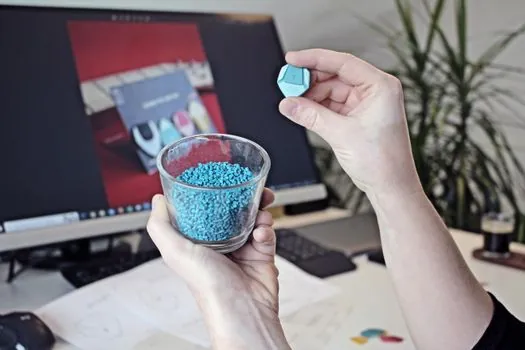
PP grade choice is the single largest determinant of part performance, and the three families behave differently in processing and end-use [S2][S3]. Homopolymer PP offers the highest stiffness and heat resistance, typically specified for rigid packaging, caps, and thin-wall containers where clarity and dimensional stability dominate [S2]. Random copolymer PP improves transparency and impact resistance at low temperatures, fitting clear containers, housewares, and medical devices with gamma or EtO sterilisation cycles [S2].
Impact copolymer PP adds an ethylene-propylene rubber phase for high impact strength, making it the default for automotive interior and exterior trim, appliance housings, and luggage [S2][S3]. A simple comparison frame for 2026 buyers: random copolymer wins on clarity and sterilisation compatibility, homopolymer wins on stiffness and cost per kg, and impact copolymer wins on toughness at sub-zero temperatures. Converters running multi-cavity tools should validate MFI windows (typically 1-35 g/10 min depending on process) and lot-to-lot CoA consistency before locking annual volume.
Process and Application End-Uses Driving 2026 Pull
Injection moulding remains the dominant conversion process, with thin-wall packaging, caps, and closures consuming the largest volume of homopolymer and random copolymer grades [S1][S2]. Film extrusion (BOPP and CPP) and raffia woven-sack production absorb the next tranche, especially across Asia-Pacific where agricultural and industrial packaging demand is structurally high [S2].
Automotive is the fastest-growing end-use segment at a 7.6% CAGR through 2033, driven by lightweighting of dashboards, bumper fascia, door trims, and battery-related components where impact copolymer and talc-filled PP compounds replace heavier engineering plastics [S2][S3]. Healthcare is the third growth pole, with random copolymer grades specified for syringes, vials, and IV containers that require gamma or EtO sterilisation compatibility [S2][S3]. PP's baseline property stack, including chemical resistance, high tensile strength, good impact resistance, and cost-effectiveness, is what keeps the material displacing PVC, PS, and some engineering resins in these segments [S3].
Who PP Resin Sourcing Is For, and Where It Fails

PP is for buyers running high-volume conversion (injection, film, raffia, fibre) who need a cost-stable, process-tolerant resin with predictable CoA delivery [S2][S3]. It is not for continuous high-temperature service above approximately 100-120 degrees Celsius without stabilisation, and not for high-purity transparent optical applications where acrylic or PC still dominate [S3].
Common failure modes in 2026 sourcing are: MFI drift between lots causing short-shots and warpage in thin-wall tools, missed CoAs blocking FDA or food-contact qualification, and resin degradation in transit that raises yellowness index for clear-container converters [S2]. Supply volatility, tied to propylene monomer swings and cracker outages, is the main upstream risk; environmental scrutiny over fossil feedstock and marine litter is the main downstream risk, and both are pushing resin manufacturers toward recycled-content and bio-based PP offerings [S1]. For moulders, the practical answer is a dual-source strategy that pairs a licensed-technology petrochemical major with a regional trading house, validated against the same grade specification and food-contact documentation. For a broader view of how resin choices compare with adjacent engineering plastics, see the ABS plastic supplier map for 2026, and for material-property context on the thermoset/thermoplastic divide the synthetic resin encyclopedia entry gives a quick reference.
Standards, Documentation, and Trackable 2026 Signals
Food-contact PP converters should require FDA 21 CFR 177.1520 or EU 10/2011 compliance statements, and medical-grade buyers should demand ISO 10993-5 cytotoxicity and USP Class VI test data, on a per-grade basis rather than per-supplier [S3]. Automotive specifiers typically reference OEM material standards (for example, GMW, MS-DB, or VW PV 3.x equivalents) and need lot-traceable CoAs tied to a resin date code [S2].
Trackable 2026 signals to watch: capacity additions in China and India, the commercial ramp of bio-based propylene routes, and the rollout of mass-balance accounting for recycled-content PP under the Circulen and similar programmes [S1][S2]. For buyers building a 2026 sourcing file, a useful internal spec sheet should lock polymer family, MFI window, additive package, sterilisation compatibility, food-contact statement, and CoA format, and require every candidate supplier to bid against that same sheet, with deviations flagged line by line. This is the only reliable way to keep a 4.4% CAGR commodity market from quietly becoming a reject-rate problem on the shop floor.
For the relevant spec sheets and selection criteria, see peek, and pom.