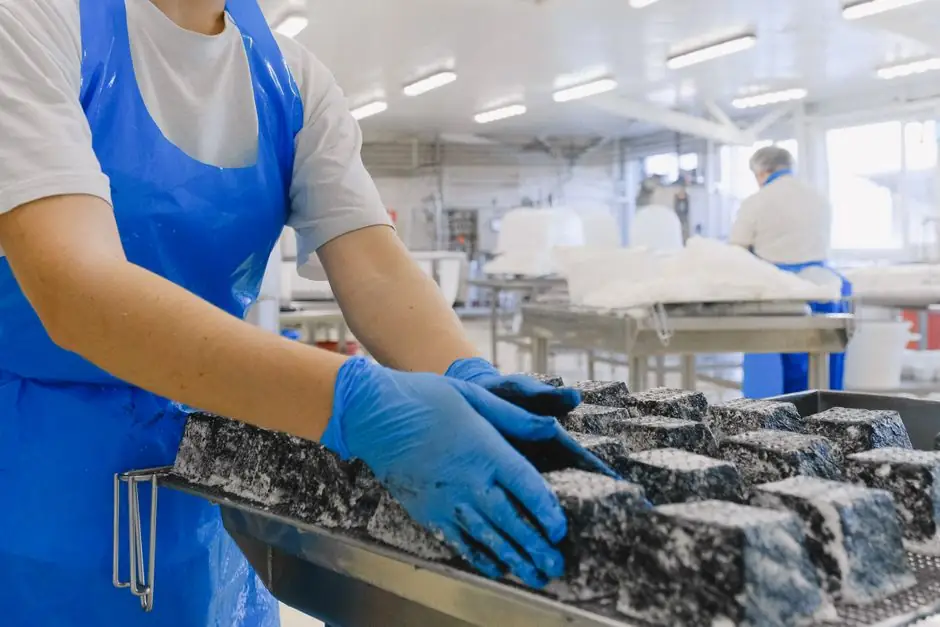
Food processing equipment supply risk in 2026 clusters around three concrete nodes: long-lead stainless fabrication, single-source Chinese extrusion lines at US$28,000-30,000 per set MOQ 1, and cyber-physical shutdown risk on high-volume meat and ready-meal plants [S1][S6].
The risk profile spans nine vertical application silos (salads, vegetables, fruit, ready meals, meat/poultry/fish, plant-based, dairy, desserts, plus custom canned/refrigerated), each demanding overlapping yet distinct machines from optical sorters to UV-C disinfection tunnels and hygienic washdown conveyors [S2][S3].
Where the shortage actually bites in 2026
The 2026 China-origin food machinery price floor is set by compact twin-screw pet-feed lines, with at least one Shandong audited supplier listing a 150 kg/h unit at US$28,000-30,000 per set with a 1-set MOQ, alongside CE marking and a 5.0/5.0 "Fast Dispatch" rating as of July 24, 2026 [S1]. That price band is a useful proxy for the small extruder category, but it also flags a concentration risk: MOQ 1 and a single audited factory mean a buyer cannot dual-source a like-for-like line in under 8-12 weeks without paying a non-trivial premium.
Mid-tier general food processing machinery from Chinese OEMs with 20+ years of operation typically ships 1,000+ cataloged models covering vegetable washers, nut roasters, packaging units, dough sheeters, and turnkey production lines, with customization offered as standard [S7]. This breadth is what absorbs small and mid-cap buyers when a Western OEM slot is unavailable.
For used and refurbished channels, public catalogs of bakery bandsaws, vacuum chambers, dicers, emulsifiers, bone dust removers, deli slicers, and smokehouse equipment remain active, and Cincinnati-based regional distributors continue to service patty machines and grinder-mixers into the US Tri-State after almost 50 years of continuous operation [S4][S5]. Refurb is the de facto shock buffer when new-build lead times slip past a quarter.
Who the 2026 supply risk applies to, and who it does not
The risk profile applies to greenfield processors specifying custom turnkey lines, to operators with single-vendor single-line architectures, and to any plant whose hygienic-handling, optical-sorting, or UV-C disinfection modules rely on one audited OEM [S2][S3].
It does not apply equally to commodity buyers sourcing standardized extruders and washers, who can pivot to 1,000+ model Chinese catalogs with documented 20-year operating histories [S7]. It also does not bite as hard on plants already holding a refurb relationship with established regional distributors handling slicers, grinders, and patty machines, since replacement units for those classes are kept in dealer stock [S4][S5].
Plants exposed to the cyber-shutdown vector (large meat, poultry, and ready-meal processors) sit in a separate risk bucket: a single ransomware event at a Smithfield-, Tyson-, Cargill-, or J USA-scale facility can idle 4-6% of US pork throughput in days, an order of magnitude larger than any mechanical supply gap [S6].
Decision criteria: criteria-based comparison of equipment sourcing options
Four practical decision criteria differentiate the main 2026 sourcing options, and the right answer depends on which risk axis the buyer weights most heavily. The comparison below lines the four channels up against lead time, single-source exposure, cyber-resilience, and unit cost band. [S1]
Option 1, new-build Chinese OEM extruder and turnkey lines: lead time typically 8-16 weeks including FAT, single-source exposure high (1 audited factory per line class), cyber-resilience high (air-gapped OT less likely to be the attack surface), unit cost band US$28,000-30,000 per small extruder set, MOQ 1 [S1][S7]. Option 2, UK/EU specialty hygienic handling and optical sorting: lead time 12-26 weeks due to stainless fabrication queues, single-source exposure medium (multiple EU integrators exist per silo), cyber-resilience high, unit cost band typically 1.5-3x Chinese equivalent for equivalent throughput, MOQ per project [S2]. Option 3, US regional distributor and refurb channel (slicers, grinders, patty machines, smokehouse auxiliaries): lead time 2-6 weeks for in-stock units, single-source exposure low (dealer stock spreads risk), cyber-resilience high (mature electromechanical, minimal networked OT), unit cost band typically 40-70% of new [S4][S5]. Option 4, custom US fabricator for canned, frozen, and refrigerated lines: lead time 16-30 weeks, single-source exposure project-by-project, cyber-resilience high, unit cost band project-quoted, MOQ 1 line [S3].
For buyers who weigh lead time and cost over configurability, Options 1 and 3 dominate. For buyers who weigh configurability and hygienic certification, Options 2 and 4 dominate. The cyber-shutdown node is orthogonal and is not solved by any sourcing choice, only by OT-IT segmentation and incident-response drills [S6].
Standards and specification anchors that matter in 2026
Food-contact stainless selection, hygienic-design weld finish, and ATEX/IECEx zoning for solvent or dust-handling lines remain the three specification anchors most often invoked in 2026 procurement documents. Buyers specifying 304 vs 316L stainless, Ra surface finish below 0.8 micrometer on product-contact surfaces, and IP66/IP69K control enclosures typically reduce commissioning rework by a measurable margin, though the exact reduction is project-specific and not declared in the public material cited here [S2][S3].
Process-side, the 9-silo application map (salads, vegetables, fruit, ready meals, meat/poultry/fish, plant-based, dairy, desserts, canned/refrigerated) carries a recurring set of unit operations: de-watering and drying, optical sorting and foreign-body removal, UV-C disinfection, washing and sanitising, weighing and mixing, weighing/bagging/packaging, slicing and shredding, forming, cooking, peeling, dicing, de-coring, and de-stemming [S2]. Each operation is a single point of failure in a turnkey line, so dual-vendor qualification at the unit-operation level, not just the line level, is the practical mitigation.
For adjacent spec-side context, the lighting equipment and electric lamps category intersects food processing through UV-C disinfection lamp selection (germicidal 254 nm low-pressure mercury vs 222 nm far-UVC excimer), where lamp life, ozone output, and IP rating drive both hygiene claim validity and lamp-replacement spares stocking. The NDT equipment category intersects via weld inspection on hygienic stainless piping, where dye-penetrant or phased-array UT verification of orbital weld seams is often a FAT prerequisite. The switching power supply category intersects through control-panel PSU selection for washdown environments, where IP-rated enclosed PSUs with conformal coating extend mean time between failures in CIP-exposed cabinets.
Failure modes and constraints buyers should price in
Three failure modes dominate 2026 food processing equipment incidents in the public record: (1) single-vendor line stoppage when an audited Chinese OEM slips a FAT date; (2) cyber-induced shutdown at a high-throughput meat or ready-meal plant, capable of removing days of national supply in a single event; (3) stainless-fabrication queue slippage on custom turnkey lines, where lead times of 16-30 weeks have become the working baseline for refrigerated and canned-fruit lines [S1][S3][S6].
Two structural constraints amplify these failures: a low MOQ (often 1 set) on Chinese extruder lines that discourages safety-stock ordering, and a 1,000+ model catalog breadth that paradoxically makes second-source qualification harder because each variant has its own spare-parts tree [S1][S7]. The fix is to qualify a second OEM at the unit-operation level during project execution, not after line acceptance.
Refurb and dealer channels partially absorb the stainless-fabrication and lead-time risks for standardized machines (slicers, grinders, patty formatters, vacuum chambers, deli equipment, smokehouse auxiliaries) but cannot cover optical sorters, UV-C tunnels, or robotic pick-and-place modules, which remain OEM-only [S4][S5].
Trackable signals for the next procurement cycle
Three signals are worth tracking into the next 90-180 days: (a) any change to the CE-marked, US$28,000-30,000, MOQ-1 extruder price band on Made-in-China.com, which functions as a small-line price floor; (b) any disclosure of additional audited Chinese OEM capacity beyond the current 1,000+ model catalog, which would loosen the single-source exposure on small extruders and turnkey lines; (c) any post-incident OT-IT segmentation disclosure from a US meat or ready-meal major, which would shift the cyber-shutdown risk premium across the sector [S1][S6][S7]. For buyers cross-qualifying equipment classes, the food processing equipment supply chain 2026: spec anchors and shock buffers companion map lines up the unit-operation-by-unit-operation second-source gates, while the food-grade ball bearing selection: material, lubricant, and seal gates reference covers the bearing and seal spec gates that quietly govern MTBF on hygienic conveyors and mixers.