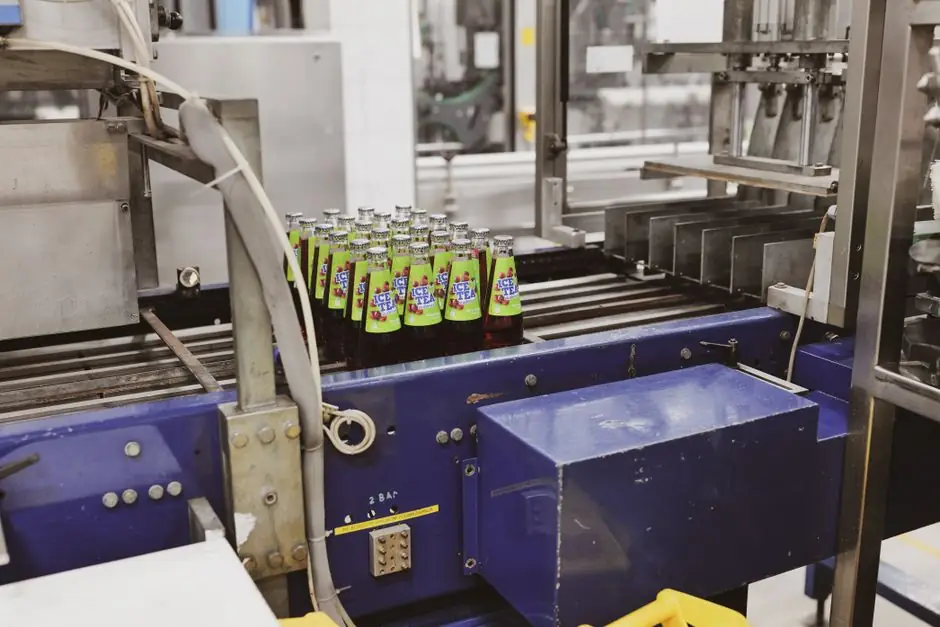
Optical sorting, UV-C disinfection, and robotic forming lines dominate the 2026 fresh-produce and ready-meal equipment mix, with vendors TOMRA, BBC Technologies, Lingwood, Provisur, and Nothum all publishing line-integration references within the last six months [S1][S3][S5][S6].
Supply diversity across origins is the cheapest shock absorber available: empirical work on US metropolitan food inflows shows that boosting supply chain diversity raises resistance to mild-to-moderate food shocks by up to 15%, on an intensity-duration-frequency model (Nature 2021) [S2]. For equipment buyers, the operational translation is: dual-source at least the critical sub-systems (sorting, washing, weighing) so a single OEM outage cannot halt a line.
Core equipment categories and what they actually do
The 2026 fresh-produce line is built from roughly eleven recurring unit operations, and Lingwood's published application map lists them across salads, vegetables, fruit, ready meals, meat/poultry/fish, plant-based, cheese/dairy, and desserts: de-coring, de-watering and drying, hygienic handling, optical sorting and foreign-body removal, projects/robotics/automation, slicing and shredding, UV-C disinfection, washing and sanitising, weighing and mixing, weighing/bagging/packaging, and forming [S1].
For fruit specifically, the Lingwood catalogue adds de-stemming, peeling and zesting, plus special cuts (wedges, fingers), while meat/poultry/fish and plant-based lines drop peeling entirely and lean on forming, cooking, and dicing [S1]. The implication for spec sheets: a single piece of equipment rarely covers a full product matrix, and a 5-axis robotic cell typically substitutes for several mechanical units when SKU count exceeds roughly twenty variants.
Selection criteria: throughput, hygienic design, sensor type
Three specifications decide most 2026 line builds: hourly throughput in kg/h on a defined product, hygienic-zone compliance (open-frame vs fully enclosed stainless with wash-down rating), and the sensing modality on the sorter (laser, near-infrared, camera-based, or multi-sensor fusion) [S1][S3].
Optical sorters are positioned by suppliers as the line's primary foreign-body and quality gate: TOMRA's published material describes millions of individual product items plus many unwanted materials passing a line per hour, which is why "accurate, fast, and robust" sorting is treated as a hard requirement rather than an upgrade [S3]. UV-C disinfection is now listed as a standard option on every Lingwood product matrix, including ready meals, desserts, and plant-based lines, indicating it has moved from niche to baseline in 2026 catalogues [S1].
Integration pattern: optical sorting plus robotic forming plus UV-C
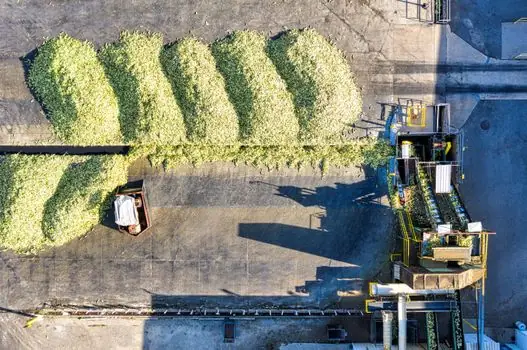
The dominant 2026 architecture is a three-block sequence: optical sort and grade, robotic form/cut, then UV-C or wash-and-sanitise, before weigh and pack. Used-equipment listings on MMEq for 2026-08-07 confirm slicers, dicers, batter/breading systems, and cook-and-chill skids remain the highest-turnover used assets, with a 2026-vintage Urschel Diversacut 2110A dicer and a GROTE 613 VS2 slicer as the current top-of-list references [S5].
Integration partnerships are visible: foodprocessing.com.au reported on 2026-07-31 that Provisur and Nothum are partnering on integrated food processing lines, while a separate feature covers a blueberry packing house that automated optical sorting after a capacity expansion [S6]. For specifiers, the practical gate is matching the sorter reject rate and the robotic pick rate against the upstream peeling or de-coring capacity; the bottleneck is rarely the sorter itself but the singulator feeding it.
Shock absorption: dual-sourcing and capacity tiering
Per the Nature 2021 finding, food supply chain diversity buffers cities against food shocks [S2]. Translating that to equipment: a plant that sources slicers, dicers, and sorters from a single vendor carries the analogue of a low-diversity supply chain, because one firmware update, one regulatory recall, or one factory fire can idle the whole line.
MMEq's 2026-08-07 used-equipment feed illustrates the secondary market that supports dual-sourcing: AMEA-certified appraisals, Lyco cook-and-chill systems, and Nothum 40-inch batter/breading units appear alongside ADCO horizontal cartoning skids, giving buyers a path to add a parallel sub-system without paying new-OEM lead-times [S5]. Spec-first selection rules for this market are the same as for new equipment: hygienic rating first, throughput second, sensor type third, brand last.
Comparison: in-house line build vs integrated OEM partnership
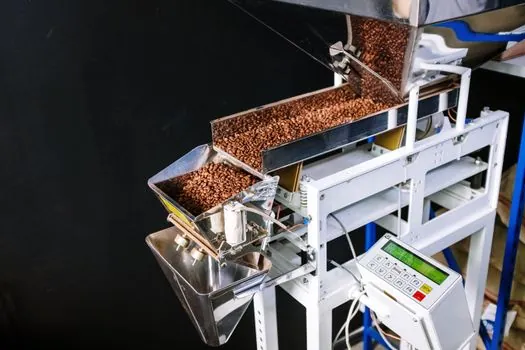
Two sourcing models dominate 2026 fresh-produce capex, and the decision criteria differ. The in-house multi-vendor build scores higher on parts commonality and on supplier diversity (lower shock risk per the Nature 2021 model) [S2], while the integrated OEM partnership (for example, Provisur plus Nothum on a single processing train) scores higher on commissioning speed and on single-point warranty accountability [S6].
For plants running more than five SKUs on a single line, the integrated partnership typically wins because changeover time is governed by the slowest unit, and an OEM that owns the whole train can re-balance setpoints in one control system rather than across three [S6]. For plants in climates or product categories prone to supply disruption, the in-house multi-vendor build is the lower-tail-risk choice, because it directly raises the equivalent of "supply chain diversity" inside the equipment base, not just inside the raw-material base [S2].
Standards, sourcing, and the audit trail
3-A Sanitary Standards remain the dominant hygienic-equipment authorisation for North American dairy and liquid-food fillers, with bag-in-box filler authorisations actively published for high-acid, low-acid, and ESL product classes (Made-in-China resources, historical industry feed) [S4]. For foreign-body and metal detection, equipment listings on MMEq in 2026-08-07 explicitly cite metal detectors as a top-three popular category alongside packaging and grinders, confirming that inspection is a primary, not secondary, equipment line in 2026 [S5].
Optical sorters increasingly carry supplier-side data layers (real-time line settings, raw-material analytics) that double as audit evidence for HACCP and retailer compliance schemes; TOMRA's 2026 product literature states explicitly that data gathered by its machines "can lead to valuable efficiency improvements" and supports "real-time" line-setting optimisation [S3]. For procurement, the audit-trail value of a sensor-rich line is now a hard spec point, not a marketing add-on, and should be priced into the tender evaluation alongside throughput and hygienic rating.
Failure modes and constraints to spec in

Three failure modes recur in 2026 equipment bids: wash-down corrosion on sub-stainless sub-frames, sensor fouling on optical sorters processing high-soil-load product, and control-system lock-in on lines that share one HMI across multiple OEM sub-systems [S1][S3][S5]. The first is mitigated by specifying full-316L contact surfaces and IP66/67 control enclosures, the second by specifying clean-in-place spray bars at each sorter infeed, and the third by insisting on open protocols (OPC UA or Modbus TCP) at the HMI layer before signing the PO.
Used-equipment appraisals are a useful hedge: MMEq's 2026-08-07 listings show cook-and-chill systems, dicers, and slicers with full appraisal certificates (AMEA) available, which is the only documented way to verify hygienic and electrical condition on a second-hand asset [S5]. For shock-sensitive product categories, the operating rule is to keep at least one sub-system on a separate OEM and a separate service contract, mirroring the supply-diversity principle that the Nature IDF model quantifies at the city level [S2].
Trackable signals into late 2026: any new Provisur-Nothum line commissioning press release, additional 3-A authorisations on bag-in-box fillers from secondary vendors (Scholle IPN remains the named reference) [S4], and the next quarterly TOMRA service bulletin covering sorter firmware revisions. Plants that have not yet dual-sourced at least the sorter and the forming cell should add this to the 2026 capex list, as the IDF-model evidence suggests the cost of inaction scales with single-vendor exposure.
Component reference pages worth checking: ndt equipment, anti static equipment, and lighting equipment and electric lamps.
For related coverage, see Robotics demand 2026 to 2030: spec anchors for AUV, service, and metamaterial sub-systems.