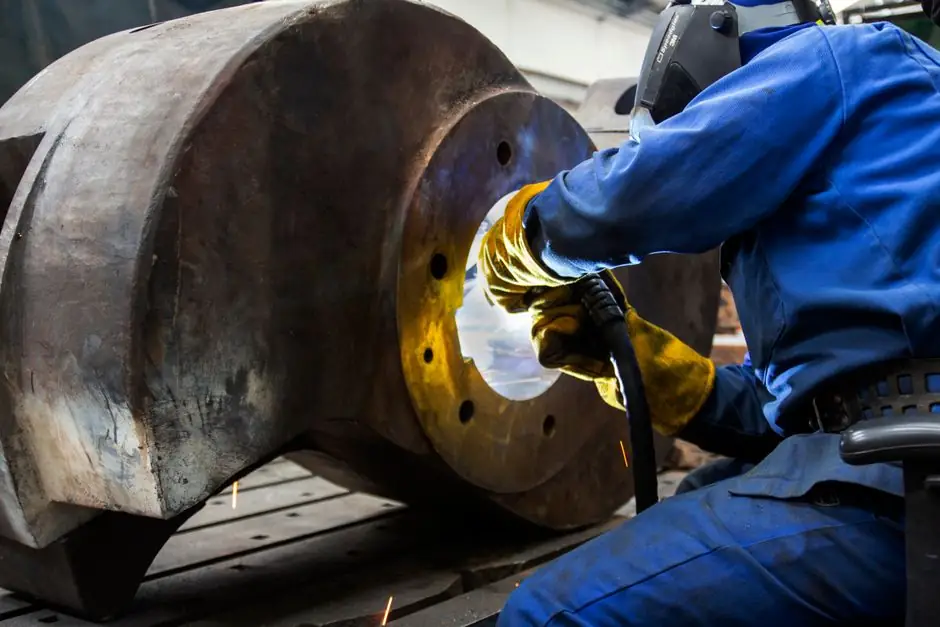
A radial spherical plain bearing is defined by a convex inner ring running in a concave outer ring, with the two surfaces sliding directly against each other, no rolling elements involved, and dimensional conformance governed by DIN ISO 12240-1 [S1][S3].
The two dominant radial-race construction routes, swaged (formed) and loader-slot (fully machined), diverge on contact area, assembly method, motion envelope, and maintenance access, and that divergence is what drives selection on hydraulic cylinders, suspension links, and heavy-machinery pivot points [S5][S2].
Formed (Swaged) Construction: Process and Resulting Geometry
Swaged sphericals are built by cold-forming a ductile race around a hardened ball, then machining the race and loosening the assembly to set clearance or torque before finish grinding [S5].
The process produces 80% to 100% contact between the race I.D. and the ball O.D., and that near-full conformity is what allows all-metal variants to take very high static loads and PTFE- or beryllium-copper-lined variants to handle high static and dynamic loads [S5]. Standard swaging assumes a symmetrical race; where a flange or one-sided overhang prevents symmetric double swaging, a pre-form design is used: the obstructed side is machined and ground, the opposite side is swaged [S5].
Machined (Loader-Slot) Construction: Process and Resulting Geometry
A loader-slot bearing is a non-swaged radial spherical plain bearing whose spherical race I.D. is fully machined, case hardened, and lapped, with two entry slots cut 180° apart into one face of the race to admit the ball during assembly [S5].
The slot sacrifices a small amount of race surface area but unlocks four engineering capabilities that swaging cannot: non-swageable race materials (e.g. certain stainless or tool-steel grades) become usable; the race I.D. can be nitrided, plated, or otherwise surface-enhanced for wear resistance; the ball can be replaced in the field without removing the housing, cutting downtime on aerospace and heavy-equipment pivots; and the lapped race can be held to a very close ball-to-race conformity tolerance, with an off-center slot intersection used to create a slight interference (pop-in) that keeps the ball from dropping out during shipping [S5]. The NHBB reference also states that entry slots should be oriented 90° with respect to the load, and that this construction is generally recommended for vibratory or static loads with small relative motion, not for moderate-to-high relative motion under load, where it exhibits high friction and excessive wear [S5].
Contact Area, Load, and Motion: How the Two Compare

On the four criteria a process engineer actually weighs, formed and machined radial spherical plain bearings line up as follows. Contact area: formed 80–100% ball-to-race conformity, machined close-tolerance but interrupted by two 180° entry slots [S5]. Static load capacity: formed is the higher of the two because of full contact, machined is lower per unit size but adequate for most vibratory service [S5]. Relative-motion tolerance: formed handles medium sliding speeds and alternating loads with relubrication, machined is restricted to small relative motion under load, otherwise friction and wear rise sharply [S5][S1]. Maintenance access: formed is a one-piece assembly, machined allows on-wing / in-housing ball replacement through the slot [S5].
For comparison context inside the broader plain-bearing family, the same spherical-pair principle (convex inner, concave outer) is used across geometries that show up in construction machinery and equipment, where formed races dominate high-load pivots and machined loader-slot races dominate articulated steering and outrigger joints that see vibration more than continuous oscillation.
Material and Lubrication Pairings Shared by Both Constructions
Construction route does not dictate friction pairing. Steel/bronze, steel/steel, and steel/PTFE are the three standard pairings, and they behave the same regardless of whether the race was swaged or machined [S1]. Steel/bronze and steel/steel require a lubricant film and periodic relubrication; they tolerate alternating loads, medium-to-large swivel movements, and medium sliding speeds [S1]. Steel/PTFE film is maintenance-free, preferred for one-sided loads and small-to-medium impact, with the specified maximum tilt angle treated as a hard limit [S1].
Where the construction route does change material choice is on the race itself: machined loader-slot races can be specified in non-swageable alloys and can receive post-machining surface treatments (nitriding, plating) that swaged ductile races cannot, because those treatments would compromise the cold-formability the swaging process depends on [S5].
Where Each Construction Wins in Practice
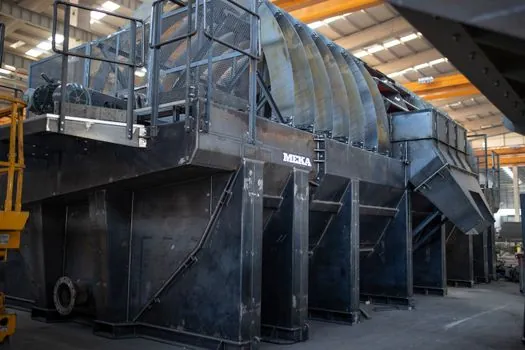
Formed (swaged) bearings are the right pick when the load is heavy and predominantly static or slowly alternating, the swivel angle is medium to large, and the assembly can be built up as a single unit during manufacture: hydraulic-cylinder rod ends, agricultural and construction-machine linkages, and heavy-duty suspension pivots [S1][S5].
Machined (loader-slot) bearings are the right pick when the application is vibratory or near-static with small relative motion, when the ball is expected to wear faster than the race and field replacement is a maintenance priority, when the required race material cannot be swaged, or when lot size and traceability favour a fully machined, individually inspected part: aerospace flight-control and landing-link pivots, outrigger pads on mobile equipment, and instrumented test rigs [S5]. For adjacent decisions on whether a spherical plain bearing is even the right starting point versus a rolling-element ball bearing, the rule of thumb is that plain bearings win wherever misalignment is part of the operating envelope and speed is low to moderate, while ball bearings win wherever speed is high and the load direction is well controlled [S2].
Standards, Sizing, and a Trackable Next Signal
Both construction routes fall under DIN ISO 12240-1, which sets dimensional series (K, E, G, W and similar), tolerances, and radial internal clearance, but leaves friction pairings, materials, surface treatments, load ratings, and service-life calculations to the manufacturer [S1]. That is why a process engineer cannot swap brands on rated load alone; static and dynamic load ratings are vendor-stated, not standard-stated, even when the envelope dimensions match [S1].
Trackable next signals: confirm on the chosen vendor's drawing whether the radial internal clearance group and the tilt-angle limit are stated to DIN ISO 12240-1 or to the vendor's house standard, and request the ball-to-race conformity percentage (formed only) and the entry-slot orientation (machined only) in writing, since both numbers directly predict service life and are the two specifications most often left off informal purchase orders.
This topic is covered further in EVA vs Metallocene vs PUR Hot Melt: Decision Map for Industrial Specifiers.