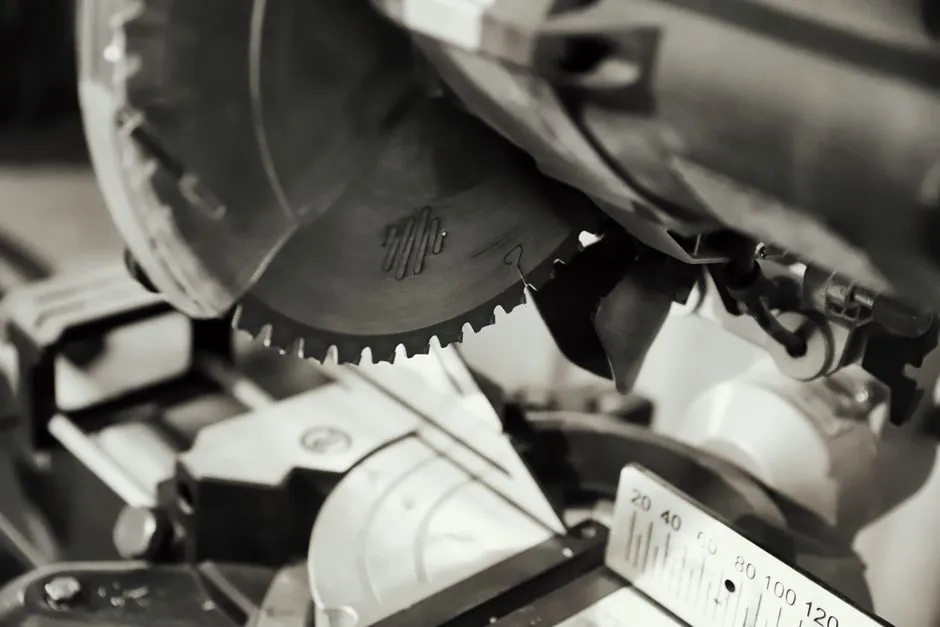
A conventional band saw normally gives the more accurate, repeatable riser cut, while a friction saw uses heat-assisted cutting to contour tougher material with less down drag and support.
Practical guidance suggests starting at 10,000 ft/min, which is about 2,400 rpm on a 16-inch saw [S2].
Decision Criteria for Riser Cutting
A friction saw is mechanically distinct from ordinary band sawing: heat is generated immediately ahead of the blade edge to soften or melt material, whereas conventional band sawing removes material through a continuously moving toothed blade [S1]. Band saws use a long, continuous blade running around two opposing wheels, while the cited friction-saw source describes friction cutting with a band tool on a band saw [S1][S3].
For steel risers, compare the options on four criteria. Conventional band sawing offers better dimensional control, a broad range of toothed-blade options, and lower setup time for one-off cuts. Friction sawing offers contouring and low down drag, but demands higher speed, power, and structural stiffness. CNC band sawing adds programmability for repeated profiles, whereas manual bandsaws win when setup time dominates a short run [S4].
Friction cutting can reduce the horsepower required for a given tough-material cut, contour cutting is possible, the thin band produces less kerf than a circular blade, and irregular pieces can be cut with little support because down drag and pull are minimal [S3]. Those benefits do not make friction sawing the default for accurate production risers.
Accuracy, Geometry, and Production Fit
Conventional band sawing is the safer specification for risers requiring controlled length, flat reference faces, or repeatable root geometry. Band saws use a long continuous blade over two opposing wheels and support vertical, horizontal, and 45-degree work orientations [S1]. Their cutting action is suited to precise profiles and mixed materials including wood, metal, and plastic [S1].
Friction sawing is justified when the riser profile is irregular, contouring is required, and the workpiece is sufficiently hard for heat-assisted cutting to be advantageous. The manufacturer description identifies three specific benefits: lower horsepower requirement than conventional cutting, contour capability, and a narrower kerf than circular blades [S3].
For repeated parts, CNC control can improve cut consistency and allow a programmed profile to run while downstream work proceeds, but setup and programming time can exceed the cycle time of a one-off bandsaw cut [S4]. A manual riser-cutting machine therefore remains economically attractive for low-volume work, while CNC band sawing fits repeat profiles and larger queues [S4].
Speed, Power, and Machine Rigidity
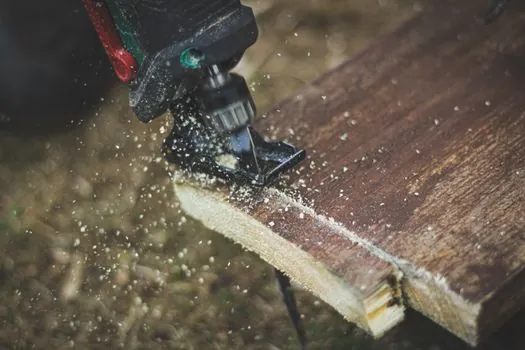
Practical guidance suggests starting at 10,000 ft/min, which is about 2,400 rpm on a 16-inch saw [S2].
For a 16-inch saw, 10,000 ft/min is stated to be about 2,400 rpm [S2]. The frame, wheels, blade tension, drive, and feed force must therefore be evaluated together rather than by motor horsepower alone.
A stock machine with insufficient mass may lack the rigidity to maintain a stable cut, and converted guides and tires must also tolerate the heat and sparks generated at the wheel surface [S2].
Material, Finish, and Failure Modes
Friction sawing works by concentrating frictional heat in the kerf. Heat generated by friction depends on pressure, the kind of material, and the distance moved, and is not affected by speed [S3]. A toothed blade is more successful than a solid band because operator pressure is transmitted to the teeth making contact with the work [S3].
The surrounding riser wall can therefore lose heat or suffer dimensional distortion if pressure, speed, feed, or blade condition is unsuitable. Friction sawing also produces sparks and demands attention to noise, guarding, and operator exposure [S2].
Blade condition must be evaluated differently from ordinary sawing. Nevertheless, replacing the blade after every short cut negates much of the economic purpose of the friction process.
Circular Saw Alternatives and Riser Workloads

A circular cold saw is a separate option from a friction band saw. Circular cold saws deliver high cutting speed and good finish, while band saws are generally less expensive and offer greater flexibility for larger capacity, layer cutting, and bundled work [S5]. Circular saw capacity commonly falls between 5 and 6 inches, while workpieces from 1 to 5 inches can be handled by either technology, depending on grade, finish, and production requirements [S5].
For riser stock, a circular cold saw is attractive where finish is critical and the geometry permits entry and exit without unusual contouring. Band saws suit longer parts, bundles, and profiles that would require costly circular-blade changes [S5]. Friction sawing adds heat-assisted contour capability, but its high-speed drive and structural requirements shift the comparison toward a dedicated machine rather than a routine shop upgrade [S2].
Do not treat a standard abrasive band and a friction band as interchangeable tooling. An abrasive wheel and bi-metal band saw comparison covers conventional cutting economics, while a friction band requires a heat-tolerant configuration and a different operating strategy [S2][S3].
Specification and Purchasing Check
Specify a conventional band saw when the riser job needs accurate, repeatable cuts, short setup, or mixed stock sizes. Require a friction saw only when the workpiece is hard enough to benefit from heat softening, contouring is required, and the machine can sustain approximately 10,000–15,000 ft/min with adequate power and frame rigidity [S1][S2].
For a conventional riser saw, evaluate capacity, blade speed range, horsepower, feed control, vise pressure, and the machine’s ability to hold the work square. A CNC option is justified when the same profile repeats often enough to recover programming time; otherwise, manual band sawing remains faster from setup through completed cut [S4].
For a friction saw, verify the OEM blade speed range, drive rating, wheel and guide materials, tire condition, frame mass, guarding, and extraction provisions. Do not approve a lightweight conversion based only on motor horsepower, because bending losses and blade forces at 10,000–15,000 ft/min can overwhelm an undersized frame [S2].
Track two signals before committing: actual cycle time on representative riser stock, including setup and finishing, and dimensional loss or discoloration immediately outside the kerf. These measurements distinguish a productive thermal cut from a machine that merely produces faster nominal cutting speed.