
An electronic-fuse installation for 50 industrial 24 V DC circuits achieved a 14-month payback and a net five-year saving of €7,994.50 against conventional gG fuses in a representative cabinet analysis [S1].
The comparison covers 50 mixed-load channels, 6 fault events per year, €500 per hour of downtime, €65 per technician-hour and a 60-month analysis horizon at a 0% discount rate [S1].
Scope and Cost Boundary for Fuse TCO
Fuse total cost of ownership covers acquisition, installation, operation, replacement and end-of-life costs rather than the purchase price alone [S2][S3]. For circuit protection, the relevant boundary includes fuse hardware, spare stock, installation labour, fault diagnosis, production loss, replacement work and periodic maintenance.
The reference model protects 25 channels at 2 A, 15 channels at 4 A and 10 channels at 6 A, serving sensors, actuators, valves, small motors and drives in a 24 V DC control cabinet [S1]. The conventional-fuse scheme had a 5-year TCO of €13,354.50 and an initial cost of €612 [S1].
This boundary fits a conventional gG-fuse review and an eFuse business case, but it does not cover every protection architecture. Circuit breakers, coordinated fuses and other panel-protection designs require separate models because their replacement mechanisms and fault-isolation characteristics differ.
What Drives Fuse Ownership Cost
The conventional-fuse case allocated €225 to 50 DIN-rail holders, €62 to 35 fuses plus 20 spares, and €325 to 5 installation hours at €65 per hour, producing a €612 initial cost [S1]. The eFuse arrangement required 13 four-channel modules, 12 full modules and one module for the remaining 2 channels [S1].
Each conventional fault event generated €424.75: €48.75 for 45 minutes of diagnosis, €375 for 45 minutes of production downtime and €1 for one replacement fuse [S1]. Across 6 events annually, that became €2,548.50 per year and €12,742.50 over 5 years [S1].
These inputs show the cost hierarchy clearly. Device price is one variable, while diagnostic time, production interruption and skilled labour determine whether a protection technology has an economic case. A TCO estimator used for sourcing decisions can evaluate 30 cost factors and produce a 5-year forecast, illustrating the need to separate acquisition cost from operating and risk costs [S5].
Conventional and Electronic Fuse Comparison
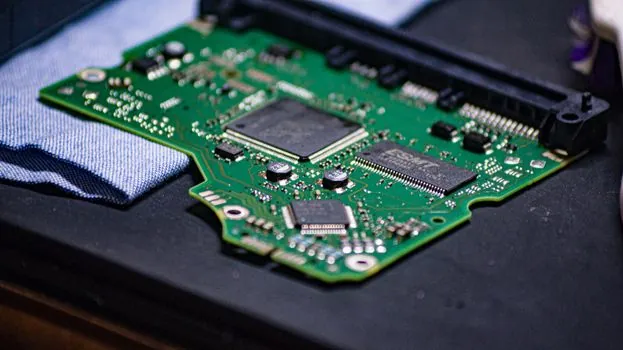
Conventional gG fuses offered the lower first cost at €612, while electronic fuses added hardware and commissioning cost but reduced diagnostic and downtime exposure through fault indication [S1]. In the 50-channel model, the electronic option recovered its incremental cost in 14 months and delivered a €7,994.50 net saving over 5 years [S1].
The 14-month result depends on exposure, not on a universal eFuse premium. Six faults per year at €500 per hour create a large recurring cost pool, while the conventional circuit assumes 45 minutes of diagnosis for every event [S1]. A lower fault frequency, lower downtime value, fewer channels or longer fault location can shorten or eliminate the payback.
Application, Suitability and Operating Limits
The economic case is strongest for 24 V DC control cabinets with many independently protected loads, frequent blown-fuse events and expensive production interruptions. The 50-channel cabinet in the analysis included sensors, valves and small motors, which makes channel-level fault identification operationally relevant [S1].
An electronic fuse is less compelling for a low-criticality auxiliary circuit with rare faults, low outage cost and no requirement for rapid fault location. It is also unsuitable where the protection design requires the specific time-current behaviour, coordination and interruption ratings of a tested fuse type, unless the electronic device has been validated for that duty.
The analysis used a 0% discount rate over 60 months and described discounting as a conservative simplification because its stated result would be more favourable for the electronic option [S1]. This matters: a 5-year nominal comparison makes later savings look larger in present-value terms, while a discounted model reduces their contribution. Installation labour, spares and replacement strategy must still be priced from the actual project.
Maintenance, Energy and Lifecycle Effects

Total maintenance cost includes preventive inspections, fault replacement, diagnostic labour and spare-parts management, not only the purchase of replacement devices [S6][S7]. For conventional fuses, the modelled annual operating cost was €2,548.50 for 6 events, of which €292.50 was diagnosis labour, €2,250 was downtime and €6 was replacement and stock [S1].
Electronic-fuse modules still require commissioning, correct current setting, functional testing and periodic inspection. Their energy use and failure consequences should be added to the site model rather than assumed negligible.
A practical TCO workbook should separate acquisition, installation, recurring operation, planned maintenance, failure response, upgrades and disposal value [S2][S3]. It should also record the actual number of channels, fault rate, diagnosis time, labour rate, downtime rate, replacement cycle, spare quantity, commissioning hours and discount rate, matching the 10 principal assumptions that determine the modelled result [S1].
Standards, Failure Modes and Sourcing Discipline
Fuse selection must be validated against the protected load, available fault current, interrupting rating, current-time characteristic and coordination with upstream and downstream protection. A TCO model cannot compensate for an electrically unsuitable device, so technical approval must precede financial comparison. [S1]
The reference case used gG fuses for conventional protection and electronic modules for the alternative, but the extracted source does not assign a specific IEC coordination or interruption standard to either option [S1]. Product selection should therefore rely on the manufacturer’s certified data for the exact current rating, 24 V DC voltage, load type, fault duty and environmental conditions.
Major failure modes to include in sensitivity testing are nuisance coordination, inadequate breaking capacity, incorrect current setting, connector or wiring faults, module power loss and loss of local fault indication. Each should have a recorded response: replacement, reset, reconfiguration or repair. This converts the spreadsheet from a price comparison into an engineering support document, consistent with the definition of TCO as lifecycle ownership rather than acquisition cost [S2][S9].
Closing verification should track 3 operational data points: faults per 1,000 protected channels, mean time to diagnose and isolate each fault, and production minutes lost per fault. Recalculate the model after 6 months and after 12 months, then replace the six-event assumption, €500 hourly outage cost and 45-minute diagnosis assumption with measured values before approving or rejecting the eFuse upgrade.