
A distribution cabinet TCO analysis must price acquisition, installation, operation, maintenance, downtime, energy, and disposal over the planned service life rather than compare cabinet quotations alone.
The sources discuss total cost of ownership for distribution transformers, electronics manufacturing, and industrial cabinets, but do not establish a low-voltage assembly methodology with component and ownership-period cost categories.
What Distribution Cabinet TCO Includes
Distribution cabinet TCO is the sum of initial purchase cost and lifetime operational and maintenance costs, with replacement or upgrade costs and decommissioning included where they occur [S3][S5]. For an electrical cabinet, acquisition cost includes the enclosure, mounted equipment, internal power-distribution components, freight, duties, customs clearance, packaging, warehousing, and installation engineering.
The same boundary must apply to every candidate, otherwise the lowest-priced cabinet can be compared against an incomplete operating budget [S3][S10].
The financial calculation should also record purchase price, acquisition expense, service-life operating costs, and residual or disposal value. Total cost of ownership is a financial estimate that includes the direct and indirect costs of owning a product or service, and ownership costs are significantly greater than the cost of purchasing or acquiring it [S3].
Cost Drivers Behind the Quotation
Shipping terms matter because freight, handling, insurance, duties, customs clearance, and carrying costs belong in landed cost rather than being treated as exceptions after award [S4].
The enclosure concept also affects inspection access, cable entry, gland installation, component replacement, and space utilization. For applications built around a fixed incoming supply and outgoing feeders, the distribution cabinet form factor provides a useful hardware baseline for that estimate.
Compare Configurations by Four Criteria
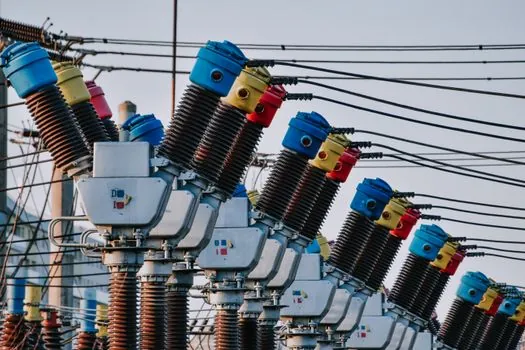
A low-voltage distribution cabinet, an MCC section, and a busway-connected arrangement may serve different functions, so the comparison must remain functional before it becomes financial. [S3]
For established feeder and protection layouts, a conventional cable distribution cabinet may offer the simplest basis for a like-for-like estimate. Where motor control is central, the MCC cabinet category adds a different maintenance and operating burden, so its cost model must not be blended with a standard distribution-board quotation.
Installation, Energy, and Downtime Drive TCO
Installation can include site delivery, rigging, positioning, anchoring, cable termination, gland installation, electrical connection, protective-device configuration, testing, labeling, documentation, and commissioning. Each activity needs labor hours, a labor rate, travel or specialist-service charges, and any shutdown coordination cost. A cabinet that arrives without tested drawings or complete documentation can consume field engineering hours that do not appear in the equipment price [S4][S10].
The cabinet comparison should not be used to infer transformer efficiency because the transformer is a separate asset with its own loss profile.
Downtime is the financial consequence of failure, not a spare-parts line alone. The model should estimate expected incident frequency, labor to diagnose and restore service, parts consumption, temporary protection or bypass, production interruption, and the value of lost service. The transformer procurement guide demonstrates why lifetime operating cost can dominate acquisition cost: for distribution transformers, future electrical losses can reach four times the purchase cost, even though transformers commonly remain in service for 30 years or more [S2]. The same discipline, applied to cabinet failure and maintenance exposure, prevents a low purchase price from obscuring downstream operational cost.
Maintenance, Spares, and Failure Modes
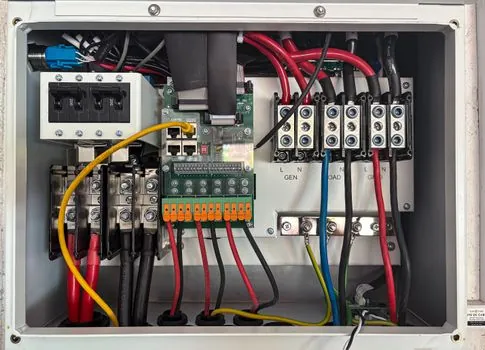
Preventive maintenance should include scheduled inspection, contactor or mechanism service where applicable, cleaning, torque verification, thermal assessment, terminal checks, label verification, and correction of operational defects. A related surge protective device TCO lifecycle analysis is useful where downstream protection affects cabinet availability, because surge events add inspection and replacement costs beyond routine maintenance. [S3]
Failure modes should be translated into cost drivers. Contact welding can require corrective switching and equipment inspection. Loose power connections can produce localized heating and urgent isolation. Failed ventilation or heaters can raise component temperatures and accelerate degradation. Damaged glands or seals can permit moisture ingress. Corrosion can increase maintenance frequency, while incomplete documentation can prolong troubleshooting after a fault or replacement [S5].
The criticality weight belongs in the calculation. A cabinet serving production-critical loads can justify greater redundancy, surge mitigation, remote indication, or premium protection than the same cabinet serving low-impact auxiliary loads. This is not a universal quality premium; it is a risk-adjusted ownership decision. The fuse and distribution cabinet specifications can be evaluated on replacement coordination, fault-current performance, and service support rather than unit price alone.
Build a Procurement-Grade TCO Model
A procurement-grade model separates hard cash costs from risk allowances and records every assumption in one worksheet. The basic formula is TCO = initial acquisition cost plus installation and operating costs, plus maintenance and downtime, plus replacement and decommissioning, less residual value. Acquisition includes equipment, freight, duties, taxes, packaging, handling, storage, and engineering; installation includes labor, travel, testing, commissioning, and shutdown coordination. [S4]
Operating costs include energy, cleaning, inspection, preventive maintenance, spare parts, replacement devices, software or communications subscriptions where applicable, and internal labor. Downtime includes lost production or service, restoration labor, temporary measures, and expedited replacement. Replacement reflects the estimated next purchase and installation cycle rather than merely multiplying the original price by a generic life factor. The result must be discounted consistently, with residual value deducted at the end of the selected study period [S3][S10].
Transformer procurement provides a useful process precedent because the IEC TCO methodology capitalizes future losses and can be applied from small distribution units through large network and transmission transformers [S2]. The governing equations and methodology for that transformer application are published in IEC TS 60076-20, Annex A [S2]. Cabinet buyers can adopt the discipline of capitalizing future operating costs without claiming that a transformer-specific standard governs enclosure selection.
Who Benefits and What the Model Must Not Hide
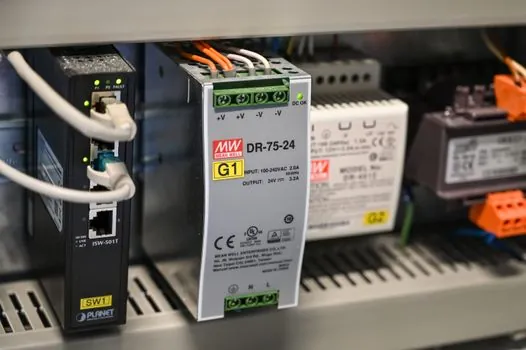
TCO is suited to owners replacing installed cabinets, facilities standardizing equipment, engineering teams comparing enclosure and protection architectures, and procurement teams evaluating supplier proposals over multiple service years. It is also suitable for assessing proposed power distribution box upgrades where installation, protection coordination, and downtime carry material cost. [S3]
Nor should an assumed service life conceal unresolved duty-cycle, environmental, or maintenance uncertainty. The busway alternative requires its own interface, access, cleaning, and load-continuity assumptions rather than inheriting the cabinet maintenance profile.
The model must expose exclusions and prevent false precision. If inputs differ between proposals, the comparison is invalid until they are normalized. A calculated TCO is a decision aid with stated assumptions, not a substitute for qualified design review.
The next control point is the completed cost-boundary sheet: reconcile each bidder quotation to the same equipment scope, require quantified freight and installation inputs, attach duty-cycle and maintenance assumptions, and document the residual-value basis.