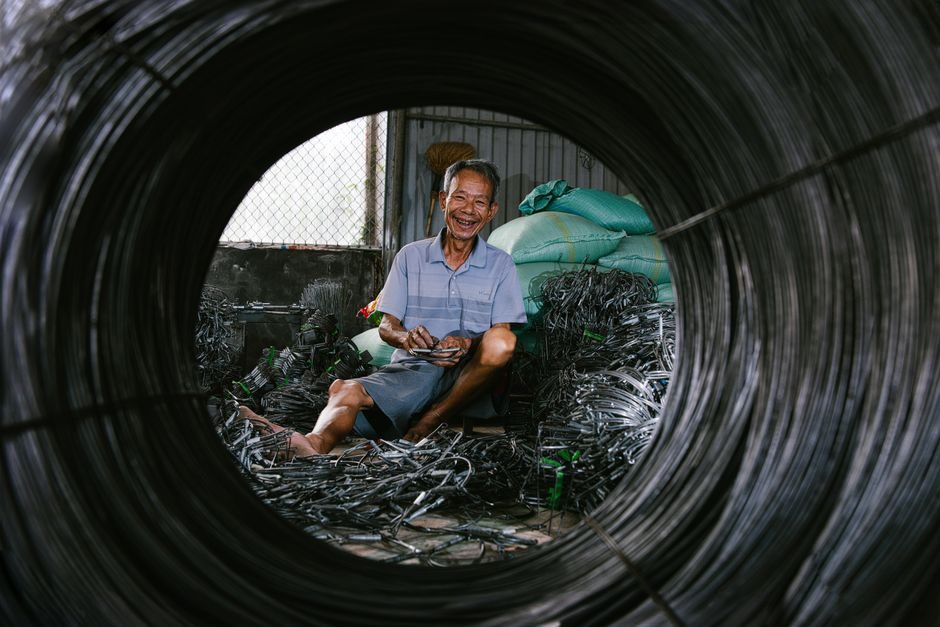
Chinese export listings for hot-dip galvanized steel coil cluster in a US$840-880/t FOB band on made-in-China.com, with a 50 m.t. MOQ and 10,000 m.t./month supply capability typical on B2B trading platforms [S3][S6].
The price spread is driven less by steel substrate and more by zinc coating mass, surface finish, and whether the order is mill-direct or via a trading house, with the same Dx51d grade frequently quoted across that band [S3][S6]. For buyers comparing offers on the same spec sheet, the difference between US$840/t and US$880/t is usually zinc weight, spangle, and passivation chemistry rather than base carbon steel chemistry.
What You Are Actually Buying: Substrate, Coating, and Spangle
A "galvanized steel coil" is a cold-rolled or hot-rolled steel substrate — most commonly carbon steel grades such as DC01, SPCC, or the workhorse Dx51d — run through a continuous hot-dip zinc bath that metallurgically bonds a zinc layer to the surface [S3]. Coating weight is sold as total zinc mass per square metre of sheet, and the standard commercial windows are Z40 (≈40 g/m²/side, light/utility), Z100, Z180, Z225, up to Z275 (≈275 g/m²/side, the upper bracket for outdoor structural and roofing use) [S1][S3].
On CAMELSTEEL's product line, the SGCC hot-dipped galvanized corrugated sheet and the Z40 g/sm hot-dipped galvanized plate sit at the low-zinc utility end, while colour-coated galvanized sheet in the 0.12-1.5 mm thickness range shows the typical downstream conversion that adds paint, ink, and embossing cost on top of the zinc [S1]. The base zinc layer is the single biggest cost driver in the coil itself: each step from Z40 to Z275 roughly doubles the metallic zinc content per tonne of steel, and zinc LME pricing flows almost directly into the coil quote.
Main Product Types: GI, GL, ZM, and Prepainted
Four families dominate the Chinese supplier landscape, and they do not price the same. Hot-dip GI (pure zinc coating) is the baseline; Galvalume GL replaces part of the zinc with aluminium (typically 55% Al / 43.4% Zn / 1.6% Si) for better cut-edge and heat resistance; Zinc-Aluminium-Magnesium (ZM/ZAM) is the newer entry with improved corrosion in red-rust edge creep; prepainted (PPGI/PPGL) is a paint coil over either GI or GL [S1][S2].
On Zhanzhi's product tree the distinction is explicit: Galvanized, Galvalume, Aluminized, and Zinc-aluminum-magnesium ZM Alloy Steel are listed as four separate metallic-coated categories, with Prepainted Steel sitting one rung above them as the value-added conversion [S2]. For a buyer sourcing the same physical dimensions, the typical 2026 ordering logic on Chinese channels is GI < GL < ZM < PPGI/PPGL, because each step adds process cost (alloy bath control, paint line, curing oven, embossing) on top of substrate and zinc. CAMELSTEEL's own catalogue cross-lists the same logic with PPGI and PPGL wrinkle prepainted coils, embossed prepainted coils, and colour-coated roofing sheets all sitting above the bare GI corrugated and Z40 plate [S1].
Coating Weight and Service Life: Z40 vs Z180 vs Z275
Zinc coating weight is the closest thing to a price-vs-life trade-off in this market, and it is also where the largest non-obvious savings sit. The 0.12-1.5 mm colour galvanized sheet family on CAMELSTEEL pairs low base weight with a paint topcoat, which is the standard move when the buyer wants atmospheric corrosion protection without paying for a heavy zinc bath [S1].
The hot-dipped galvanized plate with Z40 g/sm is the cheapest end of the range and is generally specified for indoor, non-corrosive, or short-cycle applications where paint or another barrier will carry the load [S1]. Stepping up to Z180 or Z275 is what unlocks outdoor roofing, structural decking, and HVAC duct service, and the price premium over Z40 is roughly proportional to the additional zinc mass — order of magnitude 2-3x the zinc-only cost share on the coil. The pure zinc coating is produced through a hot-dip galvanizing process and is sold on the strength of economy, formability, and the sacrificial protection zinc gives the underlying alloy steel substrate [S3].
Selection Criteria: Grade, Thickness, Width, and Spangle
The four technical levers a buyer can pull, in order of price impact, are: zinc coating weight (Z40 to Z275), base-steel grade (Dx51d for forming, S220GD-S350GD for structural, full-hard for roofing), thickness × width combination (which sets yield per tonne), and spangle (regular, minimized, or zero spangle, the last costing more for the extra skin-pass and tension-leveling). CAMELSTEEL's hot-dipped galvanized plate at Z40 g/sm and the 0.12-1.5 mm colour galvanized sheet are concrete examples of how the same supplier offers both ends of the zinc-weight spectrum under one catalogue [S1].
Okorder's export-side listing shows the commercial minimums: 50 m.t. minimum order, TT or LC payment terms, 10,000 m.t./month supply capability, and FOB Shanghai as the listed loading port — that is the mill-direct or large-trader envelope [S3]. Hangzhou Jinzhan Metal Material offers galvanized coil, pre-painted galvanized coil, corrugated steel sheet, and metallic tile sheet as a complete downstream bundle, which is the value-add path for buyers who want one supplier for both coil and finished profile [S4].
Price Bands, MOQ Tiers, and Where Quotes Cluster
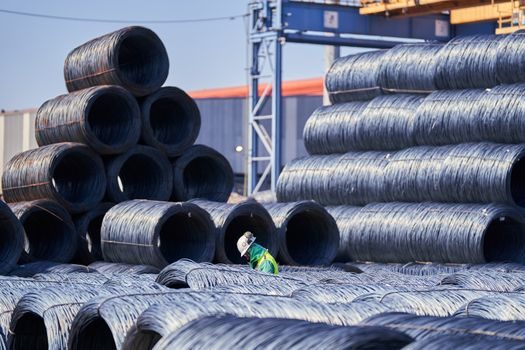
On Made-in-China's multi-search results, the visible FOB price cluster for hot-rolled galvanized steel coil sheets is US$840-880/t as of the 2026-07 listing window, with "Premium Dx51d Galvanized Steel Coil Sheets" and "High-Quality Galvanized Steel Coil Sheets" both quoting in that same band [S6]. Shanghai Zhongcansteel New Material, Rock Bolt, Galvalume, Tinplate, Aluminium, and Stainless Steel all appear on the same trading channel as additional mill/trader options for the same spec [S5].
The price gap between offers is rarely the substrate or the rolling margin; it is zinc weight, spangle control, oiling/passivation, and whether the order is mill-direct at 50+ m.t. or a small-lot trader resale. For comparison, a related product category on the same site — a Solenoid Coil Buying Guide 2026: Specs, Prices, Failure Modes — shows how coil-shaped industrial products in unrelated verticals share the same per-tonne MOQ logic, even where base material cost is far lower. The GI buyer's 50 m.t. minimum is a real barrier: orders below it commonly see a 5-12% trader markup, while orders at full-container or vessel-lot size can pull price back toward the floor of the FOB band.
Total Cost of Ownership Beyond the FOB Price
Zinc coating weight is again the dominant TCO lever: a Z275 outdoor roofing coil on a properly passivated surface can run 25+ years with no maintenance, while a Z40 + paint system may need repaint in 8-12 years, so the lifecycle math is not just material cost per square metre. [S3]
Buyers sourcing from a single mill-and-converter partner (like Hangzhou Jinzhan, which sells both bare galvanized coil and downstream corrugated and metallic tile sheet) cut one layer of handling, but they trade off on negotiation leverage compared to splitting coil and profile across two suppliers [S4]. A second useful cross-reference is the Gland Packing Price and Cost Guide 2026: Fibre, MOQ, and Certification as Real Levers — different product, same structural insight that MOQ tier and certification carriage move the actual landed price more than headline unit cost. For duct and HVAC downstream users, gauge selection is the parallel lever, covered in the Spiral Duct Buying Guide 2026: Diameter, Gauge, Material, and Duty Match.
Who Galvanized Coil Is For — And Where It Is the Wrong Pick
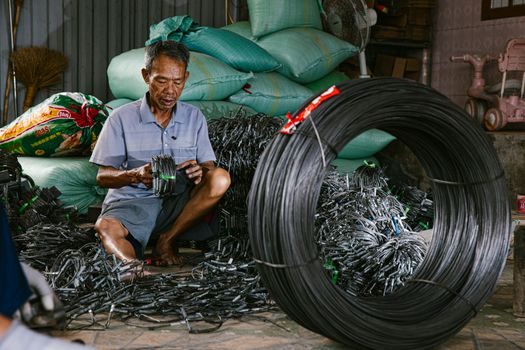
GI coil is the right pick for cold-formed structural sections, roofing and cladding, HVAC ductwork, automotive sub-frames, and any application that needs forming plus atmospheric corrosion resistance at the lowest possible cost per square metre. It is the wrong pick where cut-edge red rust is unacceptable (switch to GL or ZM), where operating skin temperatures exceed roughly 300 °C sustained (galvanize fails, aluminized is the move), and where a structural certification to a specific pressure-piping or valve standard is required (different product line entirely, see the Seamless Steel Pipe Buying Guide 2026: Standards, Grades, Price Bands for the pressure-side parallel). [S2]
For buyers with white-goods, appliance, or deep-drawing forming in mind, the Dx51d commercial forming grade is the spec to lock first, and the solenoid coil side of industrial sourcing is a useful reminder that the word "coil" covers a very wide envelope of geometries and duty cycles — the same word, very different buying logic. Where the buyer needs linear motion hardware downstream of a formed-steel frame, the linear guide and crossed roller guide families sit on the machine side, not the steel side.
Track on the 2026-07-19 channel: confirm zinc LME settlement, verify coating weight with a coating-thickness gauge on at least one coil per batch, and lock the spangle/passivation spec in writing before issuing the LC. The 50 m.t. MOQ, 10,000 m.t./month supply capability, and TT/LC payment terms shown on the active 2026-07 listings are the bench marks to negotiate against [S3].