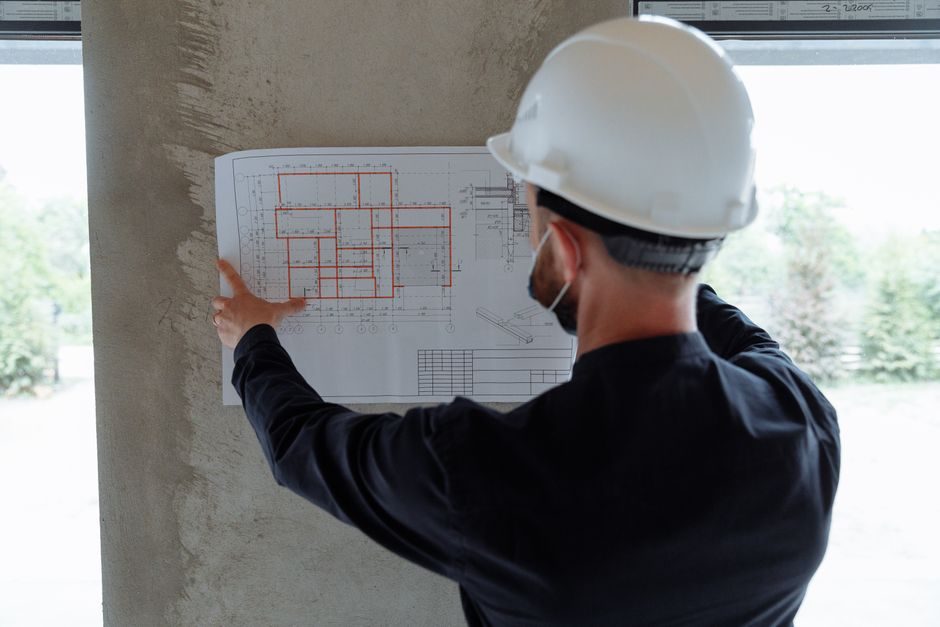
A construction-site gas alarm controller is specified by four hard parameters: the number of detector channels (commonly 4, 8, 16, or 32), the relay and analog output count, the enclosure rating (IP65 minimum for dusty sites), and the hazardous-area certification of both panel and detectors (ATEX 2014/34/EU or IECEx for zone-classified work) [S3][S1].
RC Systems has manufactured gas detection and alarm control hardware since 1979 and supplies custom multi-channel controllers alongside standalone detectors with optional wireless monitoring links [S3]. Wuxi Yongan Electronic Technology, founded in 2003, lists gas alarm controllers, detectors, and audible/visual warning lamps as a single integrated safety-equipment line, which is the typical site-bundle format procurement teams ask for [S1].
Sensor Stack and Channel Count for Site Duty
Construction sites are a confined-space-adjacent duty: a single controller panel is commonly asked to monitor methane (CH4) in trenches, oxygen (O2) displacement in shafts, carbon monoxide (CO) from diesel plant, and hydrogen sulfide (H2S) where ground disturbance hits organic matter [S3]. A 4-channel panel covers a single trench or basement cell; 8- and 16-channel panels are specified for multi-zone site plans with a central control room; 32-channel units appear on linear infrastructure such as pipeline spreads and tunnel drives [S3].
RC Systems positions its controllers as custom-configurable per channel, meaning each detector input can be assigned to a different gas range and sensor technology (catalytic bead, electrochemical, or NDIR) without forcing a uniform sensor family across the panel [S3]. Wuxi Yongan ships controllers with paired audible/visual warning lamps, which removes a separate spec line for stack lights and keeps the panel-to-lamp wiring inside one supplier's documentation set [S1].
Output, Relay, and Integration Architecture
Controller outputs split into three families: relay contacts (typically 1× alarm + 1× fault per channel, often 8 or 16 SPDT relays total), 4-20 mA analog retransmission to a SCADA or DCS, and digital fieldbus (Modbus RTU over RS-485 is the most common on site panels) [S3]. Wireless monitoring is offered as an add-on option rather than a built-in feature, which lets the same panel ship wired-first and be field-upgraded to a wireless mesh gateway where cable routing is impractical [S3].
For site duty the relay count matters because each relay drives a discrete load: a beacon, an exhaust fan starter coil, a solenoid shut-off, or a site-wide general alarm. A practical rule of thumb from the spec sheets: specify at least one SPDT alarm relay and one SPDT fault relay per monitored gas, plus two common relays for site-wide evacuation and fault summation [S3]. The fault relay is non-optional — losing the fault signal during a cable break or sensor failure is a documented silent-failure mode the panel must surface.
Enclosure, Power, and Environmental Survival

Site panels live in dust, rain, and temperature swings, so the minimum enclosure spec is IP65 with a metal or UV-stabilized polycarbonate body; stainless-steel cabinets are specified for coastal or chemically aggressive sites [S1][S3]. Power is dual-source on serious installations: mains 100-240 VAC with a 24 VDC backup that keeps the panel alive through generator swaps and brief blackouts, both supply rails monitored and reported as a fault if either drops.
Working-temperature bands need to cover at least -10 °C to +55 °C for temperate sites and -20 °C to +60 °C for cold-region or summer-shed sites; the sensor head datasheet — not the controller datasheet — usually sets the tighter limit, because electrochemical H2S and O2 sensors derate below -10 °C [S3]. For hazardous-area zones (tank farms, gas-holder demolition, sewer work) the panel and detectors must carry Ex d or Ex ia certification matched to the zone, with the controller itself typically installed in the safe area and only the detector heads entering the classified space.
Compliance, Documentation, and Service Posture
Two compliance questions pre-filter the shortlist before any price comparison: does the manufacturer publish a current ATEX or IECEx certificate for the exact panel model being quoted (not a family-level generic), and does the supplier provide 24/7 technical service support for commissioning and post-install fault-finding [S3]. RC Systems states both — international representative coverage, in-business since 1979, and 24/7 technical service support from local experts — which is the kind of documented service posture site safety officers look for before signing the RAMS [S3].
Wuxi Yongan markets a combined safety-equipment line integrating R&D, manufacturing, program design, and sales under one roof, which simplifies the documentation chain when the inspector asks for a single CE/ATEX file pack covering controller, detector, and warning lamp together [S1]. For a deeper comparison of how the panel fits into the broader detection chain, the Gas Detector Selection for Work at Height reference covers sensor stack choices that share the same electrochemical and NDIR families used on construction sites.
Selection Criteria: A Side-by-Side Comparison
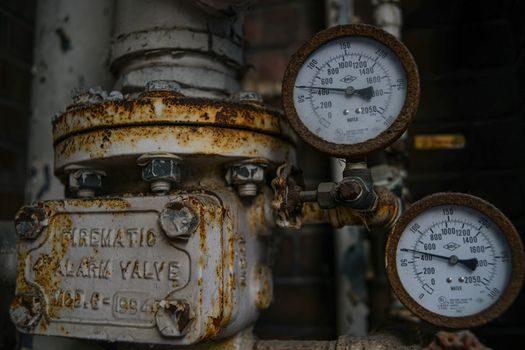
Four decision criteria separate the shortlist: channel count vs site zoning, output mix (relay / 4-20 mA / Modbus / wireless), hazardous-area certification scope, and service-network coverage. Channel count drives panel size: a 4-channel panel is right for one trench or one basement, an 8- or 16-channel panel covers a multi-trade site with a central control point, and a 32-channel unit is only justified on linear infrastructure such as tunnelling or pipeline spread [S3].
Output mix is the second filter: panels with Modbus RTU over RS-485 integrate cleanly into a site SCADA, panels without it force every alarm into a hard-wired relay which inflates cable cost on large sites. Hazardous-area certification is non-negotiable for work in or adjacent to classified zones — the certificate must name the exact panel model, not a generic family, and the certification must be in force at the date of delivery. Service coverage closes the shortlist: a controller is only as good as the engineer who can attend a site fault within the response window named in the contract RAMS [S3][S1].
RC Systems vs Wuxi Yongan on the four criteria: RC Systems scores on custom channel configuration, documented 24/7 service, and international representative coverage, and has been in the gas-detection business since 1979 [S3]. Wuxi Yongan scores on integrated package supply (controller + detector + audible/visual lamp from one manufacturer, one CE/ATEX file pack) and on being a specialist safety-equipment house founded in 2003 [S1]. For site procurement the two vendors are not direct substitutes — RC Systems is the call when the panel is a custom-engineered item, Wuxi Yongan is the call when a matched bundle with one paperwork chain is wanted.
Limitations, Failure Modes, and What the Spec Cannot Fix
Every site gas alarm controller has the same three weak points: electrochemical sensor life (typically 18-36 months in clean air, shorter on dusty construction sites), cable damage between detector and panel (the most common cause of lost-channel faults), and reliance on operator response to the beacon and siren (the panel cannot force evacuation). The panel can surface all three as faults, but it cannot prevent them — sensor replacement scheduling, cable routing in conduit, and site-induction training sit outside the datasheet [S3].
For selection this means: budget the sensor-replacement cycle into the panel's whole-life cost, specify cable routes in conduit or armoured type at the design stage, and confirm the warning lamp and siren output of the panel meets the site noise-environment level (typically 100-110 dB at 1 m for a construction site) [S1]. The gas alarm controller is the reporting hub, not the safety system — the safety system is the combination of panel, detectors, sounders, site procedure, and trained response.
For the wider detection chain on the same site, the Gas Detector Selection for Work at Height reference covers the detector side of this pair in detail. Trackable signals over the next procurement cycle: the next quarterly sensor-replacement log will show whether the 18-36 month electrochemical life holds in dusty summer conditions or shortens, and the next ATEX certificate audit will show whether family-level certifications are being tightened to model-level on the European market.
The underlying component specifications are covered under gas alarm controller, gas mass flow controller, and perimeter alarm.