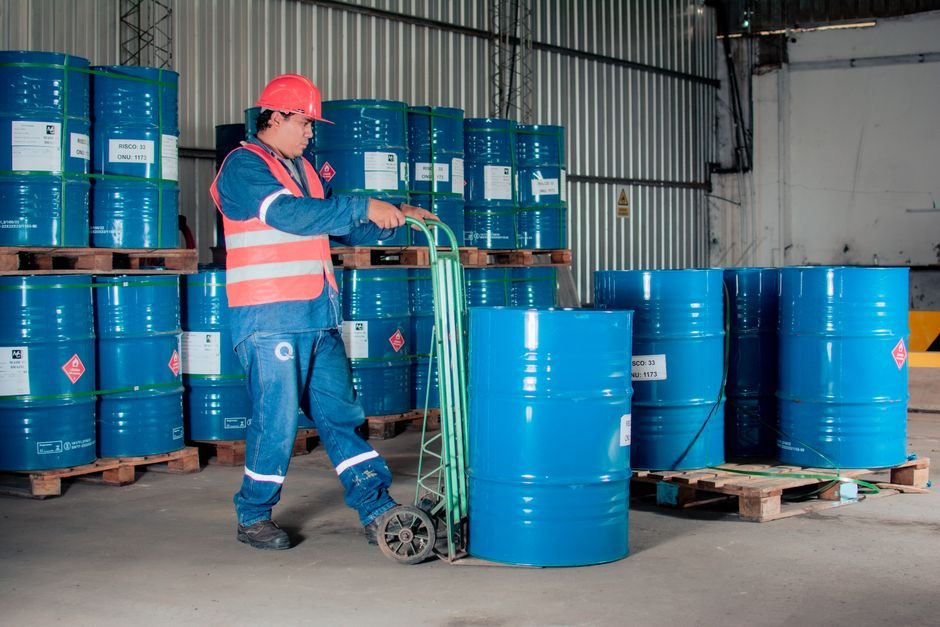
A distribution warehouse running propane, diesel or electric forklifts needs at least three sensor classes deployed by zone: CO/NO2 at loading docks and staging lanes, H2 above lead-acid battery charging areas, and CH4/C3H8 wherever natural-gas or propane forklifts refuel [S2].
For smaller dock-only operations, self-contained detector-controller units handle one or two bays economically; for sites above roughly 10,000 m², a networked architecture with zoned sensors feeding a central controller is the working baseline, with alarm relays wired to exhaust fans, audible/visual strobes, and BMS or dock-door interlocks [S2].
Target Gas Map: Where Each Hazard Originates in a Warehouse
Forklift exhaust is the dominant indoor air-quality hazard in distribution centres: propane, diesel and gasoline units all emit CO during combustion, with NO2 also present in diesel exhaust, and unsafe CO levels can build during peak multi-forklift shifts because CO is colourless and odourless [S2]. Electric forklifts eliminate the CO source but introduce a different risk — lead-acid traction batteries off-gas hydrogen during charging, a gas that is colourless, odourless, flammable, and lighter than air, so it pools near ceilings and in poorly vented roof spaces [S2].
Loading docks and yard-truck staging lanes are the highest-accumulation zones because diesel and gasoline tractor-trailers idle while loading, pushing CO and NO2 into adjacent interior spaces when dock doors are closed or ventilation is limited [S2]. Natural-gas or propane-powered forklifts add a methane or propane sensor requirement at refuel or parking points, since these fuels are heavier than air and pool low. For a primer on how the same sensor classes behave in a more hazardous process environment, see the chemical-plant gas detector selection map.
Sensor Class Comparison for the Four Warehouse Hazard Groups
The four hazard groups in a warehouse map to four sensor families with very different response characteristics, and selecting on the wrong criterion is the most common spec error. Electrochemical cells are the working choice for CO and NO2 at 0–250 ppm and 0–10 ppm full-scale respectively, with T90 response typically under 30 seconds and good cross-sensitivity behaviour in dry warehouse air [S2]. Hydrogen above battery rooms is most often handled by electrochemical H2 cells in the 0–1,000 ppm or 0–4% LEL range, though catalytic-bead sensors are also deployed where the lower explosive limit (4% by volume for H2) is the controlling setpoint [S2].
Combustible-gas detection on propane or methane-fuelled forklifts uses either catalytic-bead (pellistor) or non-dispersive infrared (NDIR); NDIR is preferred where silicone vapours or forklift exhaust could poison a pellistor, but catalytic-bead remains the lower-cost path for general LPG detection in air-conditioned warehouses. A multi-gas portable such as the ZhongAn S319 lists 1–8 simultaneous sensor slots with replaceable plug-in cells, giving a single instrument that can carry CO, H2S, O2 and a combustible cell for confined-space entry at charging stations [S1]. For an underground or heavy-industry comparison that also stresses explosion-proof certification, the mining gas detector guide lines up sensor class against IECEx/ATEX zones.
Fixed vs Portable Architecture: What Each Format Does Well
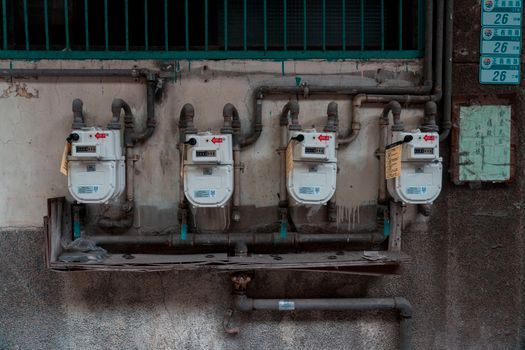
Fixed fixed gas detector networks are the baseline for continuous area coverage in any warehouse over roughly 2,000 m², because they tie sensor output to ventilation and fire-alarm logic and operate 24/7 without operator action [S2]. Teledyne's product line spans fixed-point detectors, fixed flame detectors, controllers and alarms, area wireless beacons, and personal safety portables — a five-tier stack that maps directly onto the warehouse layers: fixed-point for area coverage, controllers/alarms for fan and BMS integration, portables for confined-space and maintenance work, and personal monitors for forklift drivers [S3].
Portable instruments are not a replacement for fixed coverage in a warehouse; they handle confined-space entry at battery rooms, tanker unloading pits, and rooftop HVAC plenums. A typical four-gas portable with built-in pump sampling — the form factor the ZhongAn GSS-GP300 and S360 occupy — measures O2, combustible, CO and H2S simultaneously and is specified wherever pre-entry testing is mandated [S1]. For routine forklift-cab driver protection, a personal portable gas detector clipped to the operator is a separate layer, and sensor replacement cost (rather than instrument cost) is usually the lifetime driver.
Demand-Controlled Ventilation: Why Sensor Output Must Drive Fans
Demand-controlled ventilation (DCV) ties real-time sensor readings to exhaust-fan and make-up-air damper control, so fans run only when concentrations rise above setpoint — cutting operating cost while improving hazard response versus constant-volume ventilation [S2]. A central controller with zone-level inputs is the practical minimum: each sensor reports to the controller, the controller compares against alarm thresholds (typically 25 ppm TWA or 50 ppm ceiling for CO in occupied warehouse spaces, with lower thresholds for NO2), and drives relay outputs to staged fans and audible/visual alarms in the affected zone [S2].
Integration scope scales with site size. A 5-bay dock can be served by a self-contained detector-controller with onboard relays and a local strobe; a regional distribution centre needs networked detectors, a multi-channel controller, BMS/BACnet or Modbus output for data logging, and dock-door interlocks that close or open vents on alarm [S2]. For the broader multi-gas instrument category covering four-gas and confined-space units, the multi gas detector reference outlines the sensor-slot count and pump-sampling configurations common in these deployments.
Selection Criteria: Matching Instrument to Zone, Not to Catalogue
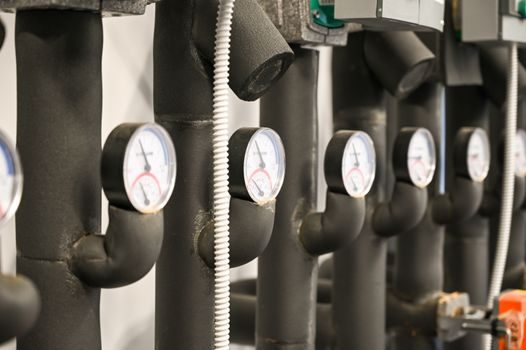
The defensible selection sequence for a warehouse project is: (1) build the hazard map (forklift fuel type, battery-charging locations, dock bay count, staging-lane geometry); (2) assign one sensor class per hazard group — electrochemical for CO/NO2/H2, catalytic-bead or NDIR for combustible; (3) pick a fixed vs portable split, with fixed covering all continuously occupied zones and portables covering confined-space and maintenance work; (4) confirm the controller architecture — self-contained for one or two bays, networked for anything above 10 zones; (5) verify output compatibility with existing BMS, fire-alarm panel and dock-door controls [S2][S3].
For toxic-gas coverage in a warehouse context — typically low-ppm NO2 at diesel lanes and any cross-contamination from cleaning chemical stores — the toxic gas detector page sets out the electrochemical-cell selection logic and the 1- and 8-hour TWA targets that drive setpoint choice. Combustible-gas sensor selection on the warehouse floor is covered at the combustible gas detector reference, including LEL setpoints, pellistor poisoning risks, and NDIR cross-sensitivity behaviour.
Limitations and Failure Modes Buyers Should Price In
Electrochemical CO and NO2 cells lose sensitivity over a 2–3 year operating life in warehouse temperatures and must be bump-tested on a defined interval; the calibration cost, not the instrument price, is the lifetime budget item, and a calibration-gas programme (typically 50 ppm CO span gas, 5 ppm NO2 span gas) is non-optional [S2]. Catalytic-bead combustible sensors are poisoned by silicone vapours, lead compounds, and certain cleaning solvents common in warehouse maintenance, and a poisoned bead reads low — a dangerous failure mode that drives preference for NDIR or poison-resistant catalytic formulations in mixed-use facilities [S3].
Hydrogen sensors installed at ceiling level must account for stratification: H2 is the lightest common industrial gas, so a sensor mounted at breathing-zone height (1.5–2 m) will under-read a ceiling-layer leak; the working practice is to mount H2 sensors within 30 cm of the ceiling plane above each charging bank and to add a second sensor at 2 m for confirmation [S2]. For a broader process-control sensor comparison that addresses drift, linearity and signal conditioning trade-offs, the displacement sensor selection map lines up electrochemical, NDIR, and solid-state classes on five decision criteria.
Watch for three signals over the next two quarters: (1) revision activity on the warehouse ventilation standard NFPA 90A as it cross-references DCV sensor density, since that drives the fixed-sensor count on new builds; (2) growth in NDIR-form-factor pricing for low-ppm NO2, which would change the cost case versus electrochemical at diesel-heavy docks; (3) wider adoption of wireless-area beacons for retrofit warehouses where running conduit to fixed sensors is the blocker, an architecture Teledyne already markets for refineries and pharma and which transfers cleanly to large distribution centres [S3].