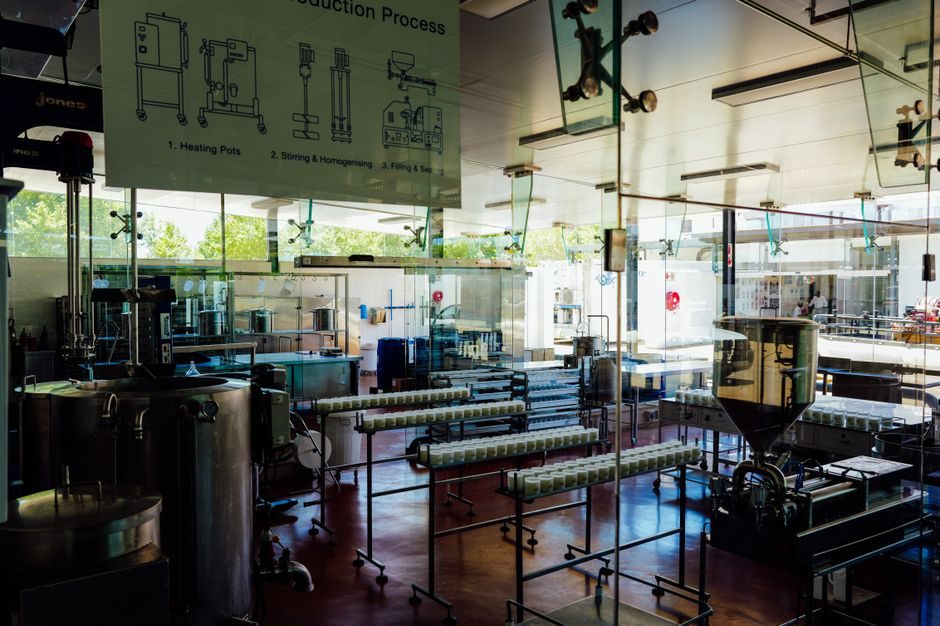
A food and beverage facility's gas-detection spec is driven by refrigerant ammonia (NH3) in cold storage, CO2 and N2 in packaging, and combustion products from process boilers — making a gas alarm controller the central engineering decision rather than a peripheral alarm panel [S9][S10].
The practical baseline is a 16-to-64 channel fixed controller accepting 4-20 mA or Modbus sensor inputs, housed to NEMA 4X, with three alarm levels per channel and a dedicated horn/fault relay pair [S3].
Target Gases, Sensor Technologies, and Mounting Geometry
NH3 is best handled by electrochemical (EC) sensors mounted on or near the ceiling of cold rooms, with a recommended coverage footprint of about 3,000 ft² per sensor and standard setpoints of 25 / 35 / 250 ppm across low/mid/high [S7].
CO2 is specified via infrared (IR) sensors mounted in the breathing zone, with setpoints scaled to range: 1000 / 1250 / 1500 ppm on a 0-2000 ppm range, or 1.0 / 2.0 / 3.0% vol on a 0-5.0% vol range [S7].
EC CO sensors sit in the breathing zone with 25 / 50 / 100 ppm alarm levels on a 0-200 ppm range, while Cl2 EC sensors are mounted low — roughly 6 in (15 cm) above the floor — because chlorine is heavier than air [S7].
For O2 deficiency and enrichment in nitrogen-flushed packaging lines, an EC O2 sensor paired with an IR CO2 sensor is the common dual-spec, because IR alone cannot resolve O2 displacement events [S10].
Channel Count, I/O, and Modbus Integration
Large plants typically spec a 32- to 64-channel head, with the TXP-C64 family providing a modular 16-channel build-up (16, 32, 48, or 64), 4-20 mA inputs and matching analog outputs, plus an optional 16-relay programmable alarm board [S3].
Standard communications are Ethernet with Modbus TCP master/slave plus a web server for remote viewing, and dual RS-485 ports running simultaneous Modbus master/slave — a configuration that lets the controller poll third-party analyzers and gas chromatographs in parallel with its own sensor inputs [S3].
For plants with only a few hazard points, a 4-channel unit such as a ViewSmart 400 keeps the cabinet footprint small; mid-sized breweries and dairies often move to a 16-channel ViewSmart 1600 in standard fiberglass before stepping to a 64-channel NEMA-4X unit [S5].
Enclosure, Ingress, and Wash-Down Ratings

Sanitary and wet-zone areas in food plants require a NEMA 4X enclosure — the TXP-C64 datasheet lists NEMA 4X with CSA C22.2 No. 1010.1 and C22.2 No. 152 for combustible detection, plus UL 1604 / C22.2 No. 213 (Class I, Div. 2, Groups A-D) for hazardous-area deployment [S3].
Operating temperature spans -13°F to +140°F (-25°C to +60°C), which covers cold-room, ambient processing, and boiler-room mezzanines without separate HVAC for the panel [S3].
On the detector side, a P-3R+ relay card provides 2 alarm relays plus 1 fault relay with NO/NC adjustability, and pairs with a PC3 detector head, so the relay logic is local to the sensor — useful when a controller failure would otherwise leave a hazard point unprotected [S4].
Selection Criteria: Head-to-Head Comparison
Three controller classes dominate food and beverage bids: small fixed multi-point panels (1-4 channels), mid-range 16-channel heads, and large 32-to-64 channel systems. [S3]
Small 1-4 channel panels: lowest unit cost, single Modbus slave, suitable for a single cold room or CO2 dosing skid, but no built-in data logging [S2][S5].
16-channel mid-range heads: balanced fit for breweries, dairies, and bakeries with 8-12 active hazard points, Modbus TCP plus RS-485, optional relay cards [S3][S5].
32-64 channel systems: required when a plant integrates cold storage, combustion, packaging, and lab gas points into one P&ID; SD-card logging and web server are standard [S3].
Decision rule: pick 16-channel if fewer than ~12 monitored points and no need for trend logging; pick 32-64 channel once SD-card data retrieval, three independent alarm levels, or 4-20 mA re-transmission to a gas analyzer becomes a project requirement [S3].
Sensor-to-Controller Wiring, Calibration, and Power

4-20 mA loop wiring remains the most common field interface, with the controller providing 24 VDC loop power to each sensor head and accepting the return signal on a dedicated input channel [S3][S4].
For a fixed combustible detector, an EC or pellistor head terminates to a P-3R+ card, which gives 2 alarm levels and 1 fault, and is universally compatible with any third-party control panel that accepts dry-contact inputs [S4].
Power input is universal: 120-240 VAC or 10-30 VDC at 600 W primary on a TXP-C64, which lets the same controller drop onto a battery-backed DC plant in a refrigeration machinery room where AC is reserved for compressors [S3].
Compliance, Standards, and Engineering Practice
CSA C22.2 No. 152 is the Canadian performance standard for combustible-gas detection and is listed on the TXP-C64 datasheet; UL 1604 / C22.2 No. 213 covers Class I, Div. 2 hazardous locations for the same panel [S3].
EMC compliance is to EN 55011 (emissions) and EN 61000 (immunity), which European food plants typically require for any control panel installed near variable-frequency drives on conveyors and pumps [S3].
Engineering practice in food plants is to include operations, safety, and the third-party fixed-system specifier in the panel selection meeting from day one, because the same gas point can be classified as an OSHA confined-space hazard, a refrigeration code item, and a BRC/IFS audit finding depending on the documentation trail [S6].
Where Fixed Gas Detection Fits — and Where It Does Not
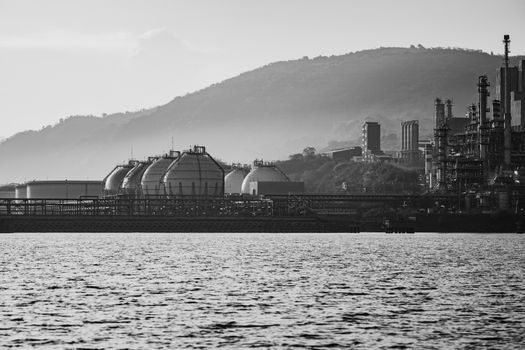
Fixed detection is the right tool for continuously occupied rooms (cold storage, CO2 dosing, packaging enclosures, boiler rooms) where the leak can grow beyond sensor range before anyone notices [S10].
For confined-space entry, contractor work, or short-duration maintenance, a portable gas detector is the correct instrument; a gas alarm controller does not replace a worker-worn four-gas monitor [S10].
Plants already running continuous emission monitoring (CEMS) at stacks can re-use those analyzers as Modbus slaves feeding the same controller, but a stack analyzer is not a substitute for breathing-zone gas detection in the work area [S3].
Common Failure Modes and Specification Pitfalls
Mounting CO2 IR sensors on or near the ceiling — rather than in the breathing zone — is the most common spec error, and it produces alarms only after the leak has displaced O2 in the worker's inhalation path [S7].
Specifying only one alarm level per channel leaves the panel unable to drive a low-warning beacon, a high-trip relay, and a horn silence without external logic; the TXP-C64's three-level scheme is the practical baseline [S3].
Forgetting the fault relay is the second most common gap: a sensor that loses loop power should drive a hard fault to a fire alarm control panel or BMS, not silently disappear from the network [S3][S4].
On the supply side, ISO 9001:2000-certified Chinese manufacturers such as Henan Chicheng Electronics have shipped fixed single-channel, multi-point, and standalone combustible / SO2 / H2S / NH3 / Cl2 controllers for more than two decades, with most exports going to North and South America and Eastern Europe — relevant context for buyers comparing landed cost [S2].
Track before the next purchase order: (1) confirm sensor setpoints against the current CET guidance of 25 / 35 ppm NH3 and 1000 / 1250 / 1500 ppm CO2 [S7]; (2) verify the controller still supports Modbus TCP plus dual RS-485 so future gas chromatograph tie-ins remain feasible [S3]; (3) record a verified NEMA 4X wash-down test report for any panel that will sit inside hygienic zones, since IP65 paperwork alone is not a substitute for the North American NEMA 4X rating carried on the TXP-C64 datasheet [S3].
Related analysis: Explosion-Proof Motor Selection: A Spec-Driven Buyer's Map.