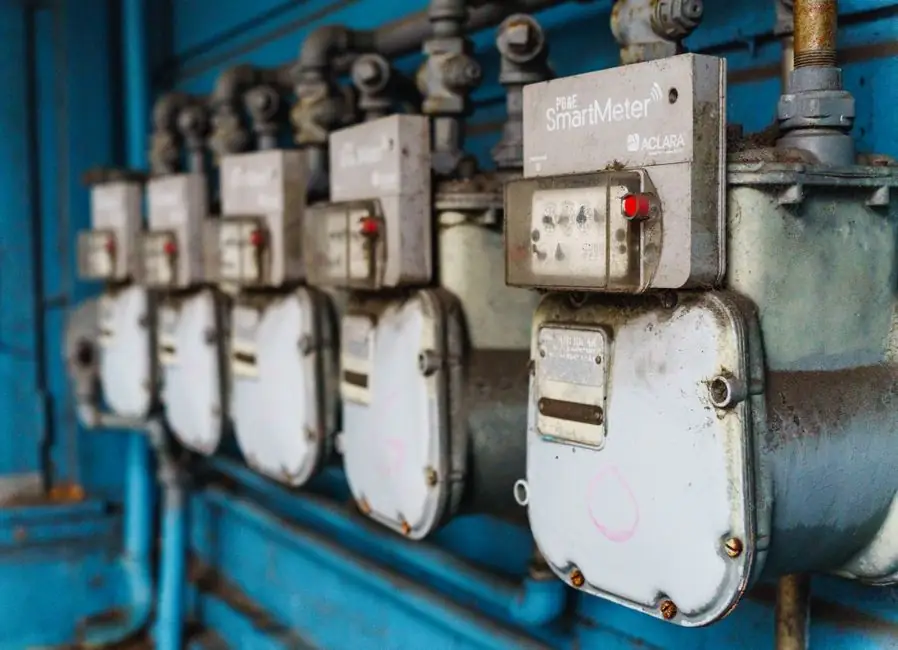
A gas analyzer selection in 2026 is governed by six binding specs: target gas, range, detection limit, measurement principle, hazardous-area class, and sample conditioning. Skip any one of those and the analyzer fails the duty, regardless of brand.
The unit is part of the broader industrial gas measurement stack, which also includes gas detectors for personal safety and gas chromatographs for compound-level speciation. Each of those overlaps a gas analyzer, but the analyzer category is the workhorse for continuous process control where the answer is a single number on a 4-20 mA loop.
Six criteria that bind the shortlist
Each of the six selection criteria is a binary gate, not a tunable preference. Range and detection limit follow from the same pair, with most process analyzers spanning 0-100 ppm to 0-100% and sub-ppm trace units needing a separate platform such as a SERVOPRO ULTRA-class instrument [S1].
Measurement principle is the second gate: NDIR, paramagnetic, zirconia, electrochemical, TDL, and process mass spectrometry each have a distinct cross-interference and response profile. Hazardous-area class (ATEX Zone 1/2, IECEx, Class I Div 1/2 in North America) is non-negotiable for any analyzer within 1 m of a hydrocarbon process. Sample conditioning (coalescing filter, chiller, pump, condensate drain) and the output protocol (4-20 mA HART, Modbus TCP, FOUNDATION Fieldbus, PROFIBUS PA) close the gate set.
Principle-by-principle comparison for the four most common options
NDIR, paramagnetic, TDL, and electrochemical analyzers dominate the 2026 process market, and each fits a narrow duty. NDIR is the default for CO, CO2, CH4, SO2, and NOx in flue gas and process streams, with typical 0-100% / 0-1000 ppm dual ranges and 0.1% FS zero stability on the SERVOFLEX line [S1]. Paramagnetic cells are the de facto O2 standard, immune to background IR, with response time on the order of 4-15 s and better than 0.1% FS drift per year.
TDL (tunable diode laser) analyzers win on selectivity, since the laser line is matched to a single absorption feature, eliminating most cross-interference, and are the only realistic option for in-situ measurement at 700-1500 deg C in fired heaters and reformers. Electrochemical sensors are cheap and fine for low-ppm H2S, NH3, Cl2, or O2 in ambient air, but 6-24 month cell life and cross-sensitivity to temperature swings make them a poor choice for process control. Process mass spec and FTIR cover the compound-level niche, sitting in the gas chromatograph and gas analyzer overlap; the GC route is the right answer when speciation matters more than speed.
Servomex and ESE: where the two product lines actually overlap
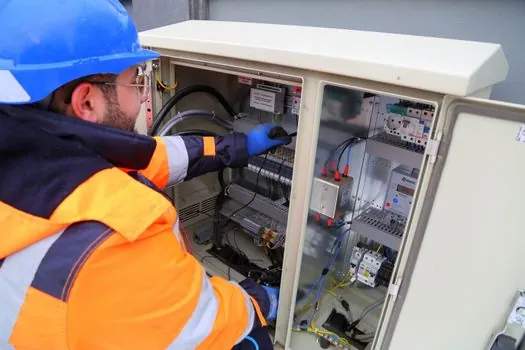
Servomex's 2026 catalog (S1) breaks into four families: SERVOTOUGH (hazardous-area IR and paramagnetic), SERVOPRO (safe-area NDIR, paramagnetic, H2S), SERVOPRO ULTRA (trace-level ppt/ppb), and SERVOFLEX (process IR, paramagnetic, Zirconia), plus a CLEAN AIR emissions range. Coverage spans over 20 gases with declared industry-leading accuracy and stability, and the analyzer finder tool is keyed by gas, technology, and measurement range [S1].
ESE Technology (S2) markets a wider, more vertical-segmented lineup for process gas, flue gas, syngas, petrochemical, medical, portable, trace, and continuous-emission monitoring, with OEM laser-detection modules aimed at integrators. Both vendors are ISO 9001 registered, and the ESE product map overlaps the Servomex flue-gas and process ranges head-on, with a 2026-07-09 catalog sweep showing 11 product families including OEM gas modules and laser gas detection [S2]. The practical differentiator at the spec level is detection limit, response time, and hazardous-area approvals, not breadth of catalog.
Who a mainstream NDIR/paramagnetic analyzer is for, and who it is not for
An NDIR/paramagnetic continuous analyzer fits a buyer who needs a stable 4-20 mA signal on a single-component stream with a defined background. Flue gas O2/CO/NOx on a boiler, methane in biomethane upgrading, O2 in inerting blanketing, and H2 purity measurement on electrolyzer skids all sit in this envelope. If the duty is any of those, a SERVOFLEX or SERVOPRO class instrument is the rational shortlist member [S1].
It does not fit a buyer who needs sub-ppb trace H2S in a natural gas pipeline, multi-component speciation on a syngas stream, or simultaneous measurement of 5+ stack species with EPA reporting. Trace duty is the SERVOPRO ULTRA space, speciation is a process GC or FTIR job, and full EPA CEMS pushes into the CLEAN AIR family with sample-conditioning skid and DAHS reporting. Reaching for an NDIR analyzer on any of those is the most common 2026 mis-spec.
Sample conditioning, calibration, and the hidden budget items
Sample conditioning is half the analyzer system and is the failure mode the spec sheet hides. Coalescing filters, membrane dryers, and condensate drains drive calibration interval from quarterly to weekly when the process stream is wet, and an unheated 316L sample line is the single most common cause of misleading readings in field service reports. [S2]
Calibration philosophy is the second hidden item: zero gas (certified N2 or instrument air scrubbed to under 1 ppm of the target) and span gas at 80-100% of range, with a verification gas at 40-60% of range for independent check. Hazardous-area certification adds cost non-linearly: a Zone 1 Ex d enclosure can add 20-40% over a Zone 2 Ex nA build, and IECEx dual-cert for global EPC projects adds further. Plan for sample system, calibration gases, and certifications as separate line items, not as free add-ons.
Limits, failure modes, and what the spec sheet will not tell you
Every measurement principle has a blind spot that the data sheet does not advertise. NDIR cross-interferes with overlapping IR bands and will misread CO2 as CO without optical filtering. Paramagnetic O2 is fooled by strongly paramagnetic backgrounds and is unsuitable for NO2-dominant streams. TDL needs a clear optical path and a known pressure/temperature correction; dust loading and condensate fog will kill the reading. [S1]
For a deeper look at how spec-first logic carries across an adjacent duty, see the Vortex Flowmeter vs Gas Mass Flow Controller map, and the wider flow meter selection criteria for process engineers. Both reuse the same gas-handling and conditioning logic, so the analyzer sample train and the flow meter run on the same play sheet.
Electrochemical cells drift with temperature and humidity, lose 10-30% of output per year, and have a defined end-of-life signal that field crews sometimes miss. The cure is a documented calibration interval, a known replacement cycle, and a cross-check with a second principle on the same stack where the regulatory or safety consequence warrants it. If you have to read a gas detector and a gas analyzer on the same stream, expect them to disagree at low concentration, and budget for the reconciliation logic in the DCS.
Shortlist logic and tracking signals
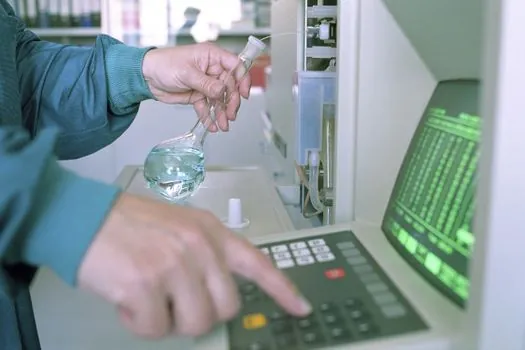
Build the shortlist in three steps: (1) lock the target gas and detection limit, (2) lock the principle that survives the background gas, (3) lock the hazardous-area class and the output protocol. Any vendor offering all three is a candidate; any vendor missing one is out, regardless of price. Add a fourth step on sample conditioning, which is where most field failures actually originate. [S2]
Track two signals through the rest of 2026: detection limit drift on installed trace analyzers (SERVOPRO ULTRA class) as the ppb-grade CEMS market tightens, and the rollout of dual-certified ATEX/IECEx platforms with HART 7 or Ethernet-APL output for refinery retrofits. Both will reshape shortlist pricing by mid-2027; a buyer specifying a 2026-08 build should confirm the firmware revision and the calibration gas certificate format with the vendor before purchase order release.