
A gas analyzer is selected by chaining five hard decisions: which gas to measure, which principle can resolve it inside the expected background, which certification frame the site imposes (ATEX 2014/34/EU or IECEx for Zone 1/2), which I/O the DCS can swallow, and which lifecycle cost the plant is willing to carry [S2].
Modern analyzer families cover landfill and biogas (linear NDIR for CH4/CO2/H2S), flue gas, syngas, petrochemical process streams, trace-level emissions, medical-gas purity and OEM modules — each with a different sensor stack, a different conditioning train, and a different calibration burden [S1][S2]. The landfill/biogas AIR LF chassis, for example, ships at 500 × 300 × 155 mm and 10 kg with integrated dust filter, flowmeter, condensate detector and touchscreen — a complete NDIR module in a single IP-rated box [S1].
Principle-by-Principle Selection Map
NDIR (non-dispersive infrared) is the default for hydrocarbons, CO2, CO and refrigerants because linear NDIR stays stable over years and tolerates dirty biogas streams with the dust filter, flowmeter and condensate trap that the AIR LF integrates in one enclosure [S1]. Electrochemical cells suit low-cost O2 or toxic-gas spot checks but drift with humidity and require electrolyte replacement on a defined interval. Paramagnetic cells handle percent-level O2 in flue and process gas without consuming the sample. TDL (tunable diode laser) and laser-gas-detection modules push the resolution into ppm and ppb trace ranges without cross-interference from water or CO2 [S2].
For a working comparison, line the principles up against the four criteria that actually break projects: target-gas resolvability, background-gas cross-sensitivity, response time T90, and ownership cost. NDIR wins on CH4/CO2 in biogas where dust and condensate are routine. Paramagnetic wins on percent O2 in flue gas. TDL and laser detection win on NH3, HCl and HF where IR cells are blinded by water. Electrochemical wins on portable toxic-gas safety instruments where size and cost dominate [S1][S2].
Target Gas, Range and Detection Limit
Specifying a gas analyzer starts with the molecule, the expected minimum and maximum concentration, and the required detection limit at process pressure and temperature — not at NTP. The biogas AIR LF datasheet states it measures the exact composition of landfill gas and biogas using linear NDIR absorption of infrared radiation, with stable measured data across the calibrated range [S1].
If the application is trace emission, continuous emission monitoring (CEMS) or purity verification, the same datasheet language does not apply — ppm and ppb work demands TDL, laser-gas-detection, or FTIR with heated sample lines, and a multi-point factory certificate traceable to a national reference [S2]. Engineered Solutions Europe (ESE) groups its portfolio into flue/emission, syngas, process, industrial, petrochemical, portable, trace, continuous, medical, and OEM laser modules, which mirrors the decision tree engineers actually walk [S2].
Sample Conditioning, Flow Path and Reliability
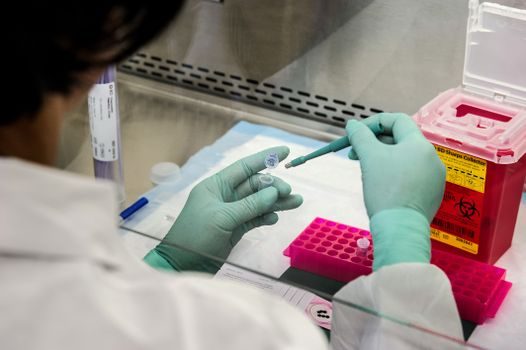
More analyzers are killed by their sample train than by their sensor. The AIR LF design moves the dust filter, flowmeter, flow controller, condensate detector and touchscreen into a 500 × 300 × 155 mm, 10 kg IP-rated box so the operator can see the failure mode (filter loaded, flow lost, condensate tripped) before the readings drift [S1]. For process and petrochemical streams, ESE builds gas analysis systems — not just sensors — with the conditioning, valves and calibration gas routing engineered as a single scope of supply [S2].
Engineers pairing analyzers with field instruments on the same skid should review the flowmeter and primary-device logic in the turbine vs ultrasonic flowmeter selection spec sheet and the open channel flowmeter selection criteria — a blocked sample line shows up first as a flow anomaly long before it shows up as a bad analyzer reading. Repeatability, mean time between calibrations, and the cost of a calibration-gas cylinder on site are the real drivers of total cost of ownership.
Output, Connectivity and Hazardous-Area Certification
Stack the analog and digital outputs against what the DCS or PLC can accept before signing the PO. Modern analyzers expose 4–20 mA, Modbus RTU/TCP, PROFIBUS, Foundation Fieldbus and Ethernet/IP; a CRAN-published R package, gasanalyzer version 0.4.3, imports and recomputes data from portable gas analyzers, which signals that the workflow now assumes PC-side post-processing rather than paper logs [S4].
Certification frames still govern the enclosure: ATEX 2014/34/EU for the European Economic Area, IECEx for international projects, and the relevant IEC 60079-x sub-series for the Zone. For the U.S. market, the Class/Division vocabulary from the NEC applies instead. A specifier should pin the exact zone, gas group and temperature class on the purchase order — vague wording such as "explosion-proof" has no defined meaning and routinely gets rejected at FAT. For background on the type of test rigs where analyzers and spectrum tools coexist, see spectrum analyzer vs signal calibrator for mechanical strength test rigs, which covers the same data-acquisition stack from a different angle.
Portable, OEM and Medical Variants

Portable gas analyzers — the class targeted by the gasanalyzer R package for field data import — trade absolute accuracy for size, battery life and ruggedness [S4]. They are the right tool for spot surveys, landfill walking surveys, and indoor-air-quality audits, not for custody or compliance. OEM gas modules and laser gas detection modules from a manufacturer such as ESE are intended to drop into a third-party analyzer or burner control, which means the specifier is buying a sensor front end, not a turnkey analyzer [S2].
Medical gas analyzers verify O2 purity, N2O residue, and anesthetic-agent levels in pipeline and vacuum systems; the regulatory floor is dictated by the medical-device directive, not by ATEX or IECEx, and a general industrial analyzer is not a drop-in replacement. The instrument catalog page for the 180C gas analyzer reflects a different buying pattern: price-on-application, cross-reference by model, and a 11-year listing on a Chinese B2B instrument directory — a reminder that imported-brand analyzers are also procured through regional distributors with their own calibration and warranty chain [S3].
Calibration, Verification and Lifecycle
Every analyzer class needs a written calibration interval, a defined zero and span gas, and a documented verification procedure that uses a third-party audit gas traceable to a national reference. NDIR modules in landfill/biogas service drift slowly with linear optics, but their dust filter and condensate trap still need a visual check on a fixed schedule — the AIR LF integrates those checks into the touchscreen so the operator does not have to remember them [S1].
For process and petrochemical analyzers, ESE delivers the system as a tested loop, which shortens commissioning but does not remove the operator's obligation to maintain a calibration-gas inventory, a log of response-time checks, and a written procedure for dealing with failed verification. The same lifecycle logic that drives temperature and pressure instrument selection — covered in the temperature transmitter selection criteria and the Pt100 RTD selection criteria 2026 spec engineering field guide — applies to analyzers: state the diagnostics, state the failure mode, and state the calibration cadence before you sign the PO.
Selection Checklist for 2026 Projects

Run a gas analyzer purchase through this filter before approving: target molecule and required detection limit at process conditions, sensing principle matched to the background matrix, sample conditioning (filter, flow, condensate, heat) integrated or supplied, hazardous-area certification pinned to zone and gas group, output protocol matched to the DCS, calibration gas and verification procedure documented, and lifecycle cost — consumables, calibration gas, service — calculated over a 10-year horizon. Two signals to watch over the next two quarters: the rate at which TDL and laser modules replace NDIR in trace-emission service, and the appearance of analyzer-dedicated R packages for field data QA — gasanalyzer 0.4.3 on CRAN is the current public example [S4].
Related: gas analyzer, gas chromatograph, gas detector.