A gas chromatograph (GC) is a separation instrument that resolves a mixture into individual components on a chromatographic column and detects them; a pH meter is a single-parameter electrochemical probe that returns a logarithmic hydrogen-ion activity figure plus temperature [S1][S2].
Choosing between them is rarely a true head-to-head: GC answers "what compounds are in this gas stream, and at what concentration," while a pH meter answers "is this water-phase stream acidic, neutral, or caustic." Specifying either as a substitute for the other produces unusable data, and on a process skid the cost gap is roughly an order of magnitude or more.
Core Measurement Principles
Gas chromatography works by injecting a discrete sample, vaporizing it at a heated inlet, sweeping it through a capillary or packed column with a carrier gas, and detecting each eluting species on the column outlet [S1]. The retention time identifies the compound; the detector peak area or height quantifies it. Detector choices (TCD, FID, MS coupling, PFPD, discharge ionization) determine what concentration range and which chemical classes the instrument can see.
A pH meter combines a hydrogen-ion-sensitive glass membrane electrode and a stable reference electrode (commonly a silver/silver chloride or saturated calomel half-cell) in a high-impedance voltmeter scaled to display pH directly [S2]. The Nernst slope of roughly 59 mV per pH unit at 25 °C sets the theoretical sensitivity; in practice, two- or three-point buffer calibration and automatic temperature compensation are mandatory for traceable work.
Both instruments depend on clean, conditioned samples, but the conditioning differs sharply. A GC needs a representative vapor with controlled pressure and flow at the inlet, and gas-flow measurement at setup is part of standard practice [S2]. A pH probe needs a hydrated, well-mixed aqueous phase; running a dry gas past a glass membrane produces a drift, not a reading.
Decision Criteria Side-by-Side
Process engineers select a GC when the analytical question lists multiple analytes in a single sample, when target concentrations are in the ppm to ppb range, or when regulatory methods (EPA, ASTM, EN) prescribe column-and-detector conditions. A pH meter is selected when the question is single-parameter aqueous acidity, when the loop must respond in seconds for neutralization control, or when a one-line 4-20 mA HART signal into the DCS is enough. [S1]
Four criteria line the two instruments up cleanly: sample phase (vapor/liquid for GC; aqueous only for pH), number of analytes (multi-component for GC; one parameter for pH), response time (tens of seconds to minutes for GC, dominated by column ramp; sub-second to a few seconds for pH with proper flow), and installed cost (industrial online GC skids sit in the high-tens-of-thousands to low-six-figures range, while a panel-mount pH loop is typically a small fraction of that). A criteria-based look at our gas chromatograph reference page and the related pH meter entry makes the same trade-off visible in spec-sheet form.
Where a Gas Chromatograph Fits
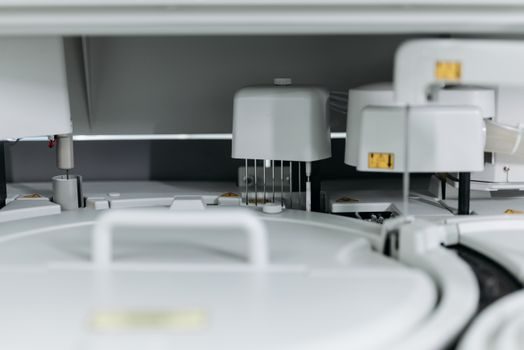
Process GCs earn their place in natural-gas calorific-value skids, refinery reformer-gas analysis, ethylene cracker off-gas monitoring, fermentation off-gas (CO2, O2, ethanol), and ambient air toxics cabinets. In each case the value comes from resolving overlapping peaks that a single-parameter analyzer cannot separate; for instance, separating methane, ethane, and propane on a single column run beats three separate NDIR benches on footprint, drift, and cross-interference. [S2]
Portable and on-line GCs are distinct product lines with different validation, carrier-gas, and calibration regimes [S1]. For hazardous-area deployment, the GC cabinet, sample conditioner, and vent paths must be evaluated against the same area classification as any analyzer on the skid.
Where a pH Meter Fits
A pH meter belongs on every neutralization, precipitation, and biological-treatment loop. In a wastewater plant, in-line pH probes drive caustic or acid dosing for ammonia stripping and metal removal. In a pharmaceutical water-for-injection skid, a calibrated pH loop is one of the release tests, and the probe must be pulled, cleaned, and re-standardized on a documented schedule. [S3]
Continuous pH monitoring also matters in amine and glycol contactors where acid gas carryover drives pH swings that flag tower upsets, and in cooling-tower basins where pH drift flags acid or caustic overfeed. For a wider comparator view, the open channel vs thermal mass flowmeter spec frame is a useful parallel case where single-parameter vs multi-parameter decisions play out on the flow side of the same skid.
Limits, Failure Modes, and Cross-Contamination Risk
The most common GC failure mode on a process skid is contamination or loss of carrier gas pressure, which shows up as retention-time drift, rising baselines, or total loss of peaks. Sample conditioning failures — coalescing filter saturation, membrane dryer breakthrough, heated line cold spots — produce the same symptom set, so troubleshooting starts at sample prep, not the analyzer [S2].
The most common pH failure mode is a poisoned or coated reference junction, which produces a stable but wrong reading that passes a one-point check. Junction clogging, glass-membrane abrasion, and aging reference electrolyte all show up as slow response, offset, or both. Online diagnostics such as slope, offset, and glass impedance (on smart probes) catch these before they cascade into a bad dosing decision.
On a shared skid, a GC sample vent and a pH probe drain must never be tied together without segregation. A GC vent can carry solvent or acid vapors that coat a pH reference junction sitting a few feet downstream in the same drain tray. Segregate the drain paths and route the GC vent outside.
Standards, Calibration, and Documentation
GC methods lean on published methods (EPA TO series, ASTM D1946, ASTM D2163, EN 15984 depending on matrix) and on instrument-level detector linearity checks. pH work leans on buffer-traceable calibration (typically pH 4.01, 7.00, 10.01 NIST-traceable buffers) and on documented two- or three-point slope capture. Neither instrument survives long in a regulated environment without scheduled calibration records and a written conditioning maintenance plan. [S1]
Both instruments can be paired on the same process: a fermentation skid, for example, typically has a pH loop on the broth and a GC on the off-gas, and the data is reconciled in the DCS to flag yield anomalies. The same pattern shows up in chlor-alkali cells, where pH in the brine loop and GC on the hydrogen and chlorine product streams are both required for material balance.
Sourcing and Skid Integration Notes
When sourcing, pin the analyzer to the method, not the brand: column phase, detector type, and cycle time for GC; reference type, junction material, and temperature compensation for pH. Industrial-process GCs come in laboratory off-line, on-line, portable, and high-end plasma configurations with different carrier-gas, calibration, and footprint implications [S1].
For related electrochemical analyzers that often travel with pH on the same skid, see the conductivity meter selection criteria for chemical dosing skid design piece — conductivity and pH loops are routinely co-specified and share conditioning hardware. For analyzer-class comparisons on the gas side, the broader gas analyzer reference and the combustible gas detector entry cover the single-parameter LEL and IR benches that GC either complements or replaces depending on analyte count.
Trackable signals for the next quarter: vendor release of multi-detector GC platforms aimed at mid-stream natural-gas and biogas skids, and tightening of buffer-traceability documentation in pharmaceutical and food-grade pH loops. Watch for updated ASTM and EN methods that lock in detector-and-column pairings; those revisions re-shape GC procurement as much as any hardware release does.