
Manual knife-gate valves from audited Chinese suppliers on Made-in-China list at US$30.00–2,000.00 per piece with a 2-piece MOQ as of 18 May 2026, with body material and seat type setting the bulk of the spread [S4]. On the same platform, generic DIN3352 F4/F5, BS5163 and BS5150 resilient-seated ductile-iron and brass units are posted at US$20.00–1,000.00 per piece with a 50-piece MOQ [S5].
Cast-steel API gate valves for oil, gas, chemical and coal-mine service carry a separate pricing track and are quoted against raw-material surcharges rather than fixed catalog numbers, reflecting WCB body cost volatility [S3]. A 8-inch ductile-iron commodity segment coexists on Alibaba alongside BS5163 with-cap utility models on Okorder for municipal water isolation [S2][S6]. For comparison-shopping context, our gate valve buying guide 2026 breaks down body, pressure class, bore and actuation as independent spec variables.
Resilient-Seated and Utility Gate Valves: The Sub-US$1,000 Band
Resilient-seated ductile-iron and cast-iron OS&Y and non-rising-stem models for water and HVAC isolation sit at the entry tier, with 50-piece MOQ factory prices of US$20.00–1,000.00 on Made-in-China [S5]. Belgicast's OS&Y gate valve for water isolation, with AISI-420 stem and a visual position indicator, is listed as an indicative pre-tax product on Direct Industry, with prices flagged as variable by country, raw-material index and FX [S1].
BS5163 with-cap utility gate valves, the dominant UK/DIN-pattern municipal water spec, are sold as a commodity on Okorder with material compliance to domestic and international standards and high overall material quality [S2]. The 8-inch ductile-iron segment on Alibaba mirrors this utility spec range and runs as a high-volume buy across municipal and irrigation projects [S6]. Within this band, selection usually rides on end connection (flanged vs. socket-end vs. with-cap), stem type (rising vs. non-rising) and seat material (EPDM vs. NBR) rather than on pressure class, which is fixed at PN10/PN16 for the bulk of utility builds.
Knife Gate Valves: US$30–2,000, Driven by Body and Seat
Manual knife-gate valves cluster tightly at US$30.00–2,000.00 per piece with 2-piece MOQ on Made-in-China, the lowest MOQ of any gate-valve category on the platform [S4]. The roughly 67:1 spread inside this single category is set by body material (cast iron vs. 304/316 stainless), seat elastomer (EPDM, NBR, Viton, PTFE), bore size (DN50–DN600 and above) and whether the body is full-bore or reduced-bore.
For pulp, paper, mining and wastewater service, the practical spec is body in 304 or 316 SS with a resilient seat rated for slurry abrasion, plus a non-rising stem and a handwheel or bevel-gear actuator. Knife-gate valves are deliberately lighter in pressure class (typically PN10, sometimes PN16) because the gate shears media rather than providing bubble-tight shut-off at high differential pressure — a spec point that often gets misapplied by buyers who treat them as drop-in gate valve replacements. The 2-piece MOQ on Made-in-China also makes sampling realistic for pilot-plant trials, which is unusual for gate-valve categories that default to 50-piece or 100-piece MOQ [S4][S5].
API Cast-Steel and WCB Gate Valves: Surcharge-Driven Pricing

API-pattern cast-steel gate valves for oilfield, chemical, coal-mine and environmental-protection service are listed on CCCME without a fixed price, priced instead against application, pressure class and body material with explicit reference to API gate valve, carbon steel gate valve and WCB gate valve categories [S3]. The reference to WCB (ASTM A216 grade WCB cast carbon steel) signals the body is suitable for ASME B16.34 service up to Class 600 in the standard trim, with hard-facing on the seat and wedge for abrasion and erosion resistance.
The price mechanism is surcharge pass-through, not list price: when carbon steel, chrome-moly or stainless trim scrap indices move, factory quotes move with them, and lead time stretches from the standard 30–45 days to 60–90 days on hot-rolled scrap volatility. For procurement teams, that means the WCB API gate valve line item is the one to lock first in a project, before NACE MR0175 sour-service trim or extended bonnet cryogenic extensions are added. The audited-supplier badge on Made-in-China's knife-gate listings, by contrast, is a fixed-price model, which is one reason the resilient and knife-gate categories track so closely with general industrial casting indices [S4][S3].
Material, Class and Bore: The Three Levers Behind the Spread
Three spec variables account for nearly the entire gate-valve price spread in 2026 catalogs. Body material alone separates a US$20 cast-iron utility gate valve from a US$2,000 stainless knife-gate unit, a 100:1 swing, while pressure class (PN10/PN16 vs. ANSI 150/300/600) and bore size (DN50 vs. DN600) layer on top [S4][S5].
For comparison against a similar industrial buy, our insulation board 2026 price and cost guide shows how density and material grade dominate the spread in building products, and the same pattern holds in fluid handling: the platform-tracked variable is material, not brand. Brass and bronze gate-valve trim adds roughly 1.5–2x over cast iron at the same bore and class, while 316 SS over 304 SS adds another 30–60% depending on scrap surcharge [S5]. Buyers who lock body and class first, then shop bore and end connection, consistently land at the lower end of the published ranges.
Sourcing Channels: MOQ, Audit Status and Lead Time
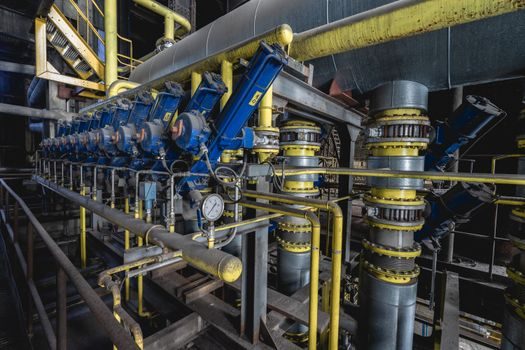
Three sourcing channels dominate 2026 gate-valve procurement. Made-in-China Diamond Member audited suppliers carry the lowest published MOQ — 2 pieces for manual knife-gate valves and 50 pieces for utility gate valves — and price is fixed at factory gate [S4][S5]. CCCME's China Chamber of Commerce of Metals, Minerals & Chemicals import-export listing covers API/spec gate valves priced on inquiry with surcharges, targeting oil and gas EPC rather than distributor resale [S3].
Direct Industry and Okorder sit in between: Direct Industry posts indicative pre-tax prices that vary by country and FX, Okorder runs BS5163 utility models as a commodity catalog with international material compliance [S1][S2]. For projects above 100 units or with NACE MR0175 sour-service requirements, the CCCME and audited-supplier channels pull ahead on traceability; for sub-100-piece water and HVAC buys, the 50-piece MOQ Made-in-China listings are usually the fastest route. Belgicast's OS&Y water-isolation model on Direct Industry is a useful reference point for European utility spec, with AISI-420 stem and visual position indicator as the documented differentiators rather than price [S1].
Failure Modes, Limits and Standards to Watch
Gate-valve misapplication in 2026 procurement falls into three buckets. First, knife-gate valves specified for clean-gas or high-pressure steam service — they are designed for slurry and wastewater, not for bubble-tight shut-off above PN16. Second, WCB API bodies used below their Class 150 minimum on thermal cycling — the body is over-spec and the seat/wedge geometry is wrong for the service, causing seat washout. Third, resilient-seated utility models installed on hydrocarbon service, where EPDM and NBR seats swell and fail; Viton or PTFE seat upgrades are mandatory outside water and air service. [S1]
Standards that govern the buy decisions: BS5163 and DIN3352 F4/F5 for municipal water utility gate valves, API 600 and API 603 for cast- and forged-steel gate valves in oil and gas, and ASME B16.34 for valve pressure-temperature ratings [S2][S3]. For sour service, NACE MR0175 restricts body and trim materials; for European water potability, WRAS or ACS elastomer approval sits on top of the body spec. Lead time on API WCB units runs 45–90 days from PO on carbon-steel surcharge volatility, while 50-piece MOQ utility and knife-gate orders typically ship in 15–30 days ex-Shandong or ex-Zhejiang [S3][S5].
The two trackable signals for the next 90 days are: (1) WCB and carbon-steel surcharge movement on the CCCME inquiry pipeline, which resets API gate-valve quotes; (2) 2-piece MOQ knife-gate pricing on Made-in-China, which has tightened at the entry tier through 18 May 2026 and will indicate whether Shandong factory capacity is holding at full output. Both signals are visible on the same platforms — no new channels needed. For buyers cross-shopping adjacent industrial categories, our butterfly valve buying guide 2026 follows the same body-seat-drive sourcing pattern and is a useful structural parallel for any gate-vs-butterfly substitution debate.
For component-level specifications, see linear guide.