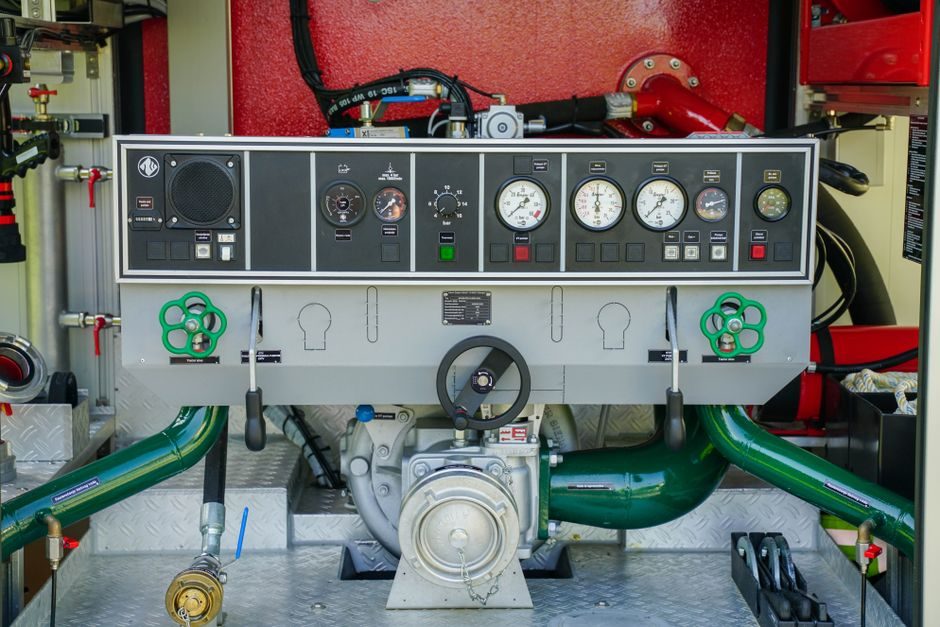
Gate valves 2026 buying hinges on five hard spec gates: body material, pressure class, end connection, bore geometry, and actuation type — get any of these wrong and the unit either won't bolt up, won't isolate, or won't pass hydrotest [S1][S2][S3].
Forged carbon-steel units in DN15–50 ANSI 150# class are commodity-priced at roughly US$10–50 per piece on Chinese wholesale channels as of April 2026, while flanged stainless ASTM-A351-CF8M / CF8 gate valves in DN½–12″ class 150 trim landed at US$30–2,000 list price on audited Made-in-China listings in May 2026. At the upper end, double-flanged ductile-iron distribution units such as the MARAN 125HT cover hot water, seawater, fuel, sludge, and hydrocarbons for industrial, chemical, and fire-suppression service [S3].
Body Material and Pressure-Class Bands
Cast carbon steel (ASTM-A216-WCB) and stainless ASTM-A351-CF8/CF8M remain the two dominant body alloys for flanged gate valves in 2026, with WCB covering general hydrocarbon service and CF8M handling corrosive and low-temperature duty [S2]. Belven's BV49 series uses PN10/PN16 flange bodies in DN40–600 with full-bore smooth bores for minimum pressure loss, including an Aquafin-spec variant BV49A for wastewater [S1]. For higher pressure classes, forged gate valves from Zhejiang Futai and Bonny lift the body to A105 / F316 forging stock and stay in the US$10–200 / piece band, the entry tier of the global gate-valve market. Premium stainless knife-gate models in the Made-in-China catalogue were listed as low as US$20/piece MOQ 1, but with audited premium-tier suppliers running US$300–5,000 per flanged pneumatic metal-seated unit.
End Connection, Face-to-Face and Bore Geometry
Flanged end connection is the default in process-grade gate valves — Belven specifies PN10/16 flanges to EN 558-1 face-to-face series 14/15 [S1], and BOLA-TEK's BT-FGA carries ANSI B16.10 face-to-face with ANSI B16.5 flanges at 16 bar (232.1 psi) PN-equivalent in DN½–12″ [S2]. For slurry, sewage, and pulp stock, wafer-style knife-gate bodies like EBRO's WB 11 fit between flanges up to DN 1,600 mm and are bidirectional — they seal against the seat on either flow direction when line is unpressurised [S4]. For isolation in clean service, a full-bore resilient-seated gate valve matches pipe ID, so a pig can pass and pressure loss is negligible; reduced-bore units save weight and cost but generate a fixed Cv loss that must be checked against the pump curve. Specifiers should lock the face-to-face dimension against ISO 5752 / EN 558 series before picking a body length, otherwise the replacement unit won't drop into the existing spool.
Manual vs Gear, Electric, Pneumatic, Hydraulic Actuation
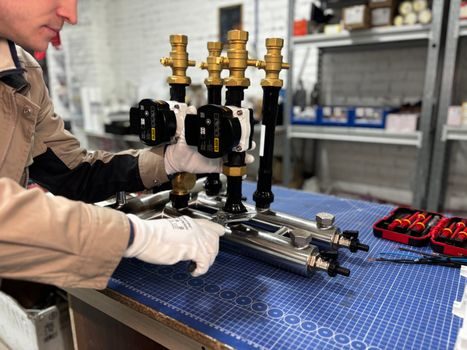
Handwheel operation is the baseline — MARAN 125HT, BOLA-TEK BT-FGA, and Belven BV49 are all handwheel-driven for drain, distribution, and regulating duty [S1][S2][S3]. Knife-gate and large-bore lines are routinely upgraded to gear, electric, pneumatic, or hydraulic operators: EBRO's WB 11 lists all four actuator types in a single product code, sized for DN up to 1,600 mm sewage duty [S4]. Selecting the actuator is a torque calculation first, voltage / air supply second, and fail-safe position (fail-open vs fail-closed) third — DN ≥ 600 mm handwheels at full differential pressure will not pass an operator hand-strength test and need a gear or motor. A knife gate valve on slurry typically needs a pneumatic or hydraulic actuator because the gate edges accumulate solids and the seating torque on a DN 1,000+ line runs into the kN range.
Application Matrix: Clean Hydrocarbon, Wastewater, Slurry, and Steam
Pick by what the line actually carries, not by valve type. Clean hydrocarbon and steam lines take a gate valve with WCB body and 13Cr / SS trim, face-to-face per ANSI B16.10 [S2]. Wastewater and raw-water lines use either a flanged resilient-seated gate (Belven BV49A Aquafin) or a double-flanged ductile-iron unit such as MARAN 125HT, which is explicitly rated for hot water, cold water, seawater, brine, fuel oil, and sludge [S1][S3]. Slurry, pulp, and sewage need a knife gate valve (EBRO WB 11, wafer, bidirectional) because the blade shears through entrained solids that would jam a wedge gate [S4]. Forged small-bore units from Chinese audited suppliers (Zhejiang Futai, Bonny) cover the DN15–50 utility class and cost less than a DIN-pillow flange.
Price Bands and Sourcing Levers in 2026
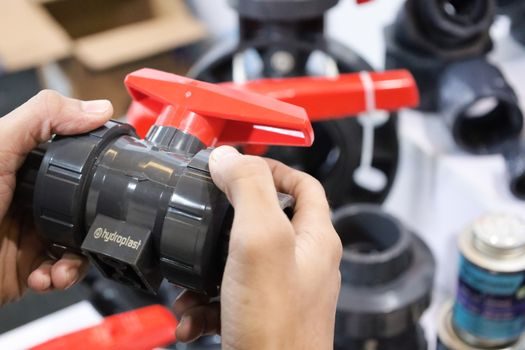
The 2026 Made-in-China price spread for manual knife-gate valves is roughly US$30–2,000 per piece (MOQ 2 pieces, Qingdao Huaguan), forge-gate valves sit at US$10–50 (Zhejiang Futai, MOQ 1) to US$19–200 (Bonny, MOQ 1), and premium-tier knife-gate units at audited suppliers run US$300–5,000 per flanged pneumatic metal-seated piece. Shanghai Power Plant Valve lists an ANSI Sdf premium gate valve at US$89/2-piece MOQ. The dominant cost levers are body alloy (WCB < CF8 < CF8M), size (DN matters exponentially on stainless), pressure class (150# vs 300# doubles forging cost), and MOQ — pushing MOQ from 1 to 10 pieces on Chinese channels routinely drops 10–20% off the unit price. [S1]
What Gate Valves Will Not Do — and When to Pick a Different Type
Gate valves are isolation devices, not throttling devices. Belven's BV49 is advertised as "easy to regulate the flow" [S1], but the underlying risk is well known in process engineering: in the 10–95% open range, partial-lift gate throttling erodes the seat and disc faces and vibration can crack the stem. If modulating control is the duty, switch to a globe valve or a ball valve characterised seat. Likewise, gate valves are not drop-tight for gas in dirty service — a knife gate valve seals better on slurry but a resilient-seated gate valve or a ball valve is preferred for tight gas shutoff. Forged small-bore gate valves (DN ≤ 50) are also a poor fit for high-cycle automation — use a ball valve with electric / pneumatic actuator instead, since the seat life of a ball outperforms a wedge gate by an order of magnitude on cycle count. Buyers who cross-shop ball valves for the same line should compare the spec gates side by side — see this 2026 ball-valve body/bore/end-connection breakdown for the parallel selection logic.
Standards, Markings and Pre-Shipment Checks
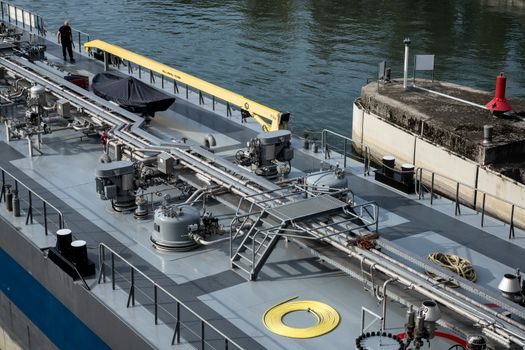
Three standard families govern almost every gate-valve spec sheet you'll see in 2026 procurement: ASME B16.34 (valve design and rating), ASME B16.10 (face-to-face dimensions, used on BOLA-TEK BT-FGA) and ASME B16.5 (flange dimensions, used on BOLA-TEK BT-FGA), and EN 558-1 series 14/15 (face-to-face, used on Belven BV49) [S1][S2]. For pressure-containing parts, ASTM A216 WCB and ASTM A351 CF8/CF8M define the cast carbon and stainless grades [S2]. Operators who physically install the units — utility crews, building-services plumbers — are now being re-equipped with purpose-built gate-valve wrenches, with Gedore publishing a 2026-05 product note on compact wrenches sized for in-duct and in-trench gate operation [S6]. A simple but effective QA gate before sign-off: confirm face-to-face per the standard series on the data sheet, confirm flange class matches the pipe schedule, and confirm hydrotest certificate references the body rating — not just the generic "tested" line.
Track two signals through Q3 2026: first, whether the Gate-Valve.com premium domain (listed on HugeDomains for US$1,795 or US$74.79/month, 0% interest) closes — its listing was active on 2026-06-25 [S5], and a sale to a manufacturer or distributor would consolidate the keyword space. Second, watch the stainless body premium — if the BOLA-TEK BT-FGA and similar CF8M units sustain quoted US$30–2,000 list into Q3, the 2026 stainless surcharge is stable and a buyer can lock the RFQ. For a complementary view on isolating vs throttling valves, the ball valve 2026 price and cost guide is a useful cross-check on material and MOQ levers.