
Gear couplings remain the highest torque-density flexible coupling option for packaging lines, with metallic flex types (gear, grid, disc) carrying roughly 3 to 5 times the torque per unit OD of typical rubber-shear elastomeric couplings [S2].
On a typical packaging line, drive stations split into two speed bands: low-speed, high-torque stations (conveyor drums, palletiser lifts, shrink-tunnel conveyors, cap-sorter bowls) where gear couplings are the default, and high-speed, low-to-medium-torque stations (labelling, filling, cartoning) where disc, elastomeric, or beam couplings usually win [S5].
Where gear couplings actually fit on a packaging line
Gear couplings are recommended for low-speed, high-torque applications in packaging, because the geared teeth share load across multiple contact lines and tolerate parallel, angular, and axial misalignment simultaneously [S5]. On a packaging line that maps to the reducer-output end of a conveyor or a palletiser slew drive, not the servo-driven labelling head.
Regal Rexnord groups Falk, Jaure, and Kop-Flex gear coupling lines under one portfolio, with continuous-sleeve and full-flex constructions used on bulk-handling, mixing, and conveying drives in process plants [S4]. Rexnord's own Falk Lifelign Type G66 is offered in single and double engagement versions for cranes, hoists, and similar high-torque/low-speed service, a duty profile that matches in-plant conveyor and palletiser stations rather than the form-fill-seal axis itself [S7].
Spec parameters that drive the right gear coupling size
The Lovejoy Coupling Handbook ranks bore and torque rating as the two primary gear coupling selection parameters, with speed, misalignment, service factor, and hub material as the secondary set [S6]. In packaging, the bore is usually dictated by the reducer output shaft (common small-frame reducer outputs land between 25 mm and 60 mm), so torque and service factor end up doing most of the work.
Engineers apply a service factor greater than 1.0 to the catalog torque to cover start/stop transients, jam loads, and cyclic peaks; almost all manufacturers rate their couplings for a 200% peak overload relative to catalog rating to absorb motor starting transients [S2]. For a cap-sorter or auger filler, where stall loads are routine, a service factor in the 1.5 to 2.0 range is typical, pushing the chosen coupling one or two sizes above the bare motor-rated torque.
Misalignment budget also needs to be specified, not assumed. Standard gear couplings typically accept up to 0.5 to 2.0 mm parallel offset and roughly 0.25 to 1.5 degrees of angular misalignment per gear mesh, with double-engagement (spacer) versions sharing the misalignment budget across two half-couplings and letting the spacer absorb the offset [S4][S7].
Comparison: gear vs disc vs elastomeric on packaging drive stations

Across the four flexing-element families commonly seen on packaging machinery, gear, disc, grid, and elastomeric, the trade is torque density versus speed, stiffness, and maintenance [S2].
On a criteria basis: torque density ranks gear > grid > disc > rubber-shear elastomeric; torsional stiffness ranks gear, disc, and grid as the stiffest with elastomeric the lowest; maximum speed (rpm) ranks disc > elastomeric > gear > grid, with gear couplings typically capped around 3,000 to 5,000 rpm depending on size and balance; misalignment tolerance ranks elastomeric highest, then gear, then disc; maintenance burden ranks gear and grid highest because they need scheduled relubrication, disc and elastomeric lowest [S2][S5].
For the high-speed filling and labelling axes (often 1,500 to 3,000 rpm servo outputs) the gear coupling is usually the wrong pick: speed and balance limits get hit before torque does, and disc or servo elastomeric couplings (zero-backlash beam and bellows types) are the spec default, as also noted in general industrial coupling guidance [S2][S5]. Selecting the right coupling for those stages is covered in detail in Jaw Coupling Selection for Marine Drives: Spec-First Guide, which has a comparable torque/speed tradeoff framework.
Materials, lubrication, and hygienic-line constraints
Standard industrial gear couplings ship in carbon or alloy steel with hardened teeth, run on a mineral or synthetic grease schedule, and need a boot or guard to retain lubricant and keep contaminants out [S2]. On food and beverage packaging lines (carton forming, bottle filling, cap application) the surrounding environment is wet, acidic, and cleaned with CIP (clean-in-place) agents, so a standard lubricated steel gear coupling is a poor fit near the product zone.
R+W addresses this by offering the full relevant coupling range in stainless steel, with surface finishes such as anodising or oxidising as alternatives where full stainless is not required, and the same supplier fits mechanical safety couplings at the carton-blade station that decouple in milliseconds on a jam to protect the cutter and motor [S1]. A food-zone packaging line therefore tends to mix coupling types: stainless disc or elastomeric couplings at the wet end, and standard lubricated gear couplings on the upstream and downstream conveyor / palletiser sections where the product is sealed.
What gear couplings do poorly on a packaging line
Three failure modes dominate when a gear coupling is misapplied on packaging equipment. First, overspeed: catalogue maximum rpm for small gear couplings is often 3,600 to 5,000 rpm, and operation above that without re-balancing accelerates tooth wear and generates heat in the lubricant [S2]. Second, missed lubrication: a gear coupling that is grease-fitted and then ignored will fail by tooth wear and backlash growth, the same metallic-coupling wear failure mode flagged across metallic coupling types [S5]. Third, backlash: geared teeth need clearance to transmit torque without binding, so gear couplings are not a zero-backlash design and should not be specified on a servo-driven register or labelling axis where positional repeatability is in the ±0.1 mm range.
For those servo axes, a disc or elastomeric jaw coupling, or a beam/bellows coupling, is the correct spec, and the practical selection pattern is similar to the marine drives case in Jaw Coupling Specs for Wind Power Drivetrains, where misalignment and stiffness constraints push the designer away from geared teeth.
Selection checklist for a packaging-line gear coupling
Specifying a gear coupling on a packaging drive reduces to a six-line decision. Confirm the drive is low-speed (under 3,000 rpm at rated point) and the load is continuous or moderately cyclic, not high-cycle servo. Compute running torque from motor power and speed, then apply a service factor of 1.5 to 2.0 for packaging duty to set the required catalog torque. Set the bore from the driven shaft diameter and the keyway, and verify the catalog bore range of the selected size covers it, since maximum bore is the hard limit on most gear-coupling lines [S2][S6]. Confirm the misalignment budget (parallel, angular, axial) is inside the half-coupling's rating, and decide between continuous-sleeve and full-flex/spacer based on whether the application needs a floating shaft or a brakewheel/disc-brake mount [S7]. Finally, lock the lubrication plan and the guarding: gear couplings need a grease schedule (often every 3 to 6 months in packaging service) plus a guard on any station within operator reach.
Clutch Engineering and other suppliers also note that gear couplings remain relatively compact for their torque rating, which matters on retrofit packaging lines where space between reducer and driven shaft is fixed [S8].
What to watch in the next sourcing cycle
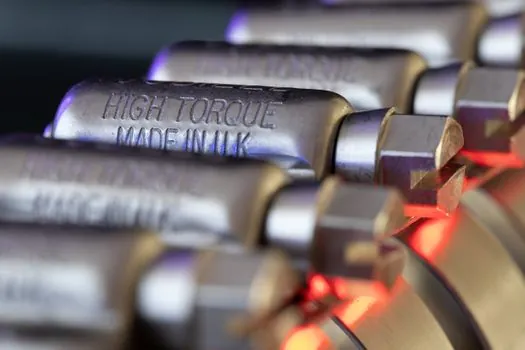
Two verifiable signals to track over the next sourcing window: the bore-vs-torque ceiling of small-frame gear couplings from Regal Rexnord's Falk/Kop-Flex lines (drives whether a single size can replace a gear-and-spacer pair on a conveyor drum) and the expansion of stainless-steel and maintenance-free disc/elastomeric options from R+W and similar suppliers into the wet-end packaging zone, since that directly substitutes for, or removes, lubricated gear couplings on food lines [S1][S4]. Gear couplings will not disappear from packaging, but the share of stations where they are the right pick is narrowing as servo axes and hygienic-zone requirements continue to expand.
For component-level specifications, see logistics packaging, packaging machine, and packaging material.