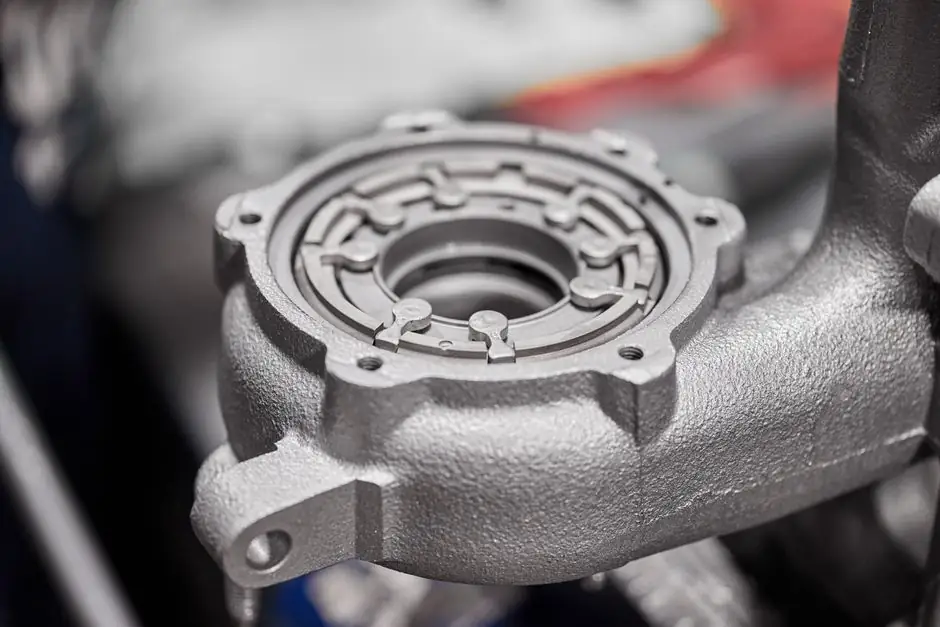
External gear pumps carry a published unit price of USD 500 to USD 3,000 against USD 3,000 to USD 15,000 for a twin-screw unit, a 2-3x capital gap that flips once maintenance, energy, and downtime are scored [S3].
Gear pumps cover 2-6,000 LPM at up to 70 kg/cm² and up to 100,000 cSt, with hydraulic variants in the CGP81/97/113 displacement class (81-113 cc/rev) rated 207 bar continuous, 248 bar intermittent, 600-2,900 rpm, and 93 °C oil [S1][S2].
What a Gear Pump Is, and Where the Money Actually Goes
A gear pump is a fixed-displacement positive-displacement device: two meshing gears enclose a defined volume per revolution and force it from suction to discharge, so flow scales with shaft speed and discharge pressure is set by the system up to the relief valve [S1].
The lifetime bill on any positive-displacement pump is dominated by operating cost, not purchase cost. A 2026 industry analysis of screw-pump economics concludes that stator replacement intervals, energy consumption, and unplanned downtime together account for 85-90% of lifetime spend [S7]. The same logic applies to gear units: published purchase price is a single-digit to low-double-digit share of TCO once a 6-12 month gear-replacement cycle and motor energy draw are layered in [S3][S7].
Stated differently, the 30-80% purchase-price premium on an ATEX-certified gear pump is normally recovered inside one or two unplanned-downtime events avoided, per the 7-step ATEX selection guide published 2026-03-28 [S8].
Cost Drivers Ranked, With Real Numbers Attached
Capital cost (pump plus motor) for a gear-pump skid in Indian process-plant pricing sits in the INR 35,000-60,000 band, against INR 55,000-90,000 for an equivalent centrifugal skid at the same duty, a 35-50% capital advantage before energy is counted [S1].
Energy cost dominates the recurring bill at moderate-to-high viscosity: between 150-300 cSt the gear pump's volumetric efficiency advantage over a centrifugal unit pulls its specific energy consumption down enough to swing TCO in 12-24 months, with the crossover moving earlier as duty hours rise [S1]. For servo-hydraulic retrofits, Voith's IPV/IPH engineering guide reports a 35% reduction in total hydraulic-system TCO at an unspecified incremental capex, signalling that efficiency-grade gearing can move the TCO needle by a full third on the right duty [S6].
Maintenance cost is the third leg. In harsh-service lubrication or abrasive-fluid duty, gear sets on external pumps are replaced every 6-12 months at roughly 4 hours of labour per pump, with the unit pulled from the line for the swap [S3]. Twin-screw rotors, by contrast, last 5+ years in normal service, with bearings and seals as the only routine consumables, and 2-hour in-line servicing [S3]. That gap is the structural reason a USD 500-3,000 gear pump can end up costing more over a 5-year window than a USD 3,000-15,000 twin-screw unit on the same duty [S3].
Comparison: Gear Pump vs Centrifugal vs Twin-Screw, on Four Decision Criteria
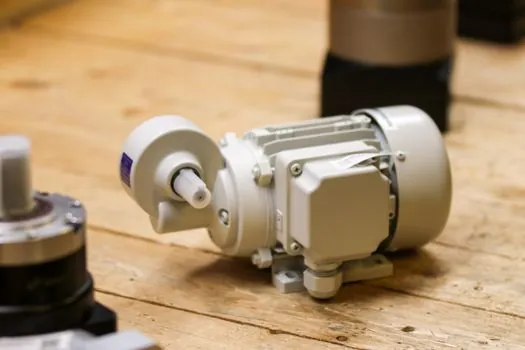
Side-by-side on the four criteria a process engineer actually decides against:
Upfront capital: gear pump INR 35,000-60,000 (pump+motor) beats centrifugal INR 55,000-90,000 and twin-screw USD 3,000-15,000 [S1][S3].
Viscosity ceiling: gear pump tops out around 500 cP, twin-screw covers 1 cP to 1,000,000 cP with custom-cut profiles, centrifugal performance collapses above 150-300 cSt without derating [S1][S3].
Solids tolerance: gear pumps are zero-solids, even 0.1 mm particles jam the gears; twin-screw passes up to 2 mm soft solids; centrifugal handles dirty water but is destroyed by hard particles above its impeller clearance [S3].
Service interval: gear sets 6-12 months with 4-hour out-of-line swap; twin-screw rotors 5+ years with 2-hour in-line bearing/seal service; centrifugal bearings and seals 18-36 months but impeller erosion is duty-specific [S3].
For a detailed run-through of where each variant wins and loses, the gear pump types and classifications spec map lines external, internal, and helical geometries against the same duty axes.
Who a Gear Pump Is For, and Who Should Walk Away
Gear pumps fit buyers with clean, low-to-medium-viscosity fluids (water, diesel, hydraulic oils, lubricants) at flow under 50 GPM, intermittent pressure up to 3,000 psi on high-pressure variants, and 600-2,900 rpm on common Cat-class hydraulic units [S1][S2][S3].
Gear pumps do not fit solids-laden service, fluids above 500 cP, abrasive slurries, applications requiring 5+ year service intervals, or hygienic duties where a pulled-from-line 4-hour swap is unacceptable [S3]. For a balanced look at where the technology starts to fail, the gear pump advantages and disadvantages 2026 spec map lays out the same duty limits with the failure-mode detail.
Field Realities: Duty, Climate, and Certification Stack
Russia's pump market sat at roughly USD 738.5 million in 2024 with a 3.4% CAGR toward USD 1 billion by 2035, and positive-displacement units, gear pumps included, are the fastest-growing slice because high-viscosity crude, bitumen, and remote-site reliability favour them [S4].
Mining duty drives the same logic through a different cost stack. Cummins' July 2026 mining-engine TCO work targets up to 3% TCO improvement and up to 16% lifecycle-cost improvement on the 2027 QSK60, with 50% reduced maintenance costs on Tier 4 base engines, by bundling fuel-system, control-module, and life-to-overhaul updates in a three-year cycle rather than ad hoc [S5]. A gear pump feeding that engine sees the same TCO levers: less parasitic draw, longer service intervals, and planned overhauls instead of reactive swaps.
On hazardous-area builds, the 7-step ATEX guide quantifies the certification premium at 30-80% above a non-ATEX equivalent, and treats the gap as an insurance policy against unplanned downtime, not a sunk cost [S8].
Total Cost of Ownership: How Each Line Item Moves the Bill
Purchase price: USD 500-3,000 (external gear), USD 3,000-15,000 (twin-screw), INR 35,000-90,000 (gear vs centrifugal skid in India) [S1][S3].
Energy: between 150-300 cSt the gear unit's volumetric-efficiency edge translates into lower kWh per cubic metre; on servo retrofits a Voith IPV/IPH-class swap has shown 35% TCO reduction at the system level [S1][S6].
Maintenance: gear sets 6-12 months at 4 hours out-of-line per swap; twin-screw rotors 5+ years at 2 hours in-line; on mining platforms, a three-year upgrade cycle has demonstrated up to 50% maintenance-cost reduction on Tier 4 base engines [S3][S5].
Downtime cost: 85-90% of lifetime pump spend is stator-replacement, energy, and unplanned-downtime cost combined, so the line item with the highest leverage is the one most often skipped during procurement [S7].
Certification premium: 30-80% above standard for ATEX/IECEx-classified units, recovered inside one or two avoided downtime events on continuous-process plants [S8].
Standards, Sourcing, and Common Spec Pitfalls
Gear-pump spec sheets name API 676 for general-refinery positive-displacement pumps, ATEX 2014/34/EU and the IEC 60079 series for hazardous-area builds, and ISO 4406 for hydraulic-fluid cleanliness targets; none of these is optional on a 3,000-psi hydraulic circuit or a Zone 1 chemical skid [S8].
Two recurring procurement errors still show up in 2026 spec reviews: (1) buying on purchase price alone and ignoring the 85-90% lifetime share of energy plus downtime [S7], and (2) overspec'ing pressure class on a high-viscosity lubricant duty where a lower-pressure, higher-displacement gear pump outperforms a piston unit on both efficiency and maintenance [S1][S3]. The reference for gear pump types and classifications maps these pressure-viscosity trade-offs to specific architectures.
Trackable signals for the next planning window: 2027 QSK60 production start with bundled TCO upgrades [S5]; continued mid-single-digit growth in positive-displacement share of the Russian pump market through 2035 [S4]; and steady downward pressure on gear-pump service intervals as helical and high-efficiency tooth profiles replace straight-cut gears in mobile hydraulics [S2][S6].
The underlying component specifications are covered under total station, gear pump, and gear coupling.