Sizing, fuel chemistry, and enclosure material compatibility are the three primary criteria that determine whether a standby or prime generator passes a chemical-plant engineering review (Consulting-Specifying Engineer, 2025-08).
Mission-critical chemical, biopharmaceutical, and semiconductor facilities must classify every load as emergency, legally required standby, or optional standby before a single generator nameplate is written, because that classification drives both the sizing margin and the enclosure rating required by the next reviewer in the chain (S10, 2025-08).
What a Chemical Compatibility Review Covers on a Generator
The Lee Company material compatibility guidelines (S7) and the Repligen Spectrum chart (S8) publish standardized rating tables that engineers reuse for wetted elastomers, while the Graco chemical compatibility guide (S4) extends the same data set to the metals, plastics, and coatings used on industrial generator enclosures, day tanks, fuel lines, and exhaust manifolds. The review pass compares every wetted material on the generator datasheet against the site chemical inventory using one of those tables, then reuses the identical table for a pressure sensor diaphragm, a seal, and a gasket in the same loop. [S1]
Generator Sizing Is the First Selection Filter
The FEMA Generator Technical Job Aid (S2, 2022-03) states that the rated output of the selected generator must be matched to the maximum anticipated capacity, with running load defined as the sum of all equipment the unit must carry in the worst single event. In a chemical plant the running load typically includes flow meter loops, scrubber fans, instrument air compressors, and emergency lighting. Sizing flows from the load classification in S10 — emergency, legally required standby, or optional standby — not from the nameplate of the largest motor on site. [S2]
Enclosure Ratings and Hazardous-Area Materials
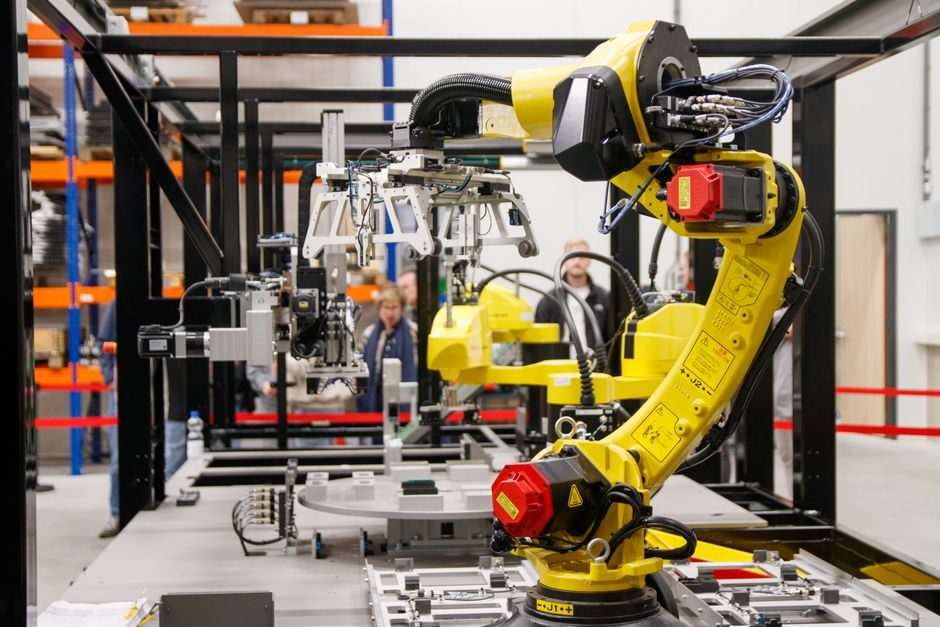
Industrial generator datasheets typically call out NEMA 4X (stainless or fiberglass, corrosion-resistant) or NEMA 7 (Class I explosion-proof) and NEMA 9 (Class II dust-ignition-proof) configurations for chemical and pharmaceutical sites (S10, 2025-08). The enclosure alloy — 304 SS, 316 SS, or coated carbon steel — is then validated against the chemicals present at the installation site using a compatibility chart such as the A/B/C scale published by Industrial Spec (S6) or the 1–5 numeric scale published by The Lee Company (S7), and the chosen rating is locked into the project specification before vendor selection. [S3]
How the Four Public Rating Systems Compare
Four published rating systems are commonly reused across generator, valve, and pump reviews, and the choice of system is project-specific. The Repligen chart (S8) uses R / L / NR / U for Recommended, Limited Exposure, Not Recommended, and Unknown. The Graco guide (S4) uses an A / B / C / D letter code with footnotes for temperature and concentration. Industrial Spec (S6) uses A Excellent through C Fair, with the explicit note that "A" means mechanical properties are not measurably affected and "C" means partial absorption has occurred. The Lee Company (S7) compresses the same idea into a 1–5 numeric scale where 5 is "Superior" and 1 is effectively "do not use." The critical rule is that the same scale must be applied to the generator's industrial valve seals and its fuel-line gaskets so that submittals cannot drift between vendors. [S4]
Steam-Generator Materials Logic Carries Over

The NRC's NUREG-0800 Section 5.4.2.1 Revision 3 (S1) and the companion Standard Review Plan (S3) define acceptance criteria for steam generator tubing against the primary reactor coolant and the secondary coolant, requiring explicit verification that tubing alloy is acceptable in the proposed chemical environment. That same logic — alloy checked against the chemistry of the working fluid — is mirrored in industrial generator reviews where the heat-exchanger alloy, the coolant hoses, and the exhaust manifold must each be checked against the site's chemical inventory using the rating tables referenced in S4, S6, S7, and S8. [S5]
Test-Bench Function Generators Sit Outside This Review
On the electronics test bench, an arbitrary or function waveform generator is selected for waveform variety, switching-load compatibility with a paired power supply, and integration ease (S5, S9). That selection vocabulary — bandwidth, sample rate, output impedance, MOSFET gate-driving capability — is unrelated to chemical compatibility and is therefore not part of the plant-floor review. The two workflows share the same disciplined specification pattern: lock the rating system, lock the load list, and reject any vendor that does not match both. [S6]
Limitations of Generic Compatibility Charts
Generic compatibility charts assume a reference temperature of roughly 20–25 °C and a single chemical concentration, while real plant atmospheres are mixed (vapor plus aerosol), elevated, and dynamic. Per the Industrial Spec chart (S6), a material rated "A" at room temperature may drop to "C" once temperature or concentration rises, and the Repligen chart (S8) carries an explicit "U" for Unknown cases that must be sent back to the vendor for lab data. S10 specifically calls out that labs and chemical plants must classify loads beyond the basic emergency / standby split because the same generator may sit in a corrosive atmosphere for years between tests without ever being run. [S1]
Specification Discipline and Closing Cross-Check
Generator vendor compatibility lists, third-party charts from S4, S6, S7, and S8, and the NEC hazardous-area drawing must all be cross-checked before a purchase order is released, and the chosen rating system (A/B/C or 1–5) must be locked into the project specification so submittals from different vendors can be compared on the same scale. The same pass also re-runs the pressure transmitter seal compatibility check, because the elastomer families on a generator's fuel, crankcase, and intake seals overlap directly with those used on instrument seals in the same loop. [S2]
Two trackable signals follow: the next revision cycle of the FEMA generator job aid (last issued 2022-03) and any change notice issued against NUREG-0800 Section 5.4.2.1, both of which are reused — sometimes informally — as the alloy-versus-coolant reference logic in non-nuclear generator heat-exchanger reviews.