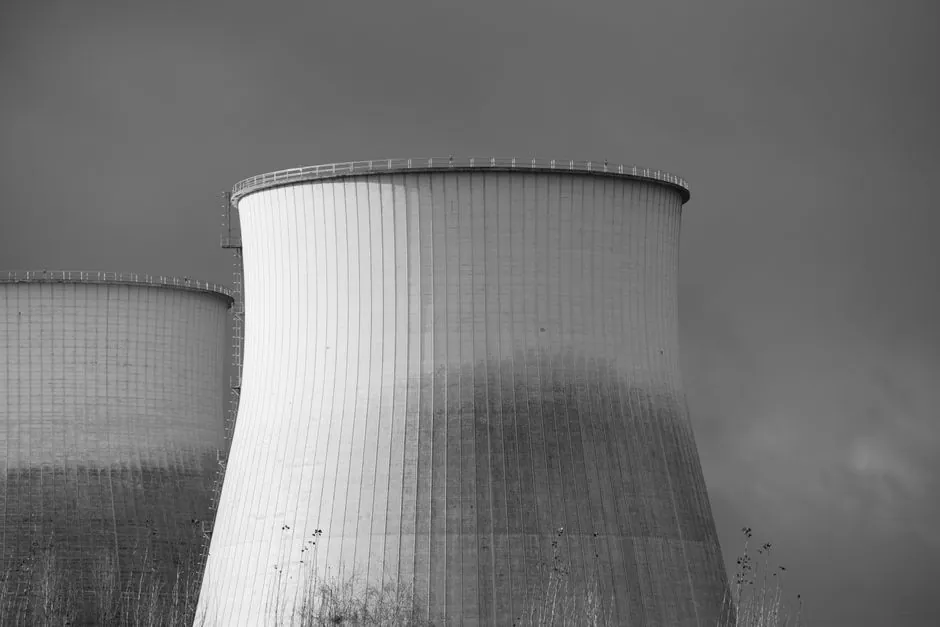
About 80 nuclear reactors with a combined capacity near 78 GW are under construction in 15 countries as of September 2026, with China alone responsible for 38 of those units [S3][S4][S6].
China holds 60 operational reactors totalling 58.7 GW across 18 sites (May 2026), plus 36 units under construction that will add roughly 38.9 GW once commissioned, which is more than 49% of all reactors under construction worldwide [S1]. Global Energy Monitor puts China's share at "nearly half" of world nuclear capacity under construction, with 58.1 GW operational and the country within reach of overtaking France (64.0 GW) within a few years [S5].
Where the 80 reactors sit: country-level buildout
China leads with 38 reactors under construction as of September 2026, followed by India with about a dozen units, then Russia, Turkey, Bangladesh, South Korea, Egypt, the United Kingdom, the United Arab Emirates, and Iran, with smaller numbers in Czechia, Slovakia, Japan, and Argentina [S3][S4]. The World Nuclear Association's running table lists 9 construction starts already logged for 2026, including Rooppur 1 (VVER-1200, 1200 MWe gross), Changjiang SMR 1 (ACP100, 125 MWe), Xiapu 1 (CFR600, 600 MWe), Kalpakkam PFBR (500 MWe), Kudankulam 3, Rajasthan 8, Kursk II-2, Saeul 3 (APR1400, 1400 MWe), and Akkuyu 1 (VVER-1200, 1200 MWe) [S3].
The construction pipeline reaches well beyond 2026: the same table maps 12 unit starts to 2027, 12 more to 2028, 11 to 2029, and a further cluster to 2030 onward, including the first grid-scale SMR unit, Darlington SMR 1 (BWRX-300, 316 MWe) in Canada [S3]. The Hualong One (1,200-1,214 MWe gross) and the Russian VVER-1200/VVER-TOI (1,200-1,255 MWe gross) dominate the design mix, with CAP1000 (1,250 MWe), APR1400 (1,400 MWe), EPR (1,720 MWe at Hinkley Point C1) and the BREST-300 lead-cooled fast reactor (300 MWe) as the next most common [S3].
China is building half the world: drivers, batch build, and SMRs
China's standardised project management and batch construction of 6 to 10 reactors per programme cut average build time to about six years for units connected between 2012 and 2021, versus a global average near nine years, with more recent reporting in 2024 showing 5-7 year build windows for Chinese contractors inside and outside the country [S1]. The pipeline through 2026 keeps that pace: six new reactor construction starts in 2025 plus Xuwei-1 and Taipingling-4 started in 2026 through May, with Sanao-1 and Taipingling-1 already commissioned in 2026 [S1].
The IEA's Global Energy Review 2026 confirms that nuclear reactors totalling 78 GW are under construction in 15 countries, with half of capacity under construction globally sitting in China [S6]. Global Energy Monitor adds that less than one-third of China's planned nuclear capacity has actually broken ground, and China already holds more cancelled nuclear capacity than any other country after its post-Fukushima pivot away from inland sites [S5]. China's first SMR, Linglong-1, is a 100 MWe ACP100 pressurised water unit intended to demonstrate commercial operation in the first half of 2026 [S1].
United States: policy push, advanced reactors, and 400 GWe by 2050
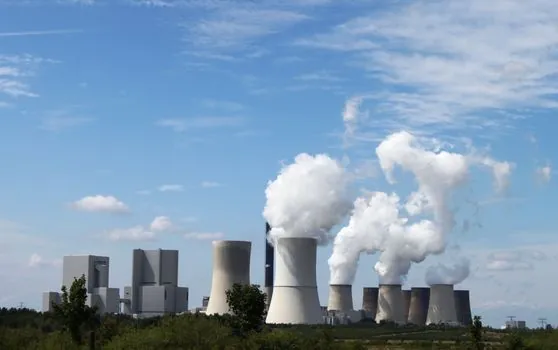
May 2025 executive orders set a target of 400 GWe of US nuclear capacity by 2050, including 5 GWe of uprates and 10 large reactors, with the World Nuclear Association outlook detailing the policy scaffolding [S8]. The US Department of Energy celebrated on July 24, 2026 that four advanced test reactors reached criticality by the July 4, 2026 deadline, exceeding the three-reactor goal of the May 2025 executive order on Reactor Pilot Program testing, with Antares Mark-0 at INL on June 4, 2026, Valar Atomics Ward 250 in Emery County, Utah on June 18, 2026, Deployable Energy Unity at INL on June 30, 2026, and Aalo Atomics Aalo-X at INL on July 4, 2026 [S2].
August 2025 selections under the Reactor Pilot Program named 11 advanced reactor projects across Aalo Atomics, Antares Nuclear, Atomic Alchemy, Deep Fission, Last Energy, Oklo, Natura Resources, Radiant Industries, Terrestrial Energy, and Valar Atomics, with four projects hosted at Idaho National Laboratory: Radiant (KDU), Antares (Mark-0), Aalo (Aalo-X), and Oklo (Aurora) [S2]. The Nuclear Innovation Alliance's April 2026 US Nuclear Energy Project Tracker tracks early-mover projects, and the Office of Energy Dominance Financing is the funding channel backing new builds and reactor restarts [S2][S9]. The DOE "UPRISE" effort targets 2.5 GW of new nuclear capacity by 2027 and 5 GW by 2029, equivalent to five new nuclear reactor-years sooner than alternative paths [S2].
Design comparison: dominant 2026 reactor types on the four decision criteria
Hualong One (Chinese PWR, ~1,200 MWe gross), VVER-1200/VVER-TOI (Russian PWR, 1,200-1,255 MWe gross), CAP1000 (Chinese Gen-III PWR, 1,250 MWe gross), APR1400 (Korean PWR, 1,400 MWe gross), EPR (1,720 MWe gross), BWRX-300 (316 MWe SMR), and ACP100 (125 MWe SMR) together cover the bulk of the 2026 construction table [S3]. On unit size, EPR and APR1400 lead at 1,400-1,720 MWe; on geographic spread, VVER-1200 leads with units under construction in Bangladesh, China, Egypt, India, Russia, and Turkey [S3].
On time-to-grid, Chinese Gen-III batches (Hualong One, CAP1000) are running at 5-7 year build windows in 2024 reporting, against a global historical average near nine years [S1]. On technology risk, the Gen-III PWRs (Hualong One, VVER-1200, APR1400, EPR, CAP1000) are reference designs in serial production, while the SMRs (BWRX-300, ACP100) and the BREST-300 lead-cooled fast reactor are first-of-a-kind builds with longer commissioning risk [S3]. Most of the 80-unit pipeline sits in the Gen-III PWR column, and this concentration is the clearest pattern in the September 2026 data [S3][S4].
Limitations, retirements, and what's not in the headline
The 80-unit headline hides a 20-year balance: 111 reactors were retired over the past 20 years against 101 new reactors starting operation, meaning net operating fleet growth has been small even as construction volumes climb [S3]. Today's 440 operating reactors in 31 countries deliver about 400 GWe and generated 2,702 TWh in 2025, roughly 9% of world electricity, so the 78 GW under construction would lift global capacity by under 20% if all units grid-connect on schedule [S3][S6].
For the United States specifically, the 400 GWe 2050 target depends on restarts, uprates, SMRs, and advanced reactors beyond the current pipeline, since only a small number of new utility-scale builds are in formal construction today [S8]. The 75-year nuclear power anniversary dataset from the World Nuclear Industry Status Report 2026 notes that some "under construction" units see their nuclear provider change during the build, which adds schedule risk to the headline count [S7]. Operators and EPC bidders should expect that the 80-unit figure counts long-stalled sites and design-changes in flight, and the IEA's 78 GW capacity number is the more conservative read on near-term additions [S3][S6].
Signals to watch in the next 6-12 months
Two trackable signals will move the headline: China's 2026 commissioning run (Sanao-1 and Taipingling-1 already connected, with the rest of the 38.9 GW Chinese pipeline scheduled through the late 2020s) and the US Reactor Pilot Program's transition from test-reactor criticality to power-producing builds, with the first electricity-producing units targeted for 2027 [S1][S2]. Investors, EPCs, and component suppliers can monitor IAEA PRIS monthly reactor status changes and the Nuclear Innovation Alliance's US project tracker for pipeline updates [S1][S9].