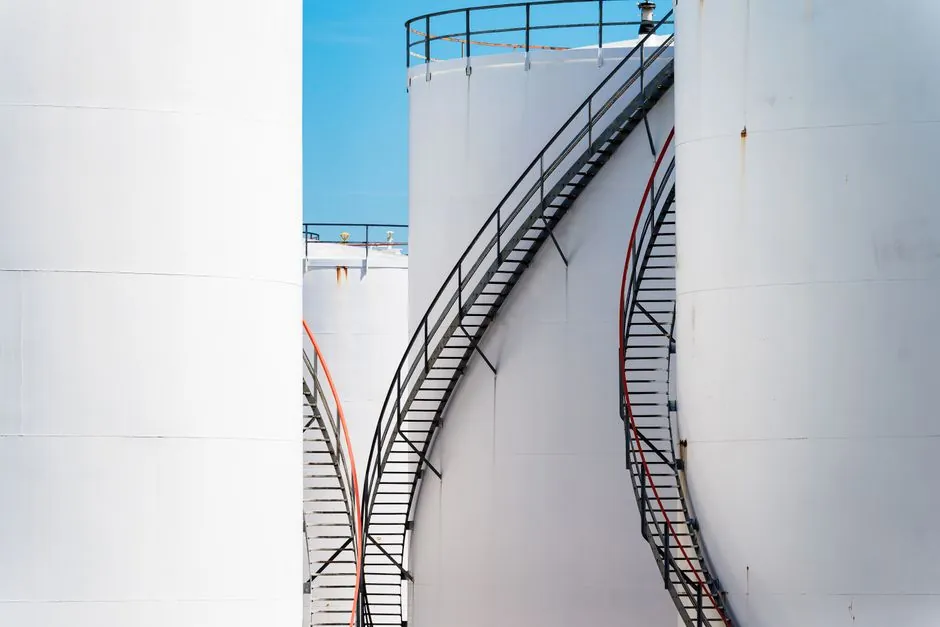
U.S. operable refinery capacity is on track to fall by as much as 402,476 barrels per day (bpd) in 2026 after Lyondell Basell shuttered its 263,776 bpd Houston refinery in February 2025 and Phillips 66 prepared to close its 138,700 bpd Los Angeles facility by the end of 2025, the U.S. Energy Information Administration reported on June 20, 2025 [S5].
The net effect, assuming no de-bottlenecking gains, would push national capacity below the 18.06 million bpd level reported for 2023 [S5]. At the same time, the operating refinery count had already fallen to 130 by January 2026, down from 132 a year earlier, as the EIA continued to remove long-idle units from the active roster [S3][S5].
Where the closures land: California carries the largest single-state hit
California is on pace to end 2026 with 11 refineries, after one facility was converted to renewable fuels in mid-2024 and two more large plants are exiting traditional crude processing, per the American Petroleum Institute [S1]. The Phillips 66 Los Angeles refinery produced its final barrel of conventional fuel in October 2025, and Valero's 145,000 bpd Benicia refinery, near San Francisco, is scheduled to halt operations in April 2026 [S4].
Together, the two California shutdowns remove 17.5% of the state's refining capacity in a single planning cycle, a structural loss that is not backfillable from in-state renewable diesel supply for gasoline-grade molecules [S4]. Because the West Coast is a relatively isolated fuel pool with limited cross-region pipeline access, the lost barrels are likely to be replaced by waterborne imports from the U.S. Gulf Coast and Asian refiners, raising baseline fuel premiums for shippers and end users [S4].
What is actually leaving the U.S. barrel count
The 402,476 bpd at-risk figure stacks three identifiable moves: Lyondell Basell's 263,776 bpd Houston shutdown (February 2025), Phillips 66's 138,700 bpd Los Angeles closure (late 2025), and the EIA's accounting of CPI Operations' 32,000 bpd Paulsboro, New Jersey refinery, which the agency lists as idle [S5]. On the offsetting side, Motiva's Port Arthur complex added 14,500 bpd to become the single largest U.S. refinery at 640,500 bpd, displacing Marathon's Galveston Bay facility [S5].
Refinery rationalization is not uniform by company: Marathon remains the largest U.S. refiner with 13 sites at 2.96 million bpd (16% of national capacity), followed by Valero at 2.2 million bpd across 13 refineries (12%) and ExxonMobil at 1.96 million bpd across four sites (10.6%) [S5]. Roughly half of the historical capacity decline in the United States has been offset by renewable diesel conversions and by new Gulf Coast hydrocrackers processing light shale barrels, but those gains cannot fully replace the lost crude-distillation throughput at the closed sites [S2].
Geopolitical overlay: a separate 10% global capacity shock
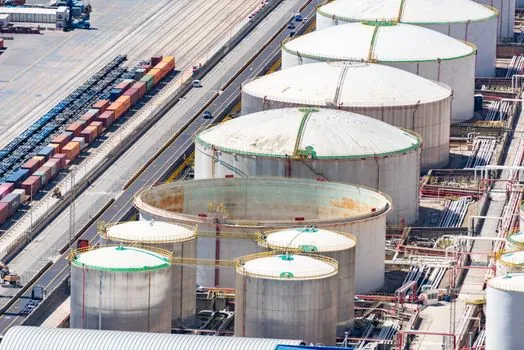
According to the Dallas Fed's October 8, 2026 energy update, global refinery capacity has declined by as much as 10 percent amid mounting transportation challenges and geopolitical tensions, including closure of the Strait of Hormuz, attacks from Houthi rebels in Yemen on Red Sea shipping, damaged Middle East refineries, Ukrainian drone attacks on Russian refineries, and export restrictions in China and Russia [S2].
Product markets, especially diesel and jet fuel, were tight before the Iran war that began in February 2026 and the subsequent Hormuz closure; those tensions pushed gasoline, diesel and jet crack spreads above 2022 levels, the last comparable post-Russia-invasion spike [S2]. Even after the Iran conflict ends and Hormuz traffic normalizes, U.S. retail fuel prices are likely to stay elevated relative to crude until a meaningful slice of global refining capacity returns, per the same Dallas Fed analysis [S2].
Why even profitable operators are exiting: demand, regulation, and age
The economic logic behind 2024-2026 closures is that utilization and margin are not enough to offset rising regulatory capex, thin crack spreads on aging assets, and structurally weaker demand. Between 2019 and 2025, global liquid fuel consumption grew by only 4 million barrels per day while refining capacity expanded by just 2.3 million bpd, and that expansion was regionally lopsided: China and the Middle East added 4.4 million bpd, while Europe and North America shed 2.1 million bpd [S2].
European rationalization was accelerated by record sustained natural gas prices and the loss of Russian crude and vacuum gasoil feedstocks, which pushed older, high-cost, heavily regulated refineries out of the money [S2]. In the U.S., the closure math is driven less by feedstock access and more by California's unique fuel blend, declining in-state gasoline demand, and the cost of compliance with state-level environmental rules that disadvantage older assets [S4]. Refinery count had already compressed from 132 in 2024 to 130 by January 2026, and the EIA's June 2025 capacity report signalled a further slide below 18.06 million bpd once 2026 retirements are booked [S3][S5].
How to read the 2026 numbers in context
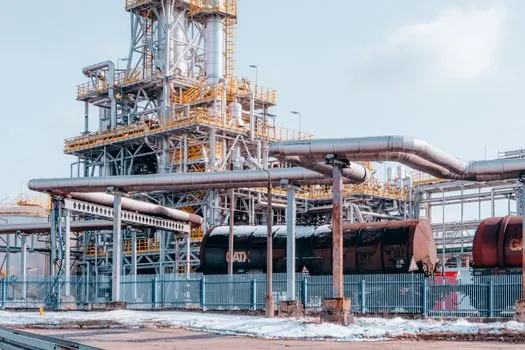
Three data points frame the size of the 2026 reset. First, U.S. operable capacity ended 2024 at 18.4 million bpd, up only 40,000 bpd year on year, after Motiva's Port Arthur efficiency gain [S5]. Second, the closure pipeline through 2026 totals roughly 402,476 bpd of confirmed or scheduled shutdowns, against no announced new refinery builds of comparable scale [S5]. Third, the global capacity overhang has shrunk by up to 10%, and crack spreads are already trading above the 2022 post-invasion highs, signalling that the marginal barrel is now genuinely scarce rather than merely reallocated [S2].
For specifiers, traders, and plant operators, the practical read is that U.S. domestic refined-product supply is moving from a position of modest surplus toward a structural deficit, with California and the West Coast facing the most acute regional premium risk, while Gulf Coast operators gain relative advantage from their proximity to import-displacement demand and shale-feedstock hydrocrackers. Closures of related industrial assets are reshaping capacity in adjacent process industries as well, as tracked in coverage of battery-grade lithium carbonate pricing slipping from 2026 peaks, where downstream battery demand is now absorbing a different slice of the global commodity mix.