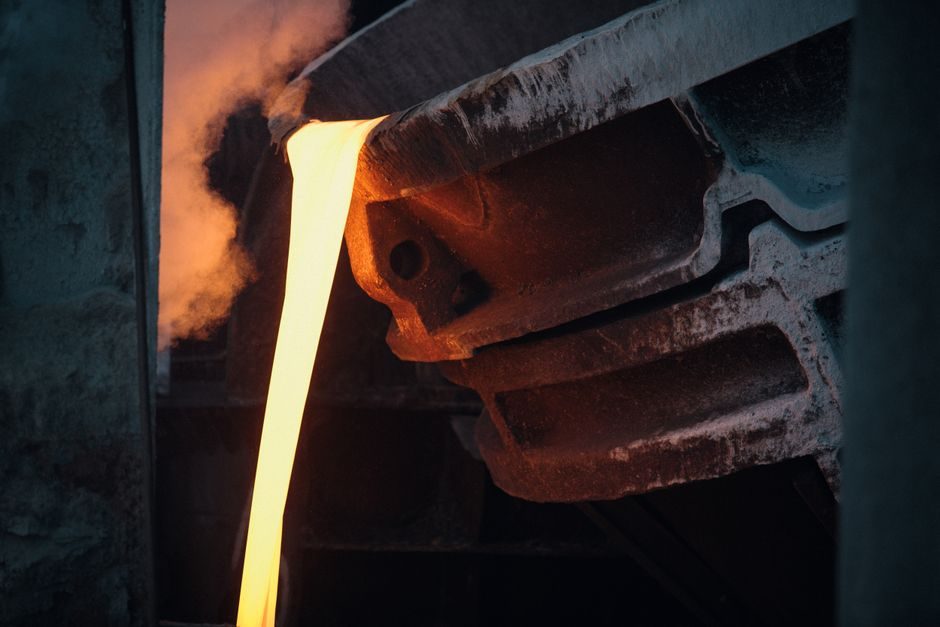
Gravity die casting — also called permanent mould casting — uses a reusable metal mould filled under gravity (or low pressure) rather than a high-velocity cold-chamber shot, and the resulting TCO profile is dominated by die life, energy per shot and refractory turnover rather than the press price itself [S5].
At typical job shops, a gravity die casting machine cell is sized 200–1,200 kN clamp, runs 8–12 cycles/hr on aluminium hand-mould work and 15–25 cycles/hr on machine-mould rotary tables, with part weights from 0.5 kg up to a 30 kg ceiling on cast-handling tooling [S1][S5].
The Five Cost Lines That Move Five-Year TCO
Tooling is the single largest one-off line: a permanent mould for a 5–15 kg aluminium automotive housing is frequently quoted at roughly 30% of an equivalent high-pressure die casting die, but that ratio flips quickly on cycle-count-heavy programmes where machined steel dies in H13 run 80,000–120,000 shots before refurbishment versus 10,000–30,000 for a gravity mould [S1].
Per-shot energy on a 1,000 kN cell is dominated by holding-furnace duty (typical 80–200 kWh per 1,000 kg of melt) and die preheat gas, with hydraulic/pneumatic clamping adding only a small fraction; tilting-furnace and low-pressure variants trade that holding loss for vacuum or pressurised riser energy, with cycle time often the deciding factor [S5].
Die consumables — release agent, die coat, ejector pins, thermocouples — run 3–8% of cell revenue on a mature aluminium programme; refractory-lined holding furnaces carry a 12–24 month reline interval depending on alloy, while iron-rich melts can halve that life [S1][S5].
Labour is the second-largest line and the one most often underestimated: a two-operator hand-mould cell at 10 cycles/hr produces ~16 t/yr per operator against a 2-robot rotary cell that can run 5× that throughput at one operator, so the 5-year labour delta is often larger than the press price spread between the two configurations [S5].
Process Selection vs. Die Casting and Low-Pressure Alternatives
Compared with a die casting machine cold-chamber cell, gravity casting trades 3–5× lower cycle time for the elimination of high-pressure injection hardware and a meaningful reduction in porosity-driven weld-repair rate on thick-wall components, which is why it is specified for safety-relevant aluminium housings where radiographic inspection is impractical [S1][S5].
For thin-wall, high-volume work the aluminum die casting machine route is generally cheaper per part; for thick-wall, lower-volume work, the gravity route is usually cheaper once tooling amortisation is included, and a vacuum die casting machine cell sits between them on both price and porosity [S5].
Magnesium and zinc programmes see different driver stacks: a magnesium die casting machine cell adds SF6 cover-gas and melt-handling safety overhead, while a zinc die casting machine cell on hot-chamber work is a faster amortisation because zinc dies routinely exceed 1 million shots, fundamentally changing the die-life line in any TCO model [S1].
Spec Map: What Sells a TCO Case to Procurement

Three machine-class metrics carry the procurement conversation: shot weight envelope (typically 1–30 kg on production gravity cells), mould clamp force, and die-preheat station count; secondary metrics are tilt-furnace capacity, automatic spray cycle, and PLC data-logging for per-shot traceability [S1][S5].
Four procurement criteria typically decide make/buy: (1) die life in shots before refurb, (2) cycle time per kg poured, (3) refractory reline interval in months, and (4) whether the cell is hand-mould, rotary-table, or low-pressure assisted — each combination shifts the dominant TCO line [S1][S5].
Operating Limits and Failure Modes That Inflate TCO
Cycle time is bounded by solidification, not by clamping: aluminium sections above ~25 mm wall need 90–180 s solidification versus 20–40 s for 6 mm walls, so a "machine with 30 s clamp" is still a 90 s cycle on a thick automotive housing, and any TCO model that ignores solidification physics will understate the real labour cost [S5].
Common TCO inflators in field data are: under-spec die preheats that cause thermal-fatigue cracking, missing thermocouple instrumentation that forces manual melt-temperature drift, and inadequate venting that drives weld-repair rates above 5% — each of which can quietly add 8–15% to 5-year spend without changing the press price line at all [S1].
Standards, Sourcing, and Total-Cost-of-Ownership Discipline
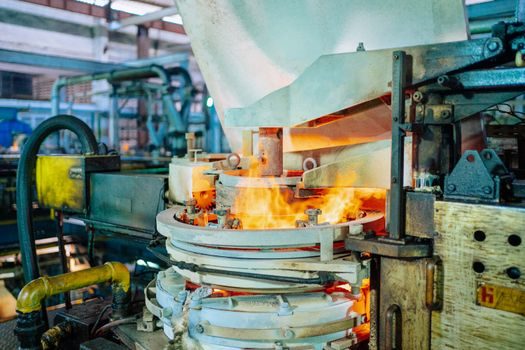
Material conformance is set by alloy designations (A356, A380, ADC12) rather than by casting-process standards; the relevant process-discipline documents are ISO 9001 for quality management and customer-specific ppap / IATF-style controls on automotive programmes, with ISO 9001:2015 certification stated on audited Chinese supplier documentation [S1].
Sourcing from a single integrated foundry that runs in-house tooling, gravity casting, sand casting and CNC machining under one roof removes the multi-vendor coordination cost and typically tightens T1 sample lead time to ~20 days on sand work, with parallel savings on the gravity line through shared heat-treat and inspection assets [S1][S3].
Trackable signals to watch: per-shot energy logs from the PLC, die-shot counters and refurb-interval drift, and refractory reline dates against rated life — together they expose TCO drift a full budget cycle before procurement feels it, and they are the same data lines that a gravity die casting machine types and classifications spec map uses to rank cells.