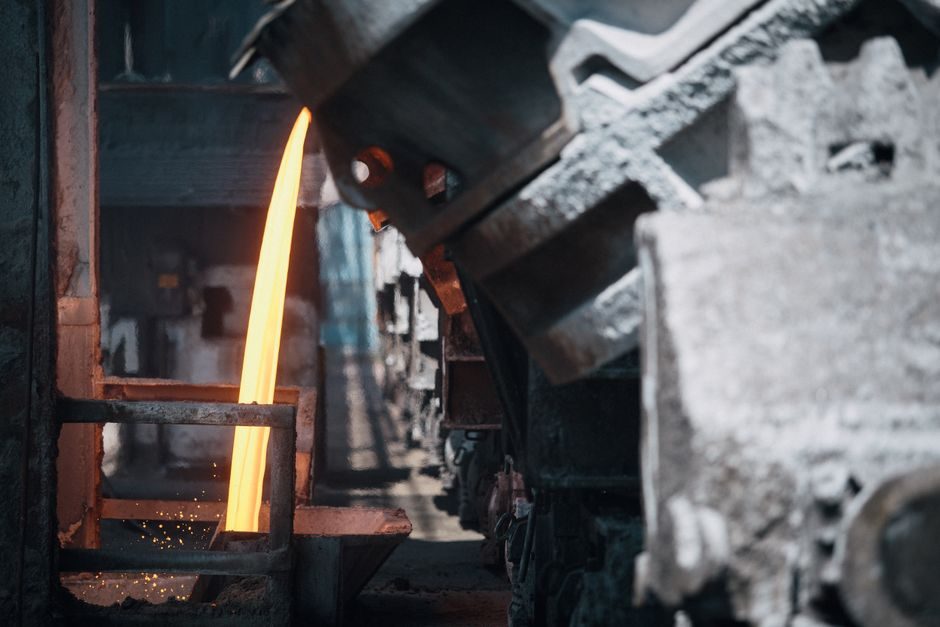
A gravity die casting machine fills a reusable metal mould by gravity pour — no plunger, no intensification pressure — and the rule-of-thumb output band cited on Chinese OEM product pages sits in the low-to-mid thousands of shots per day on a single station with manual or PLC indexing [S1].
The same OEM (WXMAC) lists the WX-LZ400 as a zinc-alloy gravity casting machine with PLC control, touchscreen data setting, imported hydraulic components, adjustable per-mould cooling time, password-protected program memory, and a preset piece counter — a feature set that is representative of the entry-level gravity platform sold into brass and zinc foundries [S1].
Where Gravity Die Casting Wins Over High-Pressure Die Casting Machine Routes
Gravity pour uses 0.0–0.5 bar of metallostatic head only, against the 300–1,500 bar typical of a cold-chamber aluminum die casting machine, so the mould itself can be cast iron or mild steel rather than hardened H13 tool steel in every cavity [S1].
Brass and zinc-alloy castings are explicitly within the WX-LZ400's published working envelope because those alloys flow easily at low superheat, and they do not attack the unprotected mild-steel moulds the way a 680 °C aluminium shot would [S1]. Compared with pressure die casting machine cells — such as the 300T to 3500T LK cold-chamber fleet running ADC12, A380 and A360 at SYX Die Casting's workshop [S2] — gravity cells trade intensification pressure for thicker walls, lower tooling cost and a quieter floor.
For an OEM weighing a vacuum die casting machine or a conventional hot-chamber zinc die casting machine for a 200–800 kg-per-day brass valve run, gravity pour typically wins on unit-tool-cost but loses on cycle time.
Process Capability and Tolerances
Published gravity-machine features include individually adjustable cooling time per mould half, a password-stored operation program and a preset production counter — the kind of control that supports stable wall-thickness repeatability in the ±0.2–0.4 mm range typical for brass gravity castings on a 400-class machine [S1].
The WX-LZ400 spec sheet explicitly states "it is suitable for gravity model casting of brass and zinc alloy" and lists mould adjustment space "convenient for distributing different molds and reducing the requirements for mold dimensions" — a deliberate design choice that lets one machine cover a family of part sizes without re-levelling the platen [S1].
Two-mode cycling (manual and automatic) is standard, which matters when a foundry is running a 60-second brass pour-cool-strip cycle that a single operator supervises while trimming sprues by hand — a workflow that a high-pressure die casting machine would automate instead, but at far higher capex.
Material Envelope: What Runs Well, What Does Not
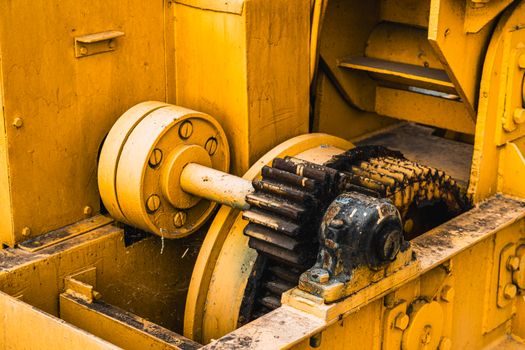
Gravity pour is well matched to copper alloys (brass, bronze), zinc alloys (ZnAl, Zamak-class), and small-to-medium aluminium-silicon parts with thick sections; the published WXMAC application note limits the LZ400 to "brass and zinc alloy" because the hydraulic and clamp package is sized for those densities [S1].
For thin-wall aluminium structural parts, the gravity route loses to a 300T+ cold-chamber aluminum die casting machine — SYX Die Casting, for reference, runs 6 cold-chamber LK cells from 300T to 3500T and casts up to roughly 60 kg (≈132 lbs) per shot in ADC12, A380 and A360 [S2]. Magnesium thin-wall work is the natural fit for a magnesium die casting machine with hot-chamber or vacuum-assist, not a plain gravity platen.
A side-by-side comparison of the three main options against four decision criteria (capex, cycle time, achievable wall thickness, alloy range):
• Gravity die casting — low capex (entry-level PLC machine), slow cycle (30–120 s typical), wall ≥3–4 mm on aluminium, 1.5–3 mm on zinc/brass, alloy range brass/zinc/some aluminium [S1].
• Cold-chamber aluminum die casting machine — high capex (300T–3500T class), fast cycle (60–180 s on 500T), wall 1.5–4 mm, alloy range ADC12/A380/A360 and other Al-Si [S2].
• Vacuum die casting machine — highest capex in the trio, cycle similar to standard cold-chamber, wall 1.0–3 mm, alloy range aluminium and magnesium, with porosity reduction vs atmospheric cells [S2].
Operating Economics and Floor Footprint
Source material quotes aluminium gravity die casting products in the US$2.10–2.50 per-piece range on the Made-in-China platform listing, with a typical "ODM full-mold casting" scope and an MOQ-friendly factory setup [S4]. The listing sits in the Manufacturing & Processing Machinery catalog and is anchored to Chinese OEM-supplier cost, not European or North American distributor resale.
By contrast, an IATF 16949-certified cold-chamber aluminum die casting machine shop such as SYX bundles in-house CNC machining (3-axis to 5-axis, 40 centres), three CNC machining centres with strokes 850/1060/1580 mm for tooling, two central melting furnaces at 1.0 t/h and 1.5 t/h, plus powder-coating and shot/sand blasting — a vertical-integration cost structure that gravity-job shops typically do not carry [S2].
The cost gap is the gravity cell's principal commercial reason to exist: a 400-class PLC-controlled gravity die casting machine lets a job shop enter brass and zinc work without the six-figure tooling spend of a hardened H13 die for a 500T cold-chamber press.
Limitations, Failure Modes and Common Pitfalls
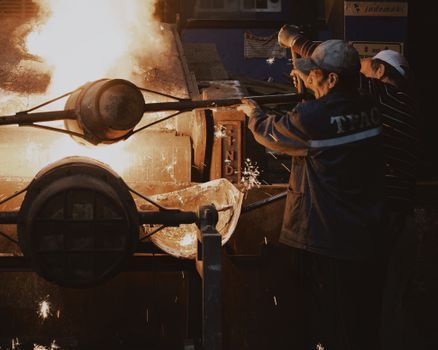
Three failure modes show up repeatedly on gravity cells: gas porosity from turbulent manual pour, cold-shut / misrun on long cavity fills, and die wear on parting-line edges because the mould is unhardened mild steel. The WXMAC spec counters the first by giving the operator manual-plus-automatic cycling control; the second by allowing per-mould cooling time to be set independently in the PLC; the third is mitigated only by periodic die re-machining because the frame is not built to take a high-tonnage clamp [S1].
For deeper coverage of how a gravity die casting machine is specified for installation — foundation loads, rigging clearances and commissioning steps — see the Gravity Die Casting Machine Installation: Foundation, Rigging and Commissioning reference.
Gravity cells also cannot match the metallurgical density of a vacuum die casting machine on aluminium structural parts, and they cannot match the surface speed of a hot-chamber zinc die casting machine on small Zamak hardware — so the decision rule is alloy-thickness-volume, not generic preference.
Standards, Certification and Sourcing Signals
Foundries specifying gravity cells into automotive Tier-1 supply chains usually require the same quality system as a high-pressure shop — ISO 9001 baseline and IATF 16949 for serial automotive work, as held by SYX Die Casting for its cold-chamber aluminum die casting machine operations [S2].
For a wider view of where the LPDC and gravity categories sit next to each other on the spec map, the LPDC Machine Types and Classifications: A 2026 Spec Reference article and the Gravity Die Casting Machine Types and Classifications: 2026 Spec Map piece give a side-by-side read. A broader 10-year cost-line view of running an LPDC cell is laid out in LPDC Total Cost of Ownership: Five Cost Lines That Drive a 10-Year Spend.
Track these signals before ordering: confirmed mould adjustment envelope on the specific machine (WXMAC publishes a defined platen clearance to "reduce the requirements for mold dimensions" [S1]); OEM ISO 9001 / IATF 16949 certificates dated within 12 months [S2]; and a published piece-counter and password-protected program memory on the PLC HMI — both standard on the WX-LZ400 [S1] and a useful proxy for whether the controller is industrial-grade or retrofit hobby.