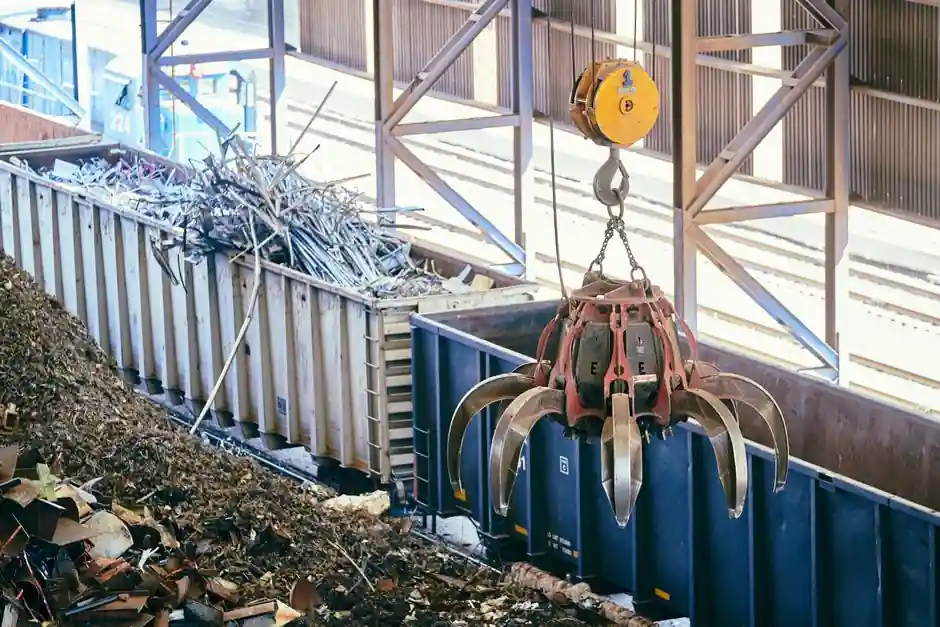
Grey cast iron price increases are driven by the ferrous scrap, pig iron, and coke charge, with U.S. cast iron scrap PPI climbing to 226.692 in August 2026 (Jun 1996 = 100), down from 237.272 in June 2026 but still elevated [S5]. The same feedstock index shows April 2026 at 215.695, confirming a 5% intra-quarter swing that flows directly into foundry melting costs [S5]. Foundries cannot substitute away from ferrous units of iron-bearing material, so scrap steel cost is the single largest variable in the grey iron cost stack.
Grey iron is produced by melting a charge of steel scrap, pig iron, and foundry returns in a cupola or induction furnace, with ferrous scrap typically making up 50–80% of the metallic charge by weight, depending on grade and section size. That tight feedstock linkage is why a $20/ton move in #1 heavy melt shows up on a casting quote within 30–60 days, a mechanism that also shapes stainless steel and alloy steel melt-shop economics, though austenitic grades use different scrap baskets.
Scrap Steel Cost Pass-Through: How $20/ton Becomes a Casting-Line Surcharge
Recyclers report that ferrous pricing can shift by as much as 30% in a single month when commodity markets reprice, and yards commonly update ferrous payouts multiple times per day during volatile sessions [S2][S3].
Regional yard price gaps reinforce the pass-through: a New Jersey yard quoted $215/ton for #1 heavy melt, $205/ton for #1 oversized, $190/ton for shred, and $160/ton for white goods on the same day, a 34% spread between the cleanest and dirtiest ferrous grades that forces foundries to spec feedstock tightly [S4]. Cast iron scrap was independently listed at $165.00/gross ton at the same site, illustrating that iron-bearing scrap is a separate product line from carbon steel busheling [S1]. This is the same cost mechanism that pressures carbon steel mills, except mills can shift between BF/BOF and EAF routes, while grey iron foundries are locked into the ferrous-charge pathway.
What Grey Cast Iron Foundry Buyers Actually Pay: Charge, Energy, Freight, Conversion
The delivered cost of a grey iron casting splits into four cost drivers, and the rankings shift quarter to quarter as energy and freight oscillate. Second, coke, natural gas, and electricity for melting and holding can add 10–20% on top, and induction foundries are particularly exposed to grid rates in the 8–15 ¢/kWh band. Third, inbound scrap freight from yard to receiving dock commonly runs $10–30/ton depending on hauls, with surcharges indexed to diesel. Fourth, conversion cost (labor, molds, cores, sand system, finishing) is the stickiest line item and is roughly fixed per shift, so it dilutes on a per-ton basis as pour weight rises.
Foundries typically pass through ferrous scrap changes via a two-part mechanism: a base price set quarterly against a published scrap benchmark, plus a monthly adjustment clause that indexes to a regional yard index. This structure exists because scrap metal prices are exposed to the same macro drivers as base metals, including GDP-linked industrial demand, currency moves against the U.S. dollar, and trade policy shocks such as tariffs on steel imports, all of which were documented in the post-2018 U.S. market reset [S2]. The same logistics shock sensitivity is also felt by silicon steel and cast iron producers, who cannot hedge away diesel, electricity, and coke costs the way a flat-products mill can with futures.
Comparing the Three Grey Iron Cost Channels: Scrap, Pig Iron, and Foundry Returns
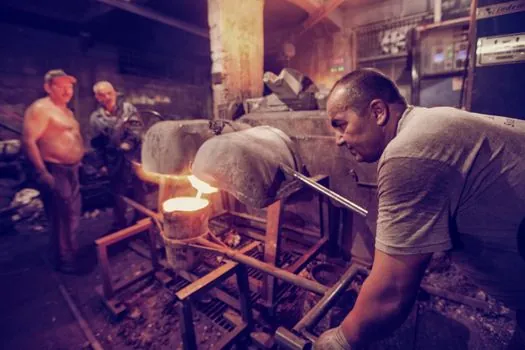
Grey iron foundries blend three iron units, and selection depends on grade, section thickness, and melt schedule. Pig iron is the cleanest iron unit, low in residuals and predictable in chemistry, and is used as a dilution tool when scrap residuals drift; it costs roughly 15–30% more per iron unit than equivalent steel scrap. Foundry returns (gating, runners, sprue, rejected castings) are internally generated and valued at below-scrap cost, but the volume is capped at 20–40% of the charge before melt-balance problems appear. [S1]
When scrap prices spike, foundries respond by raising the foundry-returns ratio, shifting the charge mix toward cleaner pig iron, and tightening yield targets to push the metallic cost per good casting down. The opposite move happens when scrap softens: steel scrap is maximized because it is the cheapest iron unit, and pig iron is held at the minimum dilution level needed to keep residuals in spec. This is exactly the trade-off documented in the broader recycling literature, where supply-demand imbalances, seasonal construction cycles (April–September strength), and international flows from India, Turkey, and China dominate pricing [S3][S6]. For a deeper look at how residual chemistry and deoxidation choices ripple into mechanical properties, the killed vs semi-killed vs rimmed carbon steel comparison is a useful parallel for melt-shop decision-making.
Use Cases, Limitations, and Failure Modes of the Scrap-Linked Pricing Model
The scrap-indexed pricing model works cleanly for high-volume grey iron grades used in automotive brake rotors, engine blocks, municipal casting grades, and Class 30/35/40 castings shipped in tonnage lots. It fails, or at least needs adjustment, for thin-wall structural castings below about 4 mm section, where metallurgical defects and pour temperature are the dominant cost drivers and the ferrous charge is only one of several tightly controlled variables. It also needs adjustment for ductile iron conversions, where magnesium treatment and higher purity iron units raise the pig iron share of the charge. [S1]
The model's biggest limitation is that it is a lagging indicator: the cast iron scrap PPI prints monthly with a 6-week lag, regional yard prices can move intraday, and quarterly base-price renegotiations often anchor to a vintage that is already stale by the time a casting ships. This is the same lag problem that scrap recyclers flag when they warn that a single-day market shift can move yard payouts faster than any contractual formula can react, which is why many large OEMs use a monthly adjustment clause layered on top of a longer base-price term [S3]. On the steel-fiber side, where scrap feedstocks also drive cost, the same dynamic is visible in the ASTM A820 grade and tensile-strength selection guide, because A820 grades ultimately price back to clean wire rod scrap.
Sourcing Standards and Procurement Signals to Track
Procurement teams that want to defend casting budgets should track four data streams: the FRED Cast Iron Scrap PPI (WPU10121308), regional yard postings for #1 heavy melt and busheling, diesel and electricity indices for the foundry's grid region, and the LME and Comex base-metal futures as a cross-check on the global industrial cycle [S3][S5]. The August 2026 print of 226.692 against June 2026's 237.272 is a 4.5% month-over-month softening that buyers should expect to see reflected in October 2026 casting quotes, with a 30–60 day lag from scrap move to surcharge reset [S5]. Recyclers also note that warmer months, mid-week trading days, and month-end yard volume pushes tend to print the strongest ferrous prices, which is a useful seasonality overlay for forward planning [S3].
One verifiable forward signal is the FRED release calendar: the next Cast Iron Scrap PPI print is scheduled for October 15, 2026, and any reading materially above the 226–237 band seen through summer 2026 will signal that the Q4 surcharge reset is going upward [S5]. A second signal is the spread between yard-quoted #1 heavy melt and white-goods prices; a spread narrower than the 34% seen in the New Jersey yard snapshot usually means clean scrap is getting tight, which is when foundries start pulling pig-iron volume upward [S4]. A third signal is diesel and coke pricing into Q4, because the scrap, energy, and freight legs tend to move together, and a divergence (scrap softening while energy firms) compresses foundry margin rather than lowers buyer cost.