
Global transformer market revenue is valued at $65.7 billion in 2026 and is projected to reach $96.8 billion by 2033 at a 5.7% CAGR, with grid-scale power and medium-voltage classes absorbing the largest share of new procurement [S1]. Within that envelope, the high-voltage power transformer sub-segment alone is sized at $25.69 billion in 2026 and is forecast to grow to $48.68 billion by 2036 at 6.6% CAGR [S3], while the medium-voltage transformer market is set at $22.58 billion in 2026, expanding to $31.63 billion by 2031 at 6.97% CAGR [S4].
Asia-Pacific dominates every voltage class: roughly 47% of total 2025 transformer revenue, about 48.9% of 2025 medium-voltage revenue, and approximately 42% of power-transformer revenue, with regional CAGRs running 7.6–7.8% versus 5.8% in North America [S1][S4][S5]. The U.S. market, by contrast, is supply-constrained rather than demand-constrained, with large power units averaging 128-week lead times and generator step-up (GSU) units at 144 weeks in Wood Mackenzie's Q2 2025 survey [S2].
Market sizing by voltage class, 2026 baseline
The high-voltage power transformer market is valued at $25.69 billion in 2026 and is forecast to reach $47.45 billion by 2034 per one source, or $48.68 billion by 2036 per FMI, with the difference reflecting horizon length rather than current-year estimates [S3][S7]. The medium-voltage transformer market sits at $22.58 billion in 2026 (Mordor Intelligence) and $22.72 billion in 2026 (Precedence Research), both rising from roughly $21.1–$21.5 billion in 2025, with CAGRs of 6.97% to 2031 and longer-horizon growth to $41.88 billion by 2035 [S4][S9]. The current transformer sub-segment, a smaller instrumentation class, is valued at $3.0 billion in 2026, up from $2.8 billion in 2025, on a 6.8% CAGR toward $4.7 billion by 2033 [S6].
Within the broader transformer market, power transformers hold approximately 90% product-type share in 2025, while distribution transformers are the fastest-growing product type through 2033 on the back of last-mile electrification, smart-grid rollouts, and EV charging [S1]. For grid-scale procurement specifically, the >500 MVA large-rating niche is a high-value segment worth approximately $6.8 billion, while medium-rating units (100–500 MVA) are growing at 7.1% CAGR on utility-scale solar and wind interconnection demand [S5].
Voltage-class comparison on cost, lead time, and supply tightness
A side-by-side read of the three grid-relevant voltage classes in 2026 shows distinct procurement profiles: [S2]
High-voltage power transformers (HV, typically 110 kV and above including 220/400/765 kV and UHV classes): $25.69 B market, 6.6% CAGR to 2036, oil-immersed cooling dominates at 68.3% share, and SPT (small power transformer) sub-classes hold 57.2% of voltage-rating mix. Lead times for the largest units exceed 128 weeks in the U.S. [S3][S2].
Medium-voltage transformers (MV, typically 1–69 kV): $22.58 B market, 6.97% CAGR to 2031, oil-cooled at 61.7% share, three-phase at 63.85%, distribution units at 60.2%, and end-user mix skewed to power utilities at 59.05%. Asia-Pacific carries 48.9% of revenue and is also the fastest-growing region at 7.63% CAGR [S4].
Large power transformers / GSU class (above 500 MVA, often in the HV envelope): highest unit value, longest lead times (128–144 weeks for power and GSU units in the U.S.), tightest supply-demand gap, and the segment where Wood Mackenzie models a 30% U.S. shortfall against a 10% distribution-transformer shortfall [S2][S5].
Demand drivers: data centers, renewables, and replacement of 1960s–1980s fleet
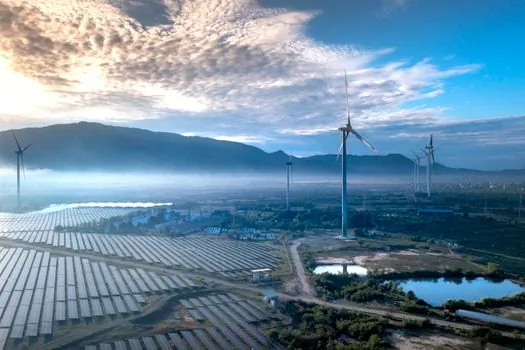
Wood Mackenzie's August 2025 analysis reports U.S. power-transformer demand up 119% since 2019 and distribution-transformer demand up 34%, with GSU demand up 274% and substation power-transformer demand up 116% over the same period, driven by faster-than-expected load growth, expanding clean-energy pipelines, and a wave of end-of-life replacements [S2]. More than half of U.S. distribution transformers, roughly 40 million units, are already beyond expected service life, and about 70% of installed transformers in the United States are over 25 years old [S2][S4].
On the macro side, the IEA projects global electricity demand growth of 3.3% in 2025 and 3.7% in 2026, with annual grid infrastructure spending at approximately $400 billion today and a stated need to rise substantially to meet net-zero targets; one report cites a $600 billion-per-year requirement through 2030 [S1][S5]. The U.S. Department of Energy's 2024 National Transmission Planning Study identified a requirement for 47,000 GW-miles of additional high-voltage transmission capacity by 2035, a figure that scales large-transformer demand directly [S5]. A separate long-horizon forecast models a 260% increase in large-transformer demand by 2050 versus 2021 [S8].
Regional split: Asia-Pacific dominance, U.S. supply crisis, Europe steady
Asia-Pacific leads every tracked metric: roughly 47% of global transformer market share in 2025, 48.9% of 2025 medium-voltage revenue, and 42% of power-transformer revenue, with the fastest regional CAGRs at 7.63% for medium-voltage (to 2031) and 7.8% for power transformers (to 2035) [S1][S4][S5]. China at 8.9% and India at 8.3% are the fastest-growing national markets, with Germany at 7.6%, France at 6.9%, UK at 6.3%, USA at 5.6%, and Brazil at 5.0% [S3].
Europe maintains roughly 24% market share, anchored by ENTSO-E's Ten-Year Network Development Plan and offshore-wind interconnections, while North America expands at 5.8% per year as utilities compete to replace antiquated fleet assets [S5]. The U.S. situation is the outlier: Wood Mackenzie models a structural supply shortfall of 30% for power transformers and 10% for distribution units, and the top three global vendors (Hitachi Energy, Siemens Energy, Schneider Electric) together held just under 35% of global medium-voltage shipments in 2024 [S4].
Cooling, phase, and end-user mix inside the medium-voltage class
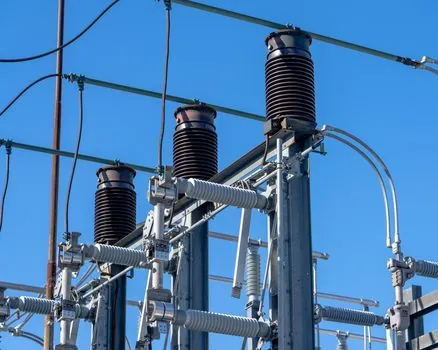
Oil-cooled units hold 61.7% of medium-voltage market share in 2025, with air-cooled models growing fastest at 7.75% CAGR through 2031, a split that maps onto data-center demand for fire-safe, dry-type units [S4]. Three-phase products lead at 63.85% revenue share in 2025, while single-phase alternatives grow at 7.21% CAGR to 2031. By transformer type inside the medium-voltage class, distribution units account for 60.2% of 2025 size and power units are the faster-growing slice at 7.78% CAGR over 2026–2031 [S4].
End-user mix is anchored by power utilities at 59.05% in 2025, but the commercial segment is the fastest-growing at 8.12% CAGR through 2031, driven by hyperscale data-center microgrid build-outs, a sub-driver that Mordor estimates adds roughly +0.9 percentage points to overall MV CAGR [S4]. Comparable long-tail drivers include renewable-integration push (+1.8%), urban/industrial demand growth (+1.4%), grid-modernization and aging-asset replacement (+2.1%), and electrolyzer-grade hydrogen projects (+0.6%) [S4].
Standards, efficiency mandates, and technology shifts
Efficiency mandates are tightening on both sides of the Atlantic: the EU's Ecodesign Tier 2 requirements, in effect since July 2021, have pushed manufacturers toward lower-loss core designs, and U.S. efficiency rules continue to compress allowable no-load losses for distribution-class units [S5]. On the technology side, advanced insulation systems, sensor-embedded bushings, and digitally integrated monitoring platforms are being used to supplement traditional silicon-steel core designs, and smart-transformer and digital-retrofit services are flagged as a core opportunity area alongside offshore-wind grid connection and emerging-market electrification [S5].
Amorphous-core distribution transformers are gaining share as a no-load-loss reduction play, a topic the SourceBySpec news desk has tracked separately in Amorphous Core Transformer Market 2026, while dry-type units are reshaping data-center and renewable procurement under a parallel dynamic covered in Dry-Type Transformer Market 2026.
Procurement signals to watch through 2026–2027

Two trackable signals will determine whether the 2026 grid-scale transformer market stays in a supply-constrained or a rebalanced posture: first, the next Wood Mackenzie quarterly lead-time survey, where the 128-week power-transformer and 144-week GSU benchmarks from Q2 2025 are the floor to beat for any meaningful easing [S2]; second, capacity additions from the top three vendors (Hitachi Energy, Siemens Energy, Schneider Electric), whose combined 35% medium-voltage shipment share in 2024 makes their announced U.S. and European plant ramp the single biggest swing factor on regional availability [S4].