
Grid-enhancing technologies are projected to grow from USD 3.77 billion in 2026 to roughly USD 14.30 billion by 2035 at a 15.97% CAGR, with dynamic line rating (DLR) and advanced power flow control (APFC) identified as the leading technology segments on congested U.S. transmission corridors [S4]. DLR alone held a 24% share of the 2026 GETs market by technology, while topology optimization accounted for 13% and is set to expand at the fastest 18.1% CAGR through 2035 [S4].
FERC Order 881 is the key U.S. regulatory driver: it mandates weather-based, rather than static-summer, transmission line ratings, forcing transmission owners to instrument existing corridors or face non-compliance [S4]. A separate tracker pegged the DLR share higher, at 41% of 2025 revenue, with APFC as the fastest-growing technology at an 18.2% CAGR for 2026 to 2035, illustrating how segment shares diverge by methodology [S5]. U.S. interconnects are amplifying the signal: PJM's interconnection backlog hit roughly 2,600 GW in 2026, and congestion cost U.S. customers over USD 12 billion in 2024 [S4].
What DLR, APFC, and topology optimization actually do on the wire
GETs are hardware or software that increase the capacity, efficiency, reliability, or safety of existing power lines faster and at lower cost than greenfield buildout, with DLR, APFC, and topology optimization forming the three core categories [S3][S7]. A DLR system uses real-time conductor temperature, sag, and weather data to recalculate ampacity continuously instead of relying on a conservative static limit; in cold or windy conditions, lines routinely carry 50% or more above their labelled static rating, and PG&E/LineVision field data shows DLR exceeding the static rating 94 to 97% of the time with an average 47% capacity uplift [S3].
APFC devices (e.g., Smart Wires SmartValve) inject or remove series reactance to push power off overloaded lines and onto parallel paths with spare headroom, analogous to a traffic director rerouting flow on a meshed highway [S3]. National Grid UK has installed 48 SmartValve units across three substations to unlock 1.5 GW of new renewable delivery, enough for roughly one million homes [S3]. Topology optimization is the software layer: it reconfigures switching states, transformer taps, and phase shifters to redistribute flows, and GE Vernova reported in 2026 that expanded topology optimization deployments across multiple U.S. transmission operators produced measurable reductions in renewable curtailment during peak wind and solar hours [S5]. A side-by-side of the three technologies is given below.
Regulation, interconnection queues, and the case for getting more from existing wires
FERC Order 881 sets the compliance floor: transmission owners must use ambient-adjusted or dynamic ratings reflecting forecasted weather rather than worst-case summer assumptions, and FERC indicated in July 2026 that utilities have begun proactively deploying DLR, APFC, and high-performance conductors to capture the cost-savings data [S4]. FERC Order 1920 layers on top of Order 881 by requiring planners to evaluate GETs alternatives before committing to new line construction, which is the procedural lever that vendors are using to enter long-range planning cycles [S5].
Queue pressure is the demand-side mirror of the regulation. PJM's roughly 2,600 GW interconnection backlog in 2026, combined with the U.S. Department of Energy's 2024 "liftoff" report estimate that grid tech can support up to 100 GW of incremental peak demand and meet as much as 95% of expected load growth in bullish scenarios, is pushing utilities toward months-not-years relief projects instead of decade-long line builds [S2][S4]. DOE followed with a USD 1.9 billion March 2026 commitment to reconductoring and advanced transmission, and earlier GRIP funding included a USD 160 million grant to Georgia Power for its first large-scale APFC deployment [S2][S4]. Transmission congestion cost U.S. customers over USD 12 billion in 2024, and a peer-reviewed DOE pathway estimated reconductoring alone could save consumers USD 85 billion over a decade [S4].
Deployment evidence: where GETs are working in 2026
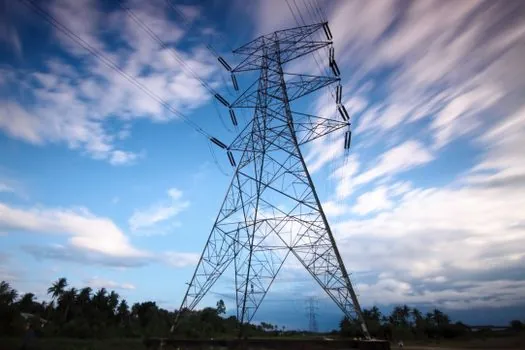
U.S. evidence is concentrated in three regions. PG&E is deploying APFC in Silicon Valley to lift capacity for new data-center demand, and the same panel reported Smart Wires SmartValve expansions across additional MISO corridors in 2026 with regulators crediting earlier installations with materially reducing renewable curtailment and congestion-driven wholesale price spikes [S2][S5]. Georgia Power's APFC rollout, partially funded by a USD 160 million DOE GRIP grant, is the first utility-scale U.S. deployment of the technology [S2].
Outside the U.S., the installed base is deeper: over 500 Ampacimon DLR devices are operating on 100+ lines from 69 kV to 700 kV across 15 countries, with Belgium's Elia running DLR since 2008 [S3]. National Grid UK used 48 SmartValve units at three substations to enable 1.5 GW of new renewable energy delivery, an Australian Smart Wires deployment saved USD 286 million, and a 2006 AEP installation on a congested 138 kV Texas line avoided a USD 20 million upgrade that would have been stranded once new lines came online [S3]. In the U.S. pilots, the Lindsey Systems SMARTLINE device monitors and models conductor behavior for both real-time and forecasted DLR, and Heimdall Power installs DLR sensors on energized lines via helicopter without an outage, removing the permit-to-install bottleneck that has slowed other sensor rollouts [S3].
Component and application mix: hardware leads, software is the growth lever
Hardware is the larger near-term bucket at 48% of 2025 revenue, but software is the fastest-growing component segment at an 18.0% CAGR for 2026 to 2035, which is consistent with the shift from one-off sensor pilots to fleet-wide analytics platforms layered on legacy SCADA [S5]. By grid application, the transmission grid segment held a 32% share in 2026, while congestion management is the fastest-growing application at a 17.3% CAGR, confirming that operators are buying GETs to relieve specific bottlenecks rather than to build general-purpose headroom [S4].
Vendors are consolidating: Smart Wires, LineVision, Ampacimon, and Lindsey Systems anchor the DLR/APFC hardware side, with GE Vernova, Siemens Energy, Hitachi Energy, and ABB expanding the power-flow-control and software portfolios [S3][S4]. The 5th Dynamic Line Rating & Grid Enhancing Technologies 2026 conference in October 2026 brought TSO, utility, and vendor engineering teams together to compare DLR, APFC, and topology optimization field results, which is the venue to watch for 2026 to 2027 deployment disclosures [S6]. Reuters' March 2026 reporting on U.S. utility scale-up of DLR, APFC, and virtual power plants described the technology mix as "more economical and faster" than traditional transmission expansion, which lines up with the months-versus-years framing that FERC Order 1920 now codifies [S8].
Limitations, failure modes, and who GETs are not for
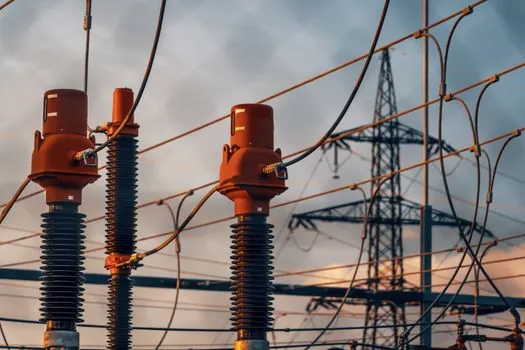
GETs do not add new physical capacity to a corridor; they re-allocate or temporarily expand the use of what already exists, so a line that is structurally at its thermal limit across all weather conditions still needs reconductoring or rebuild [S3][S9]. Distribution-side adoption is the weak link: pilots need access to medium-voltage test feeders in the 12 kV class, and as GridIQ's COO noted at a San Francisco Climate Week panel, finding a representative medium-voltage line and a willing utility partner remains the gating constraint, even after DOE funding cuts pared back earlier GRIP allocations [S2].
Operational know-how is the other constraint: scaling requires grid operators to know how to procure, install, operate, and maintain GETs, and DOE's "liftoff" framework calls out utility peer-sharing as the main mechanism to reduce information asymmetry and accelerate uptake, a mechanism that is, in the words of the Latitude reporting, "not evenly distributed across technologies" [S2]. Topology optimization depends on the quality of a utility's SCADA and contingency tooling, so a control room running legacy EMS without high-resolution state estimation will see far less benefit than an ISO with modern telemetry, even when the same software is licensed.
Standards, evidence quality, and what to track next
No single IEC or IEEE standard defines "GETs" as a compliance category; the technical requirements live in FERC Orders 881 and 1920, NERC reliability standards, and individual utility procurement specs, so compliance conversations should start from the U.S. rulemaking layer and the operator's planning manual rather than from an international product standard [S4][S5]. For evidence quality, prefer the operator-published case studies (PG&E, Georgia Power, National Grid UK, Elia) and the DOE "liftoff" report over vendor press releases, since the latter tend to quote peak-hour uplift rather than average annual capacity factor [S2][S3].
Two signals to track over the next two quarters: the 5th DLR & GETs 2026 conference disclosures in October 2026 [S6], and any FERC or NERC follow-up that ties Order 1920 implementation to measurable GETs adoption rates, since that is the lever that converts today's pilot projects into baseline planning assumptions. For adjacent reading on how a similar regulatory and capacity squeeze is reshaping another infrastructure market, see the analysis of floating solar capacity in 2026.