
Choose Halotron I for portable protection around energized electronics and occupied spaces; choose an FM-200 total flooding system for a designed server-room, data-center, or electrical-room installation.
Both agents leave no residue and are non-conductive, but the decision is not agent versus agent alone: portable extinguishers and engineered suppression systems solve different protection problems, with service interval, building automation, hazard, and occupancy requirements determining the practical outcome.
Portable Halotron Versus Engineered FM-200
Halotron I and FM-200 both target sensitive electronics without leaving a corrosive residue. Halotron I is carried in portable extinguishers for first response, whereas FM-200, chemically 1,1,1,2,3,3,3-heptafluoropropane or HFC-227ea, is a clean agent used in engineered fire-suppression systems [S1][S3].
Halotron I extinguishers are non-conductive and residue-free, making them suitable for server rooms, data centers, and electrical equipment [S3]. FM-200 is a colorless, compressed liquefied gas stored under nitrogen pressure and discharged as a gas for waterless suppression [S1].
An FM-200 fire suppression system uses pressurized nitrogen to discharge FM-200 as a gas to suppress a fire, while FM-200 is also described as a popular replacement for Halon fire suppression systems [S1].
Selection Criteria: Class Rating, Occupancy, and Control
Selection of a clean-agent fire suppression system depends on the specific environment, the presence of personnel, and applicable regulatory considerations [S2].
Class C denotes a fire involving energized electrical equipment, and an extinguisher carrying that rating is electrically non-conductive. Electrical faults can also ignite ordinary combustibles or flammable liquids, so listed extinguishers commonly carry a combined rating such as A:B:C or B:C [S3].
Both Halotron and CO2 extinguishers are rated for Class B and Class C fires, while Halotron extinguishers over 11 lb are also rated for Class A fires [S4]. FM-200 is described as effective for Class A, B, and C fires [S2]. These ratings must be verified on the listed equipment rather than inferred from the chemical name.
Occupancy also separates the options. FM-200 has low acute toxicity and is described as suitable for occupied areas when operated according to manufacturer instructions [S1]. It still requires exposure controls, ventilation assessment, and an engineered safety concept. Halotron provides portable defense without automatically flooding the room.
Comparison by Application, Installation, and Service

Halotron wins where mobility, first-response capability, and low container pressure matter. FM-200 wins where an entire room must be protected automatically without operators approaching energized equipment. The following comparison separates the main decision criteria: [S1]
Electronics Risks and Residue-Free Failure Modes
ABC dry chemical extinguishers should not be placed in rooms with energized servers, switchgear, or sensitive electronics because their residue is corrosive to circuit boards [S5].
A clean agent removes the residue problem, not every failure mode. FM-200 vapor has little effect on skin or eyes, but liquid contact can cause frostbite. Inhaling concentrations above recommended exposure limits can cause headache, dizziness, loss of coordination, confusion, and loss of consciousness [S1].
FM-200 is hydrofluorocarbon 227ea, and the FM-Two Hundred clean agent is described as having zero ozone depletion [S1][S7]. That does not make an installed FM-200 system unusable, but it belongs in the owner’s replacement, cylinder procurement, and capital-planning decision.
Where the facility includes lithium-ion energy storage, clean-agent selection requires separate analysis. The limitation described in Clean Agents on Li-Ion Battery Rooms: Limited Standalone Effectiveness is directly relevant because a portable extinguisher or room-flooding system cannot be assumed to control battery-driven reignition without an engineered fire strategy.
Who Each Option Fits and Who It Does Not
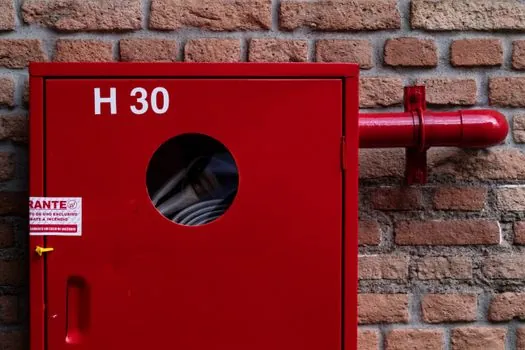
Halotron I fits facilities that need a listed portable extinguisher beside electrical panels, server cabinets, telecom equipment, or test equipment, particularly where occupants may be present during an initial response. It is also practical where an automatic suppression installation would be disproportionate, the enclosure is too open for effective total flooding, or operators need direct control over agent application. [S5]
FM-200 fits enclosed rooms where loss of a server, switchgear assembly, or control system would be severe and automatic detection and discharge justify dedicated infrastructure. It is suited to data centers, server rooms, electrical rooms, banks, libraries, museums, and telecommunications centers, subject to design verification [S2].
Neither agent is a substitute for a complete fire-protection strategy. FM-200 is not the appropriate answer where its environmental constraints conflict with the project sustainability requirement. Halotron is not the complete answer where the required protection objective is automatic room flooding. Neither should be used for Class D metal fires without a purpose-matched agent, and portable units are part of the facility’s first-response layer rather than a substitute for detection, alarms, or engineered suppression where those are required [S3].
Standards, Listing, and Maintenance Control
Portable extinguisher selection, placement, and inspection are governed by NFPA 10, NFPA 75, and OSHA 29 CFR 1910.157 for the referenced electrical, data-center, and server-room applications [S3]. Elevator machine rooms and MRL control spaces may require an extinguisher rated for Class A, B, and C under ASME A17.1, which would rule out a B:C-only unit for that application [S5].
Halotron requires annual maintenance, an internal examination every six years, and a hydrotest every 12 years under the comparison data presented for that equipment [S4]. Every extinguisher also requires service after use. FM-200 systems require compliance with the approved system design, detection and alarm interfaces, agent quantity, discharge criteria, and maintenance procedures rather than a simple cylinder replacement checklist.
Do not specify from generic product claims. Require the exact extinguisher or agent listing, rated classes, cylinder and agent identification, minimum discharge performance, maintenance requirements, and environmental criteria. The project basis should also define whether equipment will be de-energized before agent discharge, how personnel evacuation and re-entry are controlled, and how the detection interface coordinates with shutdown functions.
For a new electronics room, specify an FM-200 total-flooding system where asset criticality justifies automatic suppression and a separately mounted Halotron I extinguisher for first response. For a smaller occupied electrical or telecom room, specify a listed Class C Halotron extinguisher and verify the required Class A rating, placement, six-year internal examination, and 12-year hydrotest interval before purchase.