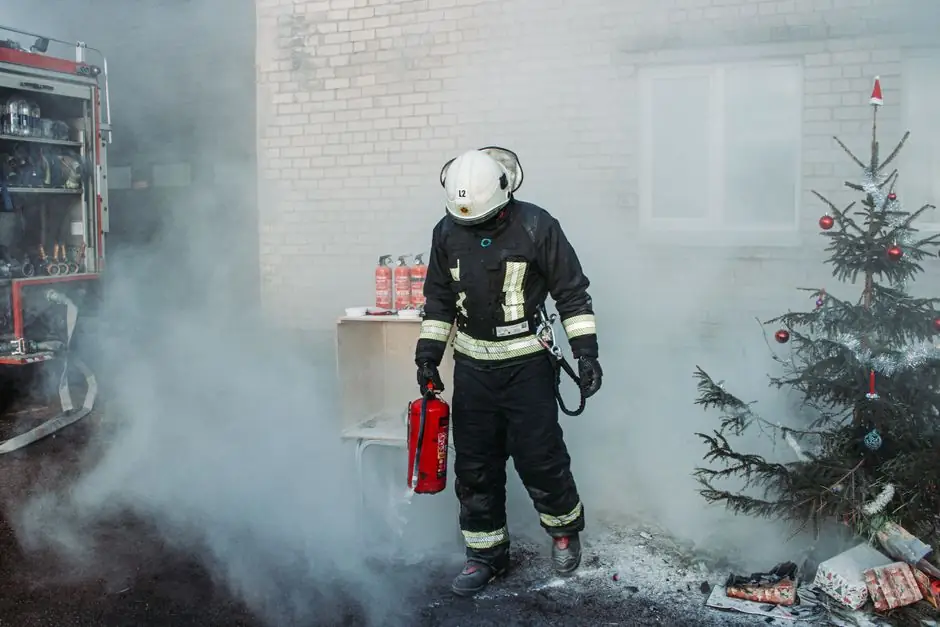
Server rooms should use a non-conductive clean agent or CO2 extinguisher because water and ABC powder can damage energized electronics through conductivity, residue, and corrosion [S1][S2].
Warehouses require multiple extinguisher classes matched to their hazards: Class A for ordinary combustibles, Class B for flammable liquids and gases, Class C for energized equipment, and Class D for combustible metals [S3].
Server Room Agent and Warehouse Hazard Classes
A server room concentrates electrical faults, short circuits, cabling, plastics, and continuous equipment operation, so the selected extinguisher must suppress fire without adding conductive liquid or corrosive residue [S1][S2]. Clean-agent units such as Halotron I or FE-36 and CO2 extinguishers are identified as suitable for server rooms, data centers, and electrical equipment because they are non-conductive and leave no residue [S2].
A warehouse has a broader hazard profile than a server room. Typical fuels include cardboard, paper, wooden pallets, plastics, shrink wrap, lubricants, gasoline, paint, propane, and battery charging equipment [S3]. This makes a single extinguisher type a poor default: an ABC unit addresses ordinary combustibles, flammable liquids, and energized electrical equipment, while a specialized Class D agent is required for magnesium, titanium, sodium, and certain aluminum dusts [S3].
Clean agents are therefore the default for a dedicated server room or data hall, while warehouse protection should follow a hazard-based distribution plan rather than agent uniformity [S1][S3]. The existing fire extinguisher reference covers the broader equipment selection and maintenance context.
Clean Agent, CO2, ABC, and Water Compared
Clean agent extinguishers provide the strongest balance for sensitive electronics because they are non-conductive and residue-free, making them suitable for server rooms and energized equipment [S1][S2]. CO2 leaves no residue and is non-conductive, but its discharge creates an asphyxiation hazard in confined or occupied spaces [S1][S5].
ABC dry chemical can knock down flames, but its residue is corrosive and can damage circuit boards [S4][S5]. It can coat circuit boards, fans, power supplies, copper traces, pads, and pin headers, causing delayed failures even when equipment survives the initial incident [S4][S5]. Water-based extinguishers can conduct electricity, creating a shock hazard and shorting equipment [S2][S5].
For a warehouse, ABC dry chemical remains practical where ordinary combustibles and flammable liquids are present, but it should not be treated as the preferred unit for an adjacent server rack or valuable electronics enclosure [S3][S5]. Class D agents are required for fires involving combustible metals [S3].
Criteria-Based Selection by Protected Asset
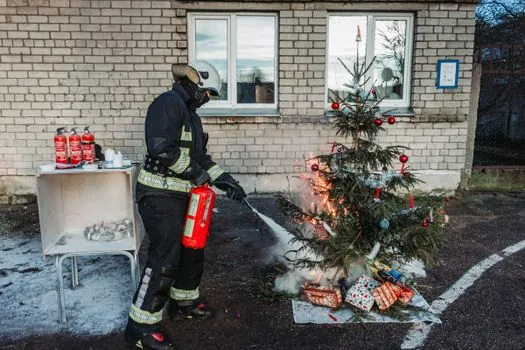
Server-room selection should prioritize equipment survival, residue, non-conductivity, discharge safety, and compatibility with room occupancy. A clean-agent unit leads when all five criteria matter because it combines non-conductivity with no residue [S1][S2]. CO2 is suitable for electrical equipment but scores less well for occupied or confined spaces because discharge depletes oxygen [S1][S5]. ABC ranks well for broad warehouse hazard coverage but poorly for electronics because corrosive residue can create secondary damage [S4][S5].
Warehouse extinguisher selection should match the extinguisher class to the hazard, follow NFPA 10 sizing and placement requirements, and ensure that employees are trained to use the selected extinguisher [S3]. An ABC unit is a practical baseline for Class A, B, and C hazards, but
Use case by use case, specify clean agent or CO2 for a dedicated server enclosure or electrical room, use ABC for mixed warehouse ordinary-hazard coverage, deploy Class B extinguishers near fueling and chemical storage, and add Class D units where combustible metals are present [S2][S3]. Do not use a warehouse ABC unit as the primary protection for energized servers, and do not use a CO2-only inventory as a substitute for a server-room solution that also needs Class A coverage [S1][S5].
Placement, Travel Distance, and Room Integration
Warehouse travel distance must account for rack aisles, dock doors, and equipment yards because an extinguisher visible across a building may still be inaccessible. The cited NFPA 10 guidance states that travel distance to an extinguisher must not exceed 75 feet for ordinary hazards [S3]. These values define the planning basis, while the authority having jurisdiction determines the installed result.
Visibility and accessibility are equally important because an extinguisher hidden behind stacked inventory or a rack is operationally ineffective [S3].
For a server room, portable equipment should complement automatic detection and suppression rather than substitute for it. Clean-agent system design depends on room volume, airflow, and enclosure integrity, while smoke detectors, heat sensors, and an alarm control panel provide early warning [S4]. Integration details for the fire alarm control panel and smoke detector should be coordinated with the suppression design.
Safety Limits and Operating Precautions
De-energization is the preferred first action when it can be performed safely, because an extinguisher rated for energized equipment addresses a secondary exposure rather than restoring normal operation [S2]. An extinguisher should control the initial fire and permit evacuation; it is not a substitute for an automatic suppression system or a complete building fire-protection design [S4][S7].
CO2 discharge requires particular control in server rooms because confined spaces and occupied areas can create an asphyxiation hazard [S1][S5]. Clean agents also require engineering review of room concentration and enclosure leakage, since the agent cannot perform as designed if the room cannot retain its calculated concentration [S4].
Portable extinguishers must be selected, placed, inspected, and maintained under NFPA 10, with NFPA 75 applying to information technology equipment rooms and OSHA 29 CFR 1910.157 addressing portable extinguisher requirements [S2]. In Canada, the cited framework includes NFPA 75, CAN/ULC-S561, the Canadian Electrical Code, and requirements enforced by the local authority having jurisdiction [S1].
Procurement Checklist for the Correct Unit
For the server room, verify a clear Class C rating, non-conductive discharge, no damaging residue, safe egress, and compatibility with the automatic clean-agent system. Confirm whether the required inventory must also cover ordinary combustibles, because CO2 generally has no Class A rating while a larger Halotron unit can carry an A:B:C rating [S5].
For the warehouse, map each extinguisher to its fuel and travel distance. Record Class A coverage for cardboard, paper, wood, and plastics; Class B coverage for gasoline, paint, solvents, lubricants, and propane; Class C protection near battery chargers, motors, panels, and energized racks; and dedicated Class D units where combustible metals exist [S3].
Final procurement verification should include the unit's printed class and size rating, agent type, mounting location, service status, and the reviewing authority's acceptance. A Class C mark alone does not resolve the residue decision for valuable electronics, and a broad ABC rating does not make the same unit the best primary extinguisher inside a server room [S1][S2][S3].
Track two control points before purchase: server-room agent approval from the suppression designer, and warehouse extinguisher locations checked against the 75 ft Class A, 50 ft or 30 ft Class B, and Class D travel criteria identified above [S3][S4].