
ABC and dry chemical extinguishers can suppress lithium-ion battery fires, but Class D extinguishers are for lithium-metal fires, not ordinary lithium-ion cells.
Commercial facilities with e-bikes, battery storage, backup power, or powered equipment need an extinguisher selection based on battery chemistry, event size, and the risk of thermal runaway.
What extinguisher should be selected for lithium-ion fires?
An ABC dry chemical extinguisher is a practical first-response choice for a small, contained lithium-ion battery fire, while evacuation and emergency-service notification remain the priority [S1][S5]. A standard ABC unit is rated for Class A combustibles, Class B flammable liquids, and Class C energized electrical fires, but that rating does not mean it can cool every lithium-ion cell or prevent re-ignition [S1].
For comparison, the available guidance identifies ABC or dry chemical for lithium-ion fires and Class D for lithium-metal fires [S5]. Class D extinguishers are designed for fires involving combustible metals such as magnesium and lithium [S3][S4]. Lithium-ion batteries generally do not contain metallic lithium, so a Class D extinguisher is not the automatic choice for them [S6].
Use evacuation as the default when the fire is large, involves multiple packs, produces heavy smoke, or presents a confined-space hazard. One safety guide advises checking the situation before attempting to extinguish a lithium battery fire, staying safe, and wearing safety gear to avoid harmful gases [S5].
How do ABC, dry chemical, clean agent, and Class D compare?
ABC dry chemical offers the broadest familiar coverage, covering Class A, B, and C hazards, while a clean agent is non-conductive and leaves no residue [S1][S3]. These differences make the agent choice a chemistry decision, not a simple comparison of cylinder size or discharge time.
Selection should be checked against four decision criteria: battery chemistry, extinguishing effectiveness, operator safety, and post-fire monitoring. For lithium-ion fires, use ABC or dry powder extinguishers, while a Class D extinguisher is used for lithium-metal fires [S5].
Which lithium battery fires should not be handled with a portable extinguisher?
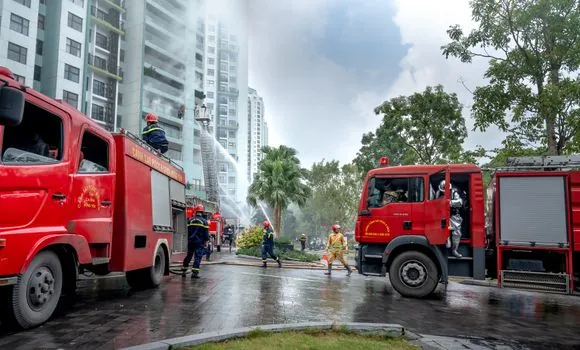
Portable suppression does not eliminate the hazards of lithium-ion fires, which can intensify rapidly, release toxic gases, and reignite after being extinguished [S1][S2][S4][S5].
Evacuate and call emergency services for multiple battery packs, electric vehicles, battery rooms, structural involvement, or an uncontrolled thermal-runaway event [S5]. Thermal-runaway lithium-ion fires can release intense heat and toxic gases, and the chain reaction can spread from one battery cell to another [S1][S2][S4].
Firefighters may isolate the affected battery in a fire-resistant container, submerge the pack, or apply large quantities of water. One operational guide states that lithium battery fires often require ten times more water to extinguish than gas fires [S5].
How should the extinguisher be used during first response?
Continue watching the battery after the flames disappear because residual heat can initiate another event [S5].
Isolate the battery from combustible materials and maintain observation rather than immediately returning it to service.
For facility planning, a portable extinguisher is only one layer. Early detection through a smoke detector, heat detector, and connected fire alarm control panel can provide earlier warning, while fire suppression systems require hazard-specific design and are not interchangeable with portable extinguishers.
What standards and evidence limits should shape the decision?
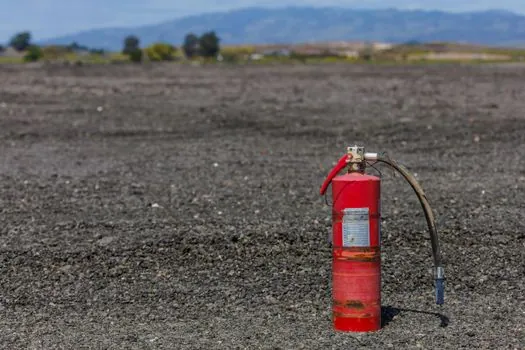
There was no dedicated standard for lithium-ion battery fire extinguishers in the 2024 technical review, and limited guidance remained available for attacking lithium-ion thermal-runaway fires with a handheld extinguisher [S2]. This makes battery chemistry, agent compatibility, test evidence, and the facility emergency plan more important than relying on an ABC label alone [S1][S2].
These system claims do not convert a portable extinguisher into a complete lithium-battery fire-control system.
Agent selection must also distinguish lithium-ion from lithium-metal chemistry because water may react violently with a lithium-metal anode battery [S2]. The same distinction drives extinguisher selection: ABC or dry chemical for lithium-ion, Class D for lithium-metal [S5][S6].
How can facilities reduce risk before ignition?
Use manufacturer-approved chargers and power supplies, do not leave batteries charging unattended, store lithium-powered equipment in cool and ventilated areas, and remove damaged, swollen, or leaking batteries from service [S1]. These controls reduce common triggers involving overcharging, physical damage, and poor thermal management [S1][S2].
Training should define a clear decision threshold: raise the alarm, evacuate, and use an ABC or dry chemical unit only for a small, contained lithium-ion fire within the operator’s training and escape capability [S1][S5]. Facilities should also evaluate extinguisher placement, battery inventory, chemical identification, and post-incident isolation before selecting equipment.
A trackable equipment check is the next control point: identify each battery as lithium-ion or lithium-metal, verify that the available fire extinguisher agent matches that chemistry, and document who is authorized to attempt first response. Re-evaluate the selection whenever the site adds EV charging, e-bike storage, UPS equipment, or energy-storage capacity.