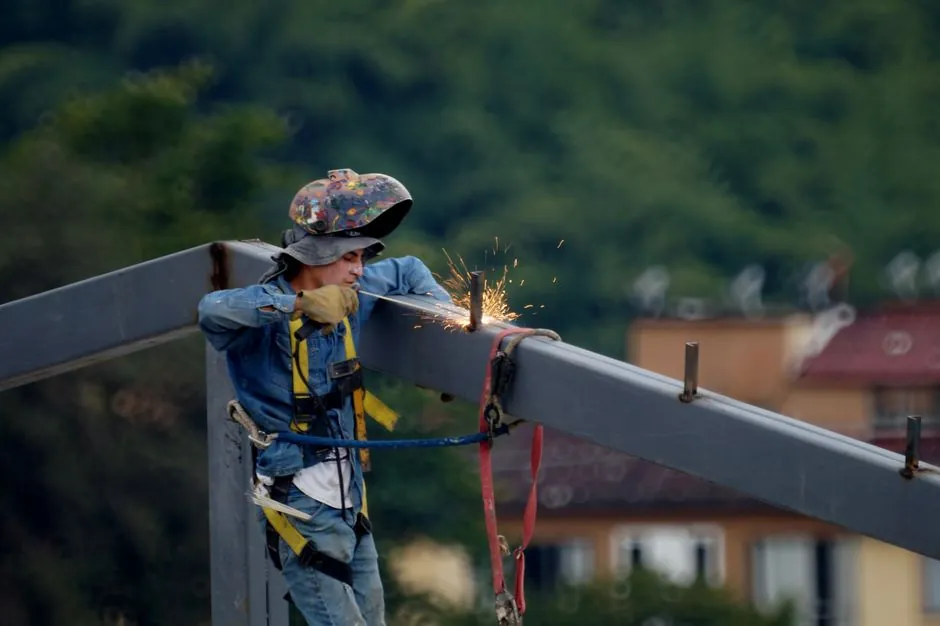
Comfort-focused hard hat procurement should use an initial ceiling of 566 g including the suspension, then fit-test the model because shell mass alone does not predict pressure points [S3][S5].
This benchmark applies to prolonged overhead construction, utility and industrial work involving Type I or Type II protection and the electrical class required by the site hazard assessment [S1][S2].
No Universal Regulatory Weight Limit
OSHA regulates workplace head protection through applicable general-industry, construction and maritime requirements, with recognized compliance through ANSI/ISEA Z89.1 helmet configurations [S1]. The cited material establishes impact types, electrical classes, materials and inspection considerations, but it does not prescribe one maximum helmet mass for prolonged overhead work [S1].
Accordingly, 566 g is a procurement comfort benchmark, not an OSHA or ANSI Z89.1 pass-fail limit. Employers must first identify falling-object, struck-by, overhead-electrical, slip-and-fall and other site hazards, then select compliant head protection appropriate to those hazards [S1].
The distinction matters because Type and Class answer separate questions. Type I is tested for top impact, Type II covers top and side impact, and the helmet can independently be Class G, E or C for electrical performance [S1][S2]. Weight cannot compensate for an incorrect rating.
Choosing a 566 g Working Target
That spread illustrates why a catalog specification based only on shell weight is inadequate for prolonged overhead work.
A sensible procurement sequence starts with a target of 500 g or less for the complete helmet when practical, treats 566 g as the initial upper comfort boundary, and verifies the assembled mass with the approved suspension and normal accessories [S3][S5]. Any lower threshold should be set by trial fitting rather than by assumption.
The 566 g boundary is most useful as a screening tool, not a universal recommendation. A slightly heavier helmet that remains centered over the head can feel better than a lighter shell that tips forward, while face shields, earmuffs, lamps and other attachments can alter the balance [S3].
Fit and Suspension Control Pressure
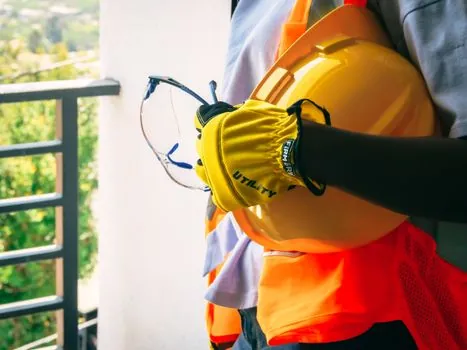
An all-day hard hat must remain level and stable without pinching the forehead, temples or area behind the ears, while preserving enough shell-to-head clearance for the suspension to manage an impact [S3]. Two helmets with the same marked size can perform differently because head shape, suspension geometry and adjustment range are not identical [S3].
Four-point and six-point suspensions are available, but the number of points does not automatically establish a better fit. The decisive checks are even load distribution, the absence of concentrated hotspots, secure positioning during overhead work and adjustment that remains functional with gloves [S3].
A workable fitting protocol requires several representative wearers to test the candidate with their normal PPE while looking up, looking down and bending at the waist. This procedure identifies front-edge creep, rear ratchet pressure, side-to-side movement and sweat accumulation before a fleet purchase [S3].
Cap, Full-Brim and Ventilated Helmets Compared
Cap-style helmets are generally less bulky in confined spaces, whereas full-brim models extend the shell and may create greater neck strain by the end of a shift [S7]. Type II helmets provide top- and side-impact protection, while Type I helmets are tested for impact resistance from above only.
Vented helmets can improve airflow during long shifts, but ventilation must be evaluated within the required electrical class. Electrical work can make a vented model unsuitable because its openings may conflict with the dielectric protection required by the hazard [S3][S4].
For overhead work, compare cap-style, full-brim and Type II configurations on complete weight, forward pitch, neck strain, side-impact need, electrical rating and accessory compatibility. The lightest option is not necessarily the most comfortable if it shifts under a tool or cannot accommodate required hearing protection without compressing the suspension [S1][S3].
Who Needs the Strict Weight Target

The lower-mass approach is most relevant to workers wearing hard hats for most of a shift, especially when working above ground, climbing, bending repeatedly, operating machinery or using overhead tools. A comfortable hard hat should remain level and stable, with its weight balanced and without creating pressure points.
It is less decisive for workers who remove the helmet immediately after leaving a controlled head-protection zone, or whose task is governed by specialized PPE rather than ordinary industrial head protection. Impact type should be selected according to the hazards present at the jobsite, including whether impacts may come from above, the side, or multiple directions.
This guidance does not support substituting a bump cap for a hard hat where falling objects, electrical hazards or other regulated head-injury risks exist. A helmet also does not eliminate every hazard, so employers must combine it with task-appropriate eye, face, hearing and fall-protection equipment [S1][S4].
Moisture, Heat and Accessory Control
Heat management can affect comfort as much as shell mass. A washable or replaceable sweatband controls moisture around the headband, while vents can improve airflow where electrically acceptable. If a worker loosens the helmet to manage sweat, the helmet may shift and no longer remain properly positioned [S3].
Chin straps are particularly relevant for climbing, work at height, awkward overhead positions and slip-or-fall scenarios because they help keep the helmet on during sudden movement [S1][S2]. Approved chin straps, liners, face shields and hearing protectors should be matched to the helmet model because improvised or poorly matched accessories can interfere with fit and protection [S3].
For an overhead-work specification, state the target complete mass, permitted adjustment range, shell and suspension configuration, approved sweatband, required Type and Class, and the accessory list. Require trial fitting with at least several representative workers and record whether the helmet remains stable during overhead reaches and forward bending [S1][S3].
Inspection and Replacement Controls

Comfort cannot compensate for a damaged helmet. OSHA’s head-protection guidance addresses proper inspection and storage, and employers must maintain head protection appropriate to the workplace hazard [S1]. Inspection should cover the shell, suspension, adjustment parts and any manufacturer-applied life-limit information.
A worn suspension can shift load away from its intended contact points, while an incorrect ratchet can allow movement that produces pressure points. A replaceable sweatband helps moisture control, but replacing that band does not justify retaining a damaged shell or compromised suspension [S3].
Separate technical criteria from comfort criteria when purchasing replacements. The electrical and mechanical hard hat comparison helps verify Type and Class first, after which the 566 g screening benchmark, representative wear test and approved accessory check can determine whether the complete helmet is suitable for prolonged overhead work.
The next procurement review should record assembled helmet mass with suspension and normal accessories, measure the percentage of wearers reporting pressure points or forward slip, and verify that every issued helmet still has the required Type and Class for its assigned task.