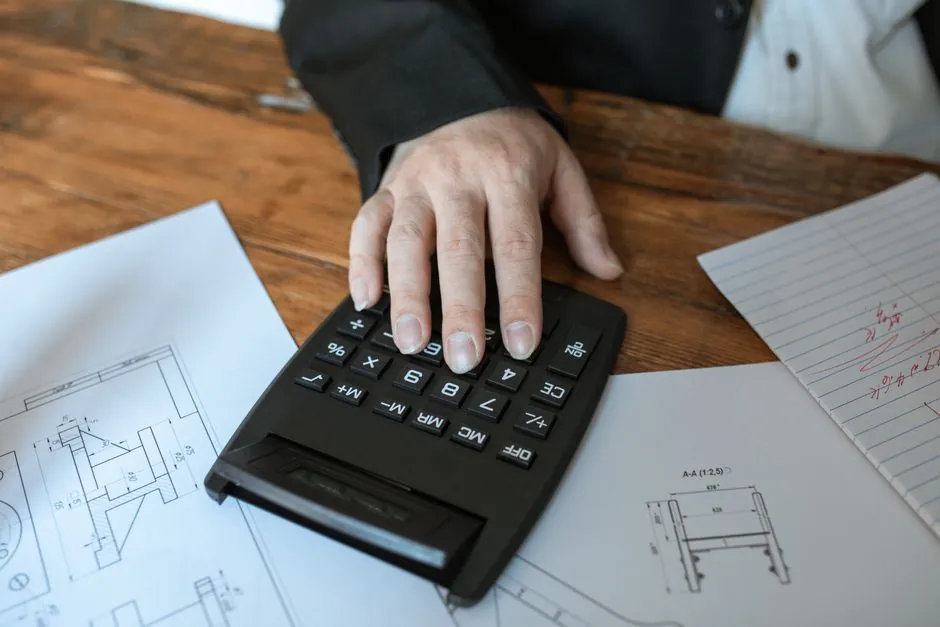
Benchtop hardness testers on the 2026 industrial market span roughly 45 kg to 55 kg per instrument, with Vickers-only micro units like the Shimadzu HMV-G series at 45 kg (99.2 lb) and multi-scale units like the QATM Qness 10/60 M at 55 kg (121.3 lb) [S1][S2].
Purchase price tiers on the 2026 market: entry analog Rockwell benches (e.g. S.A.M.A. SAB150, benchtop digital/analog) sit in the low-thousands USD band, mid-range digital Rockwell/Brinell benches land around USD 8,000 to 18,000, and automated Vickers/Knoop micro systems with motorized XYZ stages and certified indenters run USD 30,000 to 60,000+ [S1][S2][S3].
What actually moves the price: scale, load range, automation
Hardness tester price is dominated by three engineering variables, not by the brand badge. The first is the scale set: a single-scale Rockwell bench (60 kgf / 100 kgf / 150 kgf) is the cheapest configuration, while a multi-scale system covering Rockwell + Brinell + Vickers + Knoop under one frame costs roughly 3 to 6x more because of the turret, multiple indenters, and dual optical paths [S2][S3].
The second driver is load range. Micro Vickers units such as the Qness 10/60 M cover 0 kgf to 62.5 kgf with Knoop/Vickers capability, and the wider load envelope plus low-load stability directly raises the cost of the force application system, the deadweight stack, and the test cycle calibration [S2]. Reference verification hardware and the related cost logic are detailed on the hardness tester reference page. The third driver is automation: manual optical heads are the baseline, semi-automatic XY stages add USD 5,000 to 10,000, and fully automated (FA) configurations with electrically driven revolver, motorized XYZ, autofocus, and edge-recognition software (e.g. Shimadzu HMV-G31-FA) push prices into the USD 50,000 to 80,000 range [S1].
2026 price bands by tester class
Based on the 2026 manufacturer catalog data, three clear price tiers exist on the industrial market. Tier 1, entry-level analog/digital Rockwell benches (SAB150 class, single scale, dial or digital display, no automation), lists at roughly USD 2,000 to 5,000 per instrument and covers the bulk of incoming-inspection and heat-treat shops doing routine HRC checks [S3].
Tier 2, multi-scale digital benches (Qness 10/60 M class: Rockwell + Brinell + Vickers + Knoop/Vickers, semi-automatic, motorized Z, 8-position turret, software-controlled), lists at roughly USD 25,000 to 45,000 per instrument and covers QA laboratories needing ISO 6507 / ASTM E384 / EN-ISO 6506 / ISO 4545 / ASTM E140 / ISO 18265 traceability from one frame [S2]. Tier 3, automated Vickers/Knoop micro systems (HMV-G31-FA class, CCD-based automatic diagonal measurement, electric XYZ, autofocus, full PC workflow), lists at roughly USD 50,000 to 80,000+ per instrument and covers R&D, carburizing-depth profiling, and metallographic labs that need high throughput with single-operator control [S1][S4].
Options compared: Rockwell, Brinell, Vickers/Knoop, portable Leeb

Hardness method choice is the single biggest price lever a specifier controls, because each method brings its own indenter cost, load stack, and sample-prep burden. Rockwell (HRC, HRB, HRF etc.) uses a diamond cone or ball with low force (typically 60 to 150 kgf), is fast, and is the lowest-cost bench configuration; it is the default for finished heat-treated steel parts in incoming inspection [S3].
Brinell uses a tungsten carbide ball with much higher loads (typically 500 to 3000 kgf) on a heavy deadweight frame, which is why floor-standing Brinell testers cost more than comparable Rockwell units, but Brinell is preferred for rough forgings and cast irons where surface finish is poor. Vickers and Knoop use a diamond pyramid at very low to moderate loads (micro range 0.01 to 1 kgf, macro 1 to 100 kgf), need a high-quality optical path, and therefore dominate the high end of the price range; they are the reference method for case-hardened layers, carburizing depth profiles, and thin coatings [S1][S2][S4]. Portable Leeb units (e.g. S.A.M.A. SAP180/SAP550/SAP650) trade bench accuracy for on-site convenience and sit in the USD 1,500 to 6,000 band, useful for large forgings, shafts, and assembled equipment where cutting a sample is not practical.
Standards compliance and what it adds to cost
Standards compliance is not optional in a metrology lab, and each method is governed by a specific ISO/ASTM pair that drives the calibration cost stack. Vickers falls under ISO 6507 and ASTM E384, Brinell under EN-ISO 6506 and ASTM E10, Rockwell under ISO 6508 and ASTM E18, Knoop under ISO 4545 and ASTM E92, and conversion between methods under ASTM E140 and ISO 18265 [S2].
Buying a tester without the matching indenter certification (e.g. ASTM+DAkkS-certified Vickers diamond) and certified test blocks adds hidden cost, because each recertification cycle is typically USD 300 to 800 per block and USD 500 to 1,500 per indenter, and audits require traceability. The Qness 10/60 M "Ready to Test" package explicitly ships with the certified diamond, 5x and 50x lenses, dynamic 8-position turret, and Qpix Control2 M software, so the specifier is paying partly for the documentation chain, not just the hardware [S2]. Buyers comparing across brands should normalize on which standards are met out-of-the-box versus which are option-bundled.
Total cost of ownership beyond the sticker

Purchase price is typically only 50 to 65 percent of the five-year cost of ownership for a benchtop hardness tester. The remaining cost stack includes certified test blocks (USD 1,500 to 4,000 per scale set, replaced every 1 to 2 years depending on use), indenter replacement (a Vickers diamond pyramid is roughly USD 800 to 2,500, a Rockwell diamond cone USD 400 to 1,200), annual calibration by an accredited lab (USD 800 to 2,500 per visit), operator training, and software license/subscription for automated systems (5 to 10 percent of capital cost per year for IoT platforms such as the Verder Scientific integration on Qness units) [S1][S2].
Energy and floor-loading costs are negligible compared to the certification chain. The real TCO driver is throughput: an automated Vickers/Knoop micro system at roughly USD 60,000 capital that replaces two manual benches and one operator shift can pay back in 18 to 36 months in a high-volume heat-treat lab, while a USD 3,000 analog Rockwell bench in a low-volume job shop will run 10+ years on consumables alone. Buyers should also factor sample preparation (mounting, grinding, polishing, micro-etching) which can rival the tester cost over the same five-year window, and is where a related decision on roundness tester or optical comparator sourcing frequently sits in the same capital plan.
Who a hardness tester is for (and who it is not)
A hardness tester is the right tool for any shop that needs to verify heat-treat condition, incoming-material conformity, case depth on carburized or nitrided parts, weld-zone softening, or wear-surface hardness on a regular basis, and that has at least one operator trained in metallographic sample prep [S1][S2][S4]. It is not the right tool for a workshop that only needs approximate hardness on huge assemblies (use a portable Leeb unit at one-fifth the cost), nor for a production line that needs 100 percent in-process hardness on every part (use an inline ultrasonic or eddy-current hardness sensor instead, and treat the bench tester as the reference standard to calibrate it against).
Sourcing and lead-time signals to watch
Two trackable signals will move 2026 hardness tester pricing over the next 12 months. The first is the consolidation of European and US manufacturers around automated, software-driven platforms (Qness Verder Scientific IoT, Shimadzu G31-FA), which is pushing mid-tier analog benches out of OEM catalogs and into secondary markets, generally at 40 to 60 percent of new price [S1][S2]. The second is the sustained strength of the carburizing-tester sub-segment, where 3 manufacturers hold 5 active products on the DirectIndustry index as of May 2026 (Affri, Laizhou Weiyi, Mikrosize), indicating active but not crowded competition, which historically keeps price moves under 5 percent year-on-year for this niche [S4]. For specifiers planning a 2026 purchase, request quotes from at least two of the three major OEM regions (EU, US, China/Taiwan) because lead times for automated units have stretched to 12 to 20 weeks in 2026.
The underlying component specifications are covered under lighting equipment and electric lamps, and linear guide.