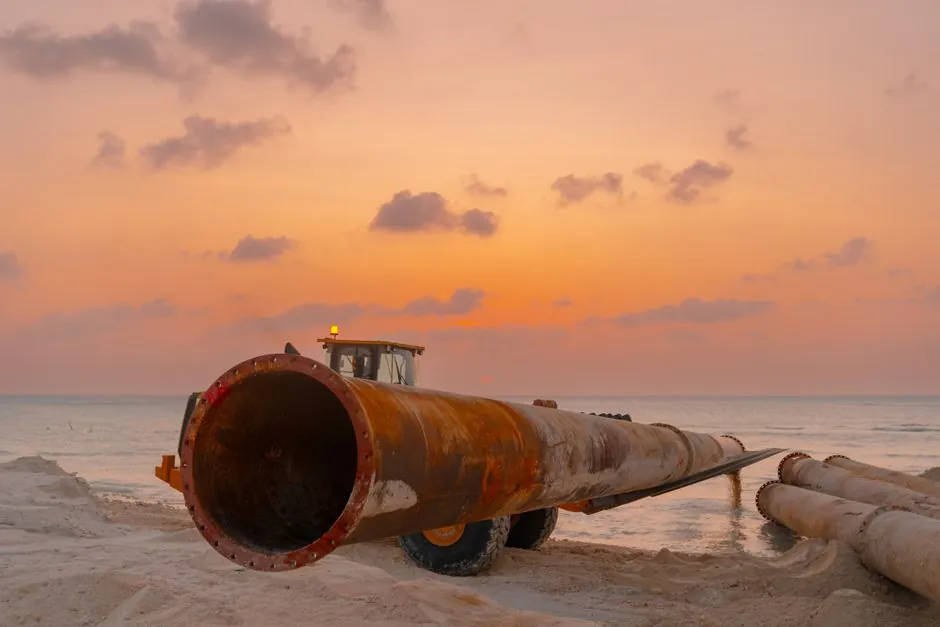
PE Alliance Webinar #2 on HDPE pipe and fusion for data centers drew 565 industry attendees and featured McElroy, Milford, and Pipeline Plastics speakers confirming HDPE as the go-to material for hyperscale campus piping [S5].
Selection today hinges on three variables: operating temperature (HDPE for chilled, PE-RT for hot return), diameter envelope (HDPE stocked up to 136 inch, 157 inch in low-pressure or gravity flow per ISCO [S2]), and joint integrity (heat-fused monolithic connections vs. mechanical restrained joints that risk leak paths behind server halls) [S2][S4].
Material choice: HDPE vs. PE-RT vs. PEX for cooling loops
Chilled water supply, condenser water, and direct-to-chip liquid cooling manifolds are typically built from HDPE because the material tolerates the wide thermal band a data center sees across rooftop risers, buried utility corridors, and indoor drops, with ISCO publishing a 100+ year design life for HDPE in those service profiles [S2]. For elevated-temperature return lines and heat-rejection loops, PE-RT (raised-temperature polyethylene) carries the same fusion-compatible joining method but a higher pressure rating at temperature, which is why ISCO pairs it with HDPE on heat-recovery skids [S2]. Cross-linked polyethylene (PEX) is documented as a competing plastic-pipe option inside water-based cooling branches, valued for flexibility on tight server-row routing, but it does not share the same butt-fusion or large-diameter capability as HDPE [S3]. Engineers comparing the three should match the chosen resin to the line's continuous operating temperature, the required diameter, and whether the segment will be fused in the field or pulled with mechanical fittings.
Joint integrity: why heat-fused HDPE wins on uptime
Heat-fused HDPE joints produce a monolithic pipe string with no mechanical couplings, flanges, or gasket seats in the pressure path, which is the single most cited reliability argument for data center designers [S2][S4]. Gajeske and ISCO both market this property as "zero leaks," and the PE Alliance has built the #fuseitorloseit campaign around it, arguing that buried or behind-wall pipe failures on mechanical-joint systems can cost days to weeks of data hall downtime [S4][S5]. Fusion also eliminates cure time and hot work, so installation can proceed inside compressed data center construction schedules without flame permits [S2][S4]. For a 1.5–3.0 MW hall build, this trades mechanical-joint QC hours for butt-fusion machine cycle time and DataLogger-recorded cool-down parameters, which is why fusion contractors now sit on the same critical path as the electrical and BMS trades.
Diameter, SDR, and routing constraints
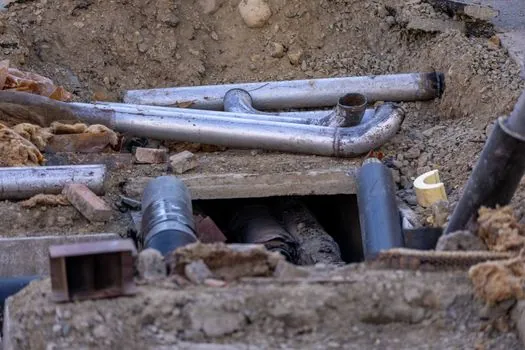
Standard HDPE is stocked and fused through 136 inch OD for pressure service and up to 157 inch in low-pressure or gravity-flow service, which covers site water mains, stormwater detention, and large chilled-water headers on multi-MW campuses [S2]. Typical data center cooling loop sizes fall in the 4–36 inch range, and HDPE's flexibility allows long directional runs and trenchless pulls under existing site utilities, reducing jobsite disruption on tight, phased campuses [S2][S4]. For above-grade and rooftop runs, UV-stabilized HDPE and PE-RT handle weather exposure without the corrosion risk that drives ductile-iron or steel systems toward coatings, cathodic protection, or section replacement. Cold-piping insulation still needs a separate decision, because condensation control on chilled lines depends on closed-cell insulation and insulated pipe supports (cold shoes) rather than the carrier pipe itself [S6].
Application coverage: cooling, fire, and site utilities from one resin family
ISCO's data center application list spans direct liquid cooling, chilled pump stations, rooftop and above-ground chilled water, elevated-temp loops and heat recovery, utility and site water, power and battery skids, E-house connections, and stormwater or detention systems, all served from one HDPE/PE-RT inventory with shared fusion equipment [S2]. Gajeske extends the list to chilled water distribution, potable and process water, wastewater and sanitation, storm drainage, and underground fire protection, including FM-approved assemblies for fire loops and mains [S4]. This consolidation matters on hyperscaler sites where one contractor fusion crew can move from chilled-water headers to fire mains to sanitary without switching tooling, and where the project schedule penalizes any material that pulls a different welder or inspector onto site.
Failure modes and limitations to spec around
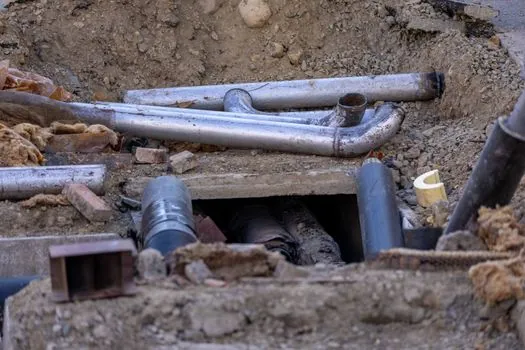
HDPE is not a universal answer. Sustained temperatures above the resin's rated ceiling will derate the pressure capability quickly, which is why hot return and heat-recovery loops step up to PE-RT rather than standard HDPE [S2]. Fusion quality is operator-dependent: an under-heated, misaligned, or improperly cooled joint will pass a low-pressure leak check but fail under thermal cycling, which is why PE Alliance and McElroy both push qualified-operator training and recorded fusion parameters as a contractual deliverable [S5]. Mechanical damage from nearby excavation, rodent chew, or improper embedment remains a maintenance risk on any buried plastic pipe, and condensation on chilled lines is an insulation and vapor-barrier problem rather than a pipe problem, addressed through proper cold-piping material selection [S6]. Finally, where local code still mandates metallic fire service lines or where the AHJ has not accepted FM-approved HDPE fire mains, the designer needs to confirm approvals before locking in the fusion scope [S4].
Selection workflow and field signals
Spec engineers working a 2026 data center scope should fix the cooling-loop resin (HDPE for chilled, PE-RT for hot return), the diameter and DR based on design pressure and temperature, the fusion-joint method (butt fusion for most sizes, electrofusion for tie-ins and fittings), and the QA trail (operator qualifications, DataLogger-recorded fusion curves, cold-side hydrotest) before issuing the procurement package [S1][S2][S4]. The next trackable signals are the upcoming PE Alliance roadshows and webinars scheduled in San Antonio (Oct 27, 2026) and Austin (Oct 28, 2026), plus the HDPE Resource Advantage webinar on Oct 21, 2026, where McElroy and Pipeline Plastics will refresh fusion and material guidance for active campus builds [S5]. Engineers should also watch the published ASCE elearning session on HDPE for data centers, which consolidates case studies, fusion equipment selection, and inspection lessons from recent hyperscale projects [S1].
For component-level specifications, see pe pipe, data logger, and pipe clamp.
See also our earlier report, Selecting a Tower Crane for High-Rise Height and Load: A 2026 Spec Engineer's Workflow.