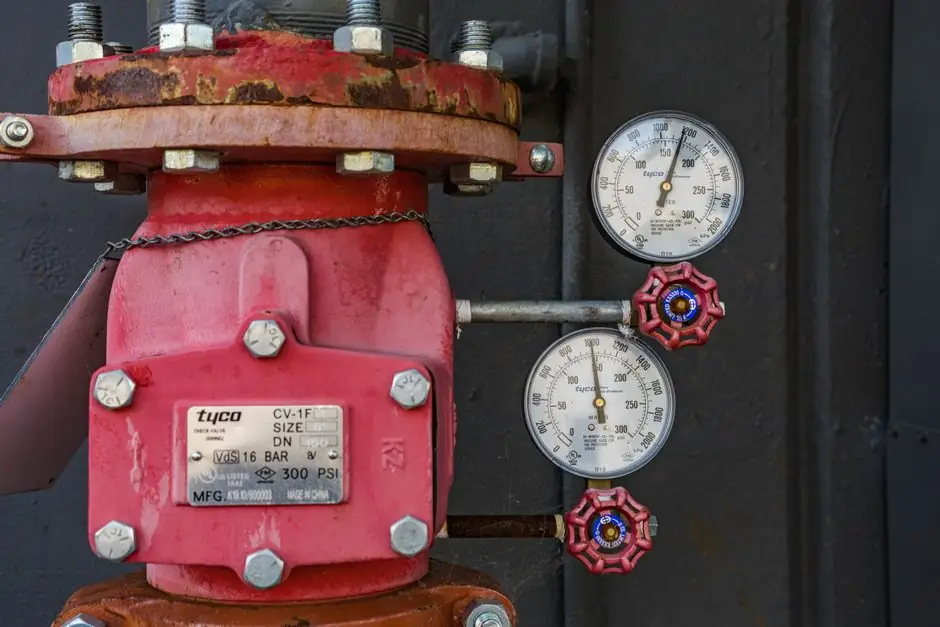
Spot-type heat detectors usually have the lower unit price, while line-type heat detectors cost more but can cover a continuous route or large area with fewer installed sensing locations [S1].
This comparison covers detector cost, coverage, response behavior, installation effort, and application fit for industrial, warehouse, tunnel, and process-area protection.
Price Basis and Installed Cost
Line-type heat detectors are generally more expensive than spot-type detectors as individual products, but their installed cost can be lower where one cable run replaces dozens of point detectors [S1]. Spot detectors are the least expensive and most reliable class of automatic detector, although they respond more slowly than smoke detection because they must first experience sufficient thermal rise [S4].
Do not compare only the quotation for one detector head. A complete price comparison should include the number of sensing points, cable or sensor length, control-unit capacity, installation labour, annual testing, replacement after operation, and any required interface to the fire alarm control panel. The research material does not provide a defensible price-per-metre or price-per-point figure, so a numeric quote requires a project-specific vendor budget.
For bulk purchasing, include mounting hardware, cable supports, branch units, end seals, test units, and commissioning labour. A related analysis of heat detector bulk installation cost for distribution centers provides a useful framework for separating equipment cost from field installation cost.
Coverage and Devices Required
A spot detector centralizes its detection around a single point in the room and has a certain effective detection radius around that point [S1]. Linear type detectors provide continuous detection along a path and are typically more suitable for large areas such as atriums or entertainment halls [S1]. These figures describe potential coverage, not a universal spacing rule.
The economic breakpoint depends on geometry. In a small equipment room, one or a few spot detectors may cover the hazard with less equipment. Along a 100 m cable tray, pipe rack, conveyor, or warehouse aisle, a linear detector can replace a long sequence of point devices while eliminating gaps between separate sensing locations [S1][S3].
Linear systems normally consist of a heat-sensing cable, a monitoring or control unit, and connections to the fire alarm system [S5]. Spot systems consist of individual detector heads, mounting bases or wiring, and a conventional or addressable alarm circuit. The system architecture is therefore part of the price, not an accessory added after the detector comparison.
Technical Options Within Each Class

Both spot and linear heat detectors are available with fixed-temperature, rate-of-rise, or rate-compensated operating principles [S2]. Heat detectors respond to thermal energy, either a fixed temperature or a rate of temperature increase [S2].
These are operating principles for comparison, not a universal alarm-setting instruction for every jurisdiction or occupancy.
Linear sensing elements include conventional fixed-temperature cable, analogue cable that can report changing temperature, and digital or addressable systems that can identify the alarm location more precisely [S5][S7]. Fixed-temperature and rate-compensated line elements are generally lower-complexity options. Analogue, digital, and fibre-optic systems require more capable monitoring electronics and therefore change the price and commissioning comparison.
Spot vs Linear Decision Matrix
For unit price, spot detectors have the advantage because they are generally cheaper than line-type devices [S1]. For spatial coverage, line detectors win decisively because detection is continuous along a path, while each spot detector detects only around its mounted location [S1][S3]. For installation effort, point detectors are easier to install and test individually, whereas a line system requires cable routing, termination, addressing or zone configuration, and monitoring-unit commissioning [S3][S5].
For false-alarm environment, neither geometry alone determines performance. Heat detectors are preferred in dusty, smoky, or high-humidity locations where smoke detection can be troublesome, and they generally produce fewer nuisance alarms than smoke detectors [S2]. Line-type detection has no dead zone between discrete point devices, but the complete installation still depends on cable type, environmental rating, and correct placement [S5].
For lifecycle, restorable spot heat detectors can reset after operation, while nonrestorable devices require replacement. Some designs combine both functions, resetting only after the restorable element operates but requiring replacement after the nonrestorable element activates [S4]. Linear cable systems add a separate consideration: an alarmed cable run may need cable replacement depending on the technology and installation, so the price must include cable length and repair strategy.
Application-Based Selection
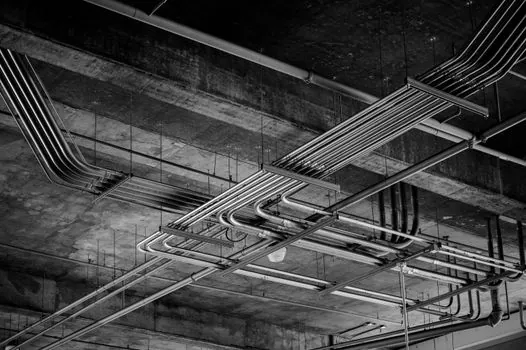
Choose spot-type heat detectors for compact, enclosed, or semi-enclosed spaces where predictable heat accumulation permits local placement. Typical applications include control rooms, electrical switchgear rooms, pump houses, compressor enclosures, laboratories, warehouses, parking garages, basements, kitchens, boiler rooms, and engine rooms [S2][S3].
Choose linear heat detection for long, narrow, open, or geometrically complex areas. Strong candidates include cable trays, pipe racks, conveyor tunnels, transformer bays, high-bay storage, outdoor pipe bridges, solar farms, and industrial equipment routes [S3][S5]. Linear cable is particularly useful where airflow disperses smoke or where installing enough point detectors would be impractical [S3].
Use rate-of-rise or rate-compensated detection where fast thermal development matters, and fixed-temperature detection where the alarm threshold and local ambient behavior are more important [S2][S4]. Fixed-temperature devices are suited to locations exposed to sudden temperature changes because an intermittent heat source that does not reach the alarm temperature will not operate the detector [S4].
Limitations, Maintenance, and Failure Modes
Fixed-temperature heat detectors can be slow because of thermal lag, the time required for the detector body to approach the surrounding air temperature [S4]. That delay makes them unsuitable as the sole life-safety measure in many occupancies where codes require smoke detection. Their role is commonly where smoke, dust, humidity, or ventilation prevents reliable smoke detection [S4].
Spot detectors leave uncovered space if spacing ignores airflow, ceiling geometry, or the hazard location. A fire beginning at the edge of a coverage zone can take longer to affect the detector, while airflow can carry combustion products away [S3]. Maintenance also includes individual functional testing and replacement of nonrestorable units [S4].
Linear systems avoid discrete gaps between point sensors, but cable can be damaged by abrasion, moisture, chemicals, ultraviolet exposure, or other site conditions unless the selected jacket and installation suit the environment [S5]. Cable runs also need support, routing discipline, terminations, and periodic system testing. If location-level identification matters, analogue or digital systems justify a higher equipment price because the monitoring unit receives more diagnostic information [S5][S7].
Standards and Purchasing Checklist

NFPA 72 defines a line-type detector as “a device in which detection is continuous along a path” [S1]. Linear heat detection products are also associated with NFPA and UL requirements, while the cited materials describe digital, analogue, and fibre-optic sensing distinctions [S5][S7]. Confirm the applicable edition, product listings, alarm threshold, spacing, cable construction, ambient-temperature rating, and system compatibility with the authority having jurisdiction before ordering.
For a spot system, request the detector model, response principle, alarm temperature, rate-of-rise threshold if applicable, restorable or nonrestorable construction, mounting dimensions, ingress protection, and certification marks. For a linear system, request cable type, conductor or sensing architecture, nominal alarm temperature, environmental exposure ratings, maximum run length, monitoring-unit compatibility, and location-reporting capability.
Price the same functional scope for both alternatives: alarm initiation, notification, power, interface, installation, commissioning, periodic testing, and post-alarm restoration. The defensible rule is straightforward: select spot type for a few discrete protected locations; select line type where a continuous route or large irregular area would otherwise require many point devices. Request at least three project-specific quotations, then compare total installed cost rather than detector price alone.