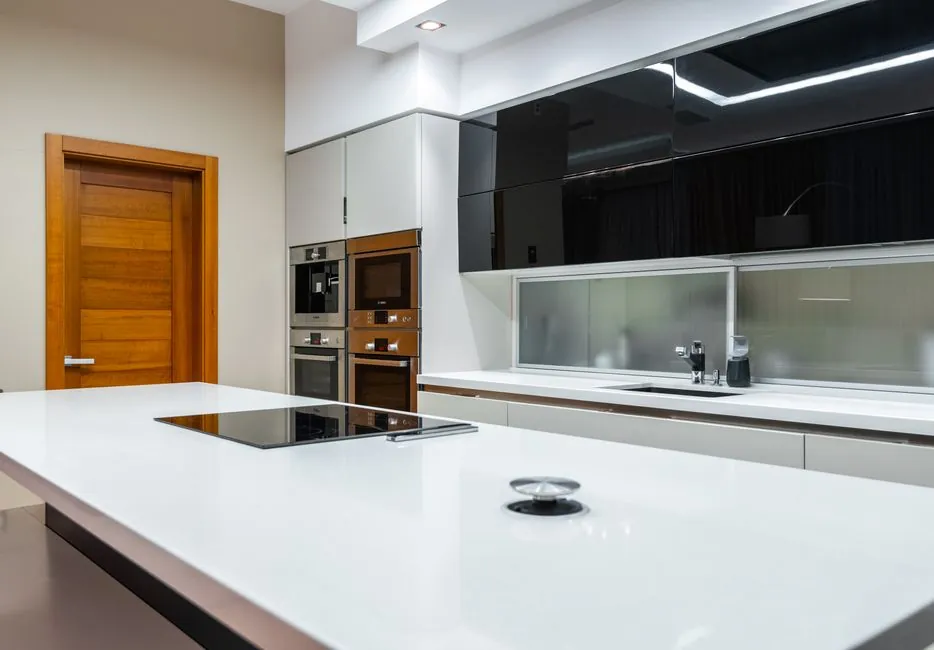
Choose a heat detector for a commercial kitchen because it responds to temperature change rather than airborne particles, reducing nuisance alarms caused by cooking aerosols and steam [S1][S3].
The practical division is between kitchens, garages, attics and similar high-nuisance spaces, where heat detection is preferred, and bedrooms, hallways and living areas, where smoke detection provides earlier warning [S1][S3].
Kitchen detection: use heat where particles are routine
A heat detector ignores smoke, dust and aerosol concentrations and instead monitors temperature, so cooking grease, shower steam, garage exhaust, attic dust and workshop debris do not create the same false-alarm mechanism as a smoke detector [S3].
That advantage is most valuable in kitchens, where normal cooking can send combustion particles and steam toward a detector. A smoke alarm may activate repeatedly under those conditions, and repeated alarms can lead occupants to ignore the system [S1][S3]. The design objective is therefore not fewer detection points, but a sensor suited to the environment [S3].
Heat detection is the better choice for a kitchen, but it does not make smoke detection elsewhere unnecessary. The smoke detector remains appropriate for adjacent bedrooms, corridors, escape routes and other locations where early recognition of smoke matters and ordinary aerosol conditions are controlled [S1][S3].
Fixed-temperature and rate-of-rise performance
A fixed-temperature detector alarms when the surrounding temperature reaches its set threshold. The exact alarm point must be selected for the protected environment rather than copied generically.
A rate-of-rise detector evaluates the rate of temperature increase. This can identify a rapidly developing fire earlier, but normal heat generation must not reproduce the design rate repeatedly.
Product documentation should provide the rated threshold, rate criterion, operating range and alarm output for the selected model [S3].
Smoke detection remains better away from nuisance sources

Smoke detectors detect airborne combustion products, while heat alarms detect temperature changes or elevated temperature [S4]. These are different sensing principles with different response characteristics, so the more visible smoke alarm is not automatically the better kitchen device [S4].
Ionization smoke detectors respond quickly to fast-flaming fires involving materials such as paper, wood and grease. Their ionization chamber detects microscopic airborne combustion particles, which also means cooking aerosols, steam and some sprays can create unwanted alarms [S3].
These distinctions define the appropriate division of duty. Use smoke detection for early warning in cleaner, occupied areas, and use heat detectors where airborne cooking products make smoke sensing operationally unreliable. A smoke detector is still appropriate outside the kitchen boundary when the surrounding air is not routinely contaminated [S1][S3].
Decision criteria across the two detector types
On false-alarm exposure, heat detection wins in a kitchen because temperature sensing does not react to cooking particles, steam or dust, whereas smoke detection can respond to cooking aerosols, with ionization models being particularly susceptible [S1][S3].
On response to fast-flaming fires, ionization smoke detection can react quickly, while fixed-temperature and rate-of-rise heat devices respond to thermal conditions rather than smoke [S3].
On integration, both detector types can connect to an alarm panel and report to a monitoring station, but the system specification must match the sensing method, alarm behavior and relay or addressable interface of the selected unit [S3]. For a panel-integrated purchase, compare addressable and conventional heat detectors separately from the choice between heat and smoke sensing.
Use cases and important limitations
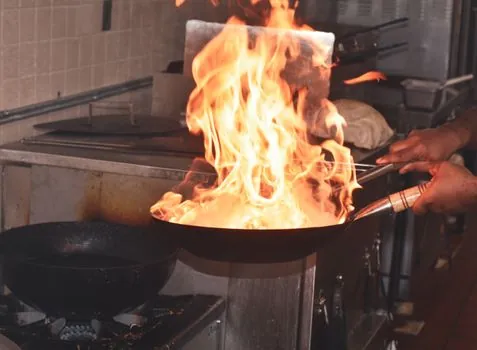
Heat detectors fit kitchens, garages, attics and other spaces where dust, steam, exhaust or combustion aerosols would cause repeated smoke alarms [S1][S3].
Smoke detectors fit bedrooms, hallways and living spaces, where detecting smoke during a developing fire provides a practical warning advantage [S1][S3]. Photoelectric units are the better smoke-sensing choice near kitchens or dining areas when smoke detection remains necessary, because they are generally less vulnerable to cooking-related alarms than ionization units [S3].
Heat detection is not a substitute for every smoke detector, and neither type replaces an approved kitchen suppression system where required. A detector identifies a developing condition, while suppression equipment responds to the fire hazard through an engineered arrangement. Select detectors and interfaces by the actual appliance, fuel, duct, ceiling, ambient-temperature and ventilation conditions, rather than by the room label alone [S1][S3][S4].
Specification and sourcing checks
Record at least 4 decision-critical fields for every proposed device: sensing principle, fixed-temperature point, rate-of-rise criterion, and alarm or communication interface [S3]. For smoke units, also record whether the sensing method is ionization, photoelectric or combined [S3]. These fields allow a kitchen heat detector and a corridor smoke detector to be compared on function rather than marketing labels.
The research supports a typical residential fixed-temperature example of 135°F and a rate-of-rise example of approximately 15°F per minute, but it does not establish a universal requirement for every commercial kitchen [S3]. Verify the approved design threshold, listed installation instructions, ambient limits, mounting requirements and system compatibility for the exact model before purchase [S3].
For panel arrangements, confirm whether the fire alarm control panel accepts conventional or addressable devices, whether each detector provides an individual address, and what output interface is available for relay integration. The heat-versus-smoke decision must remain compatible with the panel and the monitored hazard; both device types can connect to a panel and report to a monitoring station [S3].
The traceable procurement record should include the detector model, sensing method, calibrated threshold or rate criterion, environmental limits, mounting arrangement, panel compatibility and the dated test or acceptance result. If no listed model data are available for a selected threshold or ambient range, obtain manufacturer documentation before approving the submittal.
Final specification should place heat detection in the kitchen nuisance zone, retain smoke detection in adjacent cleaner escape and sleeping areas, and verify every threshold and interface against the approved fire-alarm design and listed product instructions [S1][S3][S4].