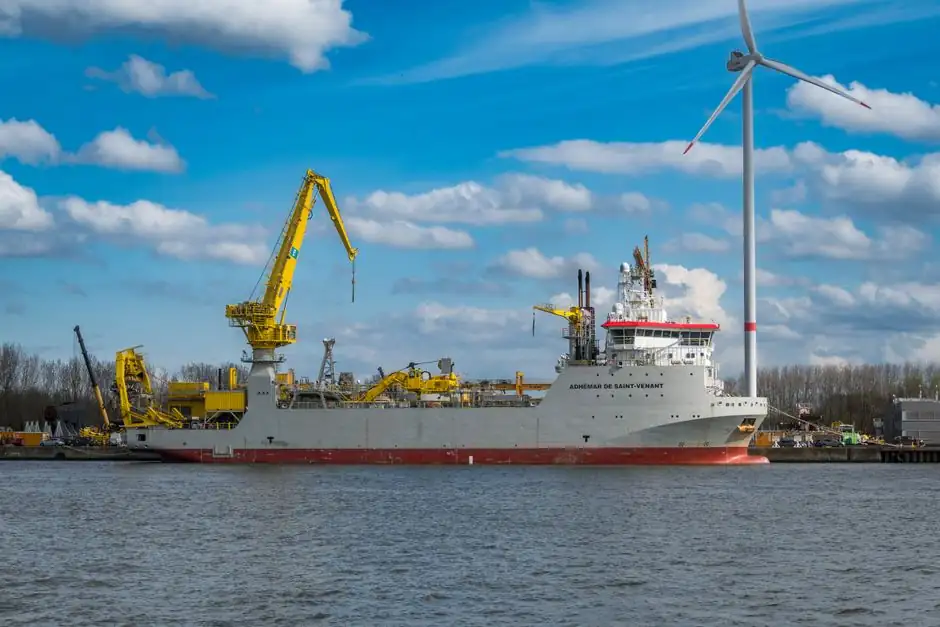
Power transformer lead times now average about 128 weeks, with some high-capacity units quoted at four to five years, while the heavy-lift ships, breakbulk berths, and SPMT trailers needed to move them are booked out on the same arc, so a 300-tonne generator step-up unit can sit on a quay for weeks waiting for a ship or a crane window that lines up with inland permits [S3].
Reuters figures cited in May 2026 show U.S. demand for generator step-up transformers up 274% from 2019 to 2025 and substation power transformer demand up 116%, with prices climbing roughly 80% over five years, which has pulled Turkish and South Korean factories (Astor Enerji, LS Electric) into multi-year contracts with U.S. utilities worth $769 million and $312 million respectively for 2026-2029 delivery [S2].
Why the ocean leg is now on the critical path
A hyperscale data center campus of 100 MW to 300 MW generates several separate heavy-cargo streams at once: large power transformers in the 50-200 tonne band, generator step-up units above 300 tonnes, switchgear, chillers, battery systems, and prefabricated electrical modules, each of which needs its own transport mode, permit window, and site slot [S3]. Marine cargo underwriters classify the largest units as Generator Step-Up (GSU) at 125-550 tonnes / 200-1000+ MVA or Extra-Large / HVDC at 300-600+ tonnes / 250-1000+ MVA, both of which move by breakbulk or Ro-Ro only, never on a bulk carrier, because of shock, vibration, and tilt sensitivity of the core-and-winding assembly [S1].
That tier of weight rules out standard container or general-cargo slots. Operators have to book a heavy-lift multipurpose vessel (MPV), a deck barge with ship-shaped sheerlegs, or a Ro-Ro with reinforced ramps, then line up port gear that can lift 200-500 tonnes in a single pick. Each piece of kit exists in finite global population, and lead logistics planners now book the ship before the transformer finishes factory acceptance testing, not after, because the next slot may be 6-10 weeks further out.
The eight handoffs that turn a 30-day voyage into a 90-day project
For an imported large power transformer, the chain runs factory release to ocean booking, heavy-lift or breakbulk loading, ocean transit, discharge port crane window, customs and temporary storage, SPMT or multi-axle trailer road leg with bridge and axle-load permits, escort and route survey, then site receipt and crane set [S1][S2]. AIG's marine risk guidance notes that any delay at intermediate storage, whether at the discharge port or a local logistics hub, can run into weeks or months because the unit cannot simply be parked on a laydown yard without oil preservation, nitrogen blanketing, and fire-protection measures [S1].
The transformer itself may be the highest-value item, but the generator sets, switchgear, cooling equipment, battery energy storage systems, and prefabricated power modules shipped alongside it can generate dozens of additional abnormal loads, all of which must reach site in a sequence that matches civil construction, electrical installation, and commissioning, so a transformer arriving several weeks early may need secure preservation while one arriving late leaves foundations, cranes, and crews idle [S3].
Weight bands and the equipment that has to move them
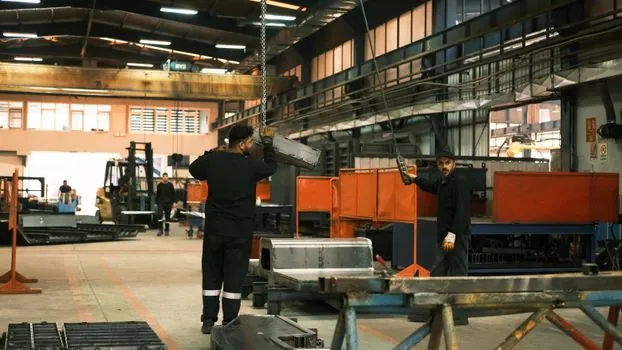
AIG's reference table puts Medium Power Transformer Heavy (MPH) units at 70-125 tonnes and Large Power Transformers at 100-300 tonnes, with generator step-up units topping out at 550 tonnes and HVDC units at 600+ tonnes, dimensions running 6-12 m long, 3-5 m wide, and 3.5-5.5 m tall at the top of the scale [S1]. For the 50-200 tonne band that dominates U.S. data center work, the road leg typically needs 9-axle or 13-axle steerable hydraulic combinations, modular hydraulic trailers, perimeter frame trailers, or a barge-rail-road combination, with axle-load planning and bridge checks often more constraining than the ocean leg itself [S3].
Offshore wind, rail traction, and HVDC interconnector projects all sit in the same MPH-to-Extra-Large weight classes, so when a heavy-lift MPV is committed to one of those jobs, the rest of the queue, including utility and data center transformers, shifts by the same number of weeks. The market is responding with new tonnage, but newbuild heavy-lift MPVs deliver on multi-year orderbooks, so capacity lags demand rather than corrects it within a single procurement cycle.
Where the chain breaks most often
CxT Logistics and Breakbulk both flag the same four pressure points: port congestion, heavy-lift vessel availability, road permits, and crane windows. Gulf region delays documented in mid-2025 traced primarily to dock congestion, with limited berth capacity colliding with large cargo volumes [S6]. For transformers specifically, the failure modes are port-side (no ship, no crane, no laydown space), road-side (bridge rating, urban clearance, escort availability), and site-side (no foundation ready, no set crane, no commissioning crew), and each one can wipe out the float on its own.
The freight-forwarder response, in plain terms, is to treat the transformer as a managed milestone from the first project plan, not as a line item quoted after the purchase order is signed, because once the manufacturing clock is already running at 128 weeks average, even a four-week shipping slip can push a hyperscale commissioning date past the customer interconnection window, with deferred revenue and higher financing costs as the practical consequence [S2][S3].
Import dependence stretches the chain further
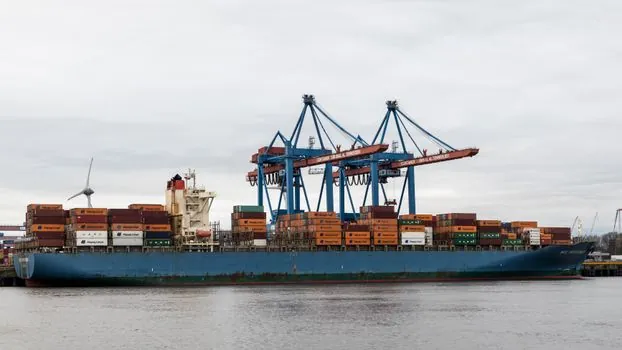
Domestic U.S. transformer manufacturing is expanding, but the shortage is not disappearing quickly because key inputs, copper and grain-oriented electrical steel, remain constrained and many developers are signing multi-year import contracts to cover near-term demand [S2]. Those contracts add an ocean leg, a customs leg, and an inland heavy-haul leg on top of factory release, and each handoff is a failure point that can collide with construction crews, commissioning dates, customer commitments, or utility interconnection milestones.
The net effect for project planners between 2026 and 2029 is that the binding constraint on transformer and turbine deliveries is no longer the factory gate, it is the heavy-lift ship, the discharge berth, the SPMT, and the road permit, so transformer control plans now have to lock port of entry, discharge equipment, inland route, permits, staging yard, delivery window, and escalation owner before the unit is even ready to ship, otherwise the move itself becomes the bottleneck that turns a 128-week procurement cycle into a longer one with stranded assets at the end of it [S2][S3].
Signals worth tracking through 2026 and 2027
Three figures will tell the story: (1) the average power-transformer lead time, which sat near 128 weeks in late 2026, (2) the heavy-lift MPV orderbook delivery rate, since new tonnage enters service on a 2-3 year lag, and (3) U.S. data center capacity under construction, which Breakbulk pegged at about 5 GW against roughly 12 GW announced for 2026 alone, a 7 GW gap that only closes if the heavy-lift supply chain scales at the same pace as the load it has to move [S3].