
Large power transformer lead times reached 120 weeks or more during 2024-2025 and the backlog has not cleared in mid-2026, with utilities and data-center developers now booking slots 24-36 months ahead [S2].
Hitachi Energy disclosed an additional 250 million USD investment on 2025-10-03 to expand global transformer manufacturing footprint, explicitly framed as a response to the supply-demand gap created by grid build-out, renewables interconnection and hyperscale data-center load growth [S2]. The same supply pressure is pushing industrial specifiers toward dry-type transformers, switching power supplies and DC power systems as functional substitutes where the duty permits.
Why the 2025-2026 Transformer Bottleneck Formed
Three demand pulls collided: grid replacement of 1970s-era units, renewables tie-ins (utility-scale solar and onshore wind step-ups), and hyperscale data centers requesting 100-300 MVA campus feeds with N+1 redundancy [S2]. On the supply side, large-power transformer (LPT) factories run on long cycle times — grain-oriented electrical steel (CRGO/HiB), wound core stacking, and oil-impregnated tanking each add months before factory acceptance testing (FAT) and dielectric / heat-run testing per IEC 60076 series [S2].
Lead-time data points tracked across the 2024-2025 cycle: 110-130 weeks for >100 MVA units, 60-90 weeks for 30-100 MVA, and 30-50 weeks for distribution-class pad-mount and cast-resin units [S2]. The non-linear cost of a single replacement transformer on a 230 kV / 400 kV grid transformer can exceed 4-8 M USD, so a 6-month slip on a hyperscale campus energization translates into hundreds of millions of deferred revenue — that is why procurement is moving to a slot-booking model similar to semiconductor wafer allocation [S2].
Hitachi Energy 250 M USD Expansion: What It Buys
Hitachi Energy's 250 M USD top-up is earmarked for new production capacity and supply-chain hardening, with the press release explicitly citing "address global transformer shortage" as the programme's framing [S2]. The capital flows into additional winding capacity, expanded CRGO cutting and slitting lines, and tank / radiator fabrication cells, plus long-term offtake agreements with electrical-steel mills [S2].
For procurement teams, the realistic takeaway is that even with this capital injection, new tank capacity ramps over 18-30 months, so the binding constraint through 2026 and most of 2027 remains slot allocation rather than price [S2]. A practical workaround widely adopted in 2025-2026: split procurement into 60% slot-booked new LPT + 40% power transformer refurbishment / repurposing of decommissioned units, with a mobile substation as bridging capacity during the 12-18 month build window [S2].
Spec Bands and Pricing Reality for Substitutes
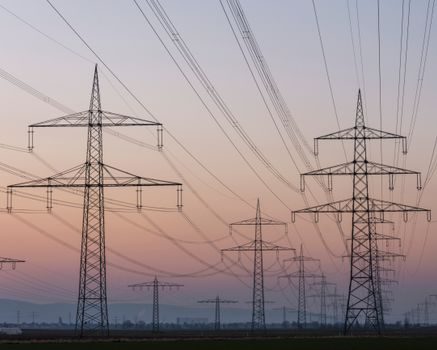
For low-voltage and LED-driver duty — where industrial buyers can sidestep the LPT queue — switched-mode and DC-supply substitutes are available on fast MOQs. Shenzhen Kediya Technology lists 12 V / 24 V LED-driver-class switching transformer power supplies at 1.50-1.70 USD per metre on a 50-metre MOQ, while Genesis Power Technology quotes 200 W IP68 outdoor switch-mode LED drivers at 15.00-17.00 USD on a 100-piece MOQ [S1]. These are not equivalent to a 100 MVA grid dry-type transformer, but they illustrate the order-of-magnitude difference in allocation pressure at the LV end of the market [S1].
The decision band for specifiers in 2026 looks like this, comparing four functional options against the binding constraints buyers actually face:
Where Industrial Buyers Cannot Substitute
There is a hard floor under which no switched-mode product can replace a transformer: any duty requiring galvanic isolation across a 50 Hz / 60 Hz MVA-class power path, impedance matching for fault-current limiting, or outdoor HV insulation coordination under IEC 60076-3 / IEC 60076-11 [S2]. Distribution-class dry-type cast-resin can step in for indoor 10 kV / 0.4 kV duties in data centers, hospitals and offshore platforms where oil is unacceptable, but a 230/400 kV grid step-up transformer has no drop-in solid-state alternative at utility scale [S2].
Two engineering realities that bit specifiers in 2025-2026: (a) paralleling two smaller transformers to cover a single large LPT slot only works if short-circuit impedance, vector group and tap range are matched within the OEM's paralleling guide — sloppy matching causes circulating current trips; (b) mobile / skid-mounted substations rated 30-100 MVA are themselves on a 12-18 month queue, so they are not a free option [S2]. The same allocation logic that has reshaped the semiconductor supply 2026 and copper supply chain 2026 markets now reaches into transformer procurement.
Standards, Sourcing Levers and Trackable Signals
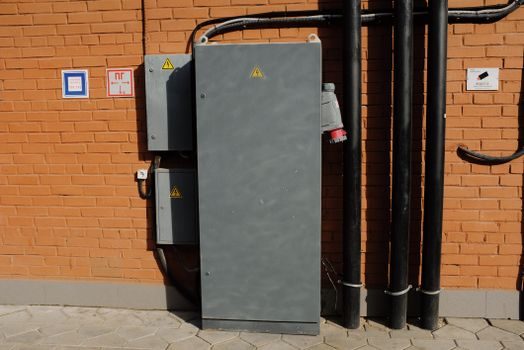
The applicable reference family for industrial transformer specification remains IEC 60076 (power transformers), IEC 60076-11 (dry-type), IEEE C57 (North American parallel), and NEMA TP-1 / DOE 10 CFR 431 efficiency banding for distribution units [S2]. Buyers ordering during a shortage should demand FAT witnessing, locked tap-changer type (OLTC vs DETC), and named CRGO supplier (e.g. Nippon Steel, ThyssenKrupp, Posco, Baoshan HiB) inside the contract, because sub-spec electrical steel is the leading cause of elevated no-load loss in 2025-vintage field failures [S2].
Three signals to watch through 2H 2026 and into 2027: (1) Hitachi Energy's expanded-capacity line commissioning dates as reported in subsequent investor briefings — the 250 M USD round must convert to shipping slots or the lead-time curve stays flat [S2]; (2) European Union and US Department of Energy transformer-efficiency rule updates, which historically pull demand forward ahead of effective dates; (3) China-domestic transformer OEM export licensing, since CRGO allocation and 765 kV-class tank capacity increasingly sit with Chinese suppliers and affect the global queue [S2]. For any project where an LPT slot cannot be confirmed inside 12 months, the data-center upstream and downstream industries 2026 build-out will be the gating demand driver, while nuclear power supply shortage 2026 is the related baseload constraint amplifying the same transformer lead-time story.