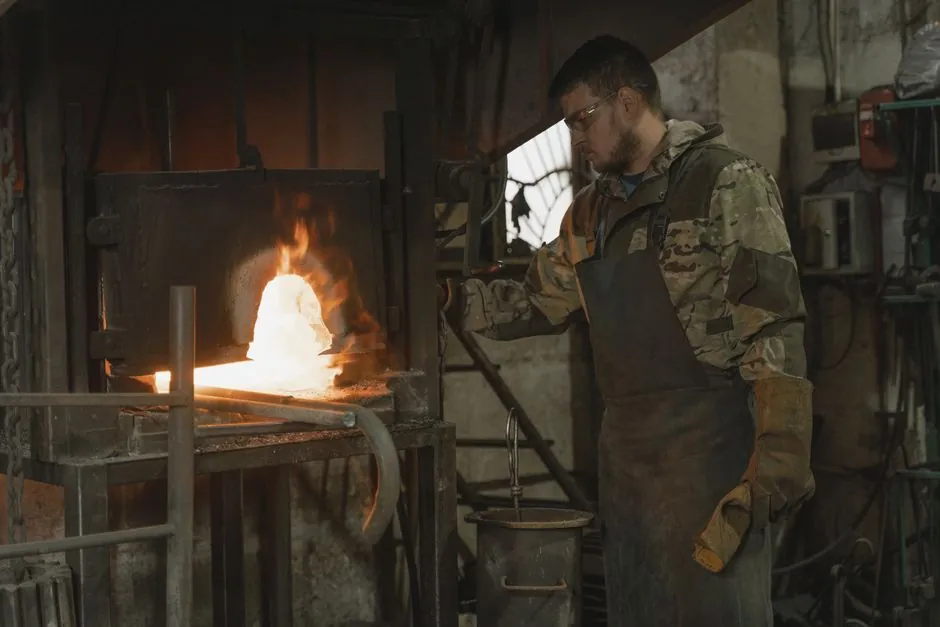
Die-casting holding-furnace power should be calculated from peak metal demand and recovery duty, because a machine’s nominal shot rate does not define the furnace’s thermal load.
An hourly demand model for sizing a holding furnace uses casting weight, yield, shots per hour, number of machines, shift pattern, expected interruptions, refill quantity, arrival temperature, allowable bath-temperature drop, and recovery time [S5].
What the Furnace Must Deliver
A holding furnace is the thermal buffer between melting and injection, so its duty depends on average consumption, peak consumption, and the heat needed to restore bath temperature after a refill [S3][S5]. A useful equipment review for holding-furnace selection should record material condition, required capacity, operating schedule, utilities, loading and discharge method, layout limits, safety responsibilities, and acceptance criteria [S5].
Machine shot rate and furnace capacity are different quantities. Shot rate is a production frequency, while furnace capacity is a mass or heat-balance requirement. A useful first calculation is:
Net metal demand, kg/h = shot mass, kg × shots/h × number of simultaneous machines ÷ casting yield.
The gross feed rate must also cover return metal, runners, overflow, flash, and other process loss. The aluminum die-casting rule of thumb cited for bath size is that holding capacity should equal at least one to two times the melting rate in kg/h, but that is only a preliminary sizing rule and does not replace a peak-demand calculation [S6].
Build Average and Peak Demand
Average demand should be calculated from casting weight, yield, shots per hour, machine count, shift pattern, and interruption assumptions [S5]. Average demand can hide the real constraint because simultaneous machine demand, short production runs, changeovers, or refill events may create a higher instantaneous load than the daily or shift average.
Use two demand cases:
1. Normal case: expected shots per hour, normal shot mass, normal machine allocation, and scheduled operation.<br> 2. Peak case: the highest credible combination of active machines, shot mass, cycle rate, interruption recovery, and refill arrival rate.
The peak case should not combine unrelated maxima without engineering justification, but it must include credible simultaneous events. A furnace that meets only average demand may recover too slowly after a large refill or fail to maintain the specified pouring temperature when several machines draw metal together [S3][S5].
Convert Metal Flow into Thermal Duty
Electrical power is selected only after the required heat rate is calculated from the metal mass flow, temperature rise, and furnace and metal losses. The melter, transfer system, and holder must be evaluated as one thermal process [S5].
The calculation should use the selected heating method and its available utility capacity. Gas-fired systems must be checked against available gas pressure and flow, while electric systems must be checked against available electrical service, load balancing, and required temperature control [S5]. Utility availability is not the same as delivered thermal performance, and neither nominal furnace capacity nor machine shot rate proves that the specified temperature can be recovered within the required interval.
For metal-quality reasons, the design should also address temperature uniformity, covers, bath geometry, cleaning practice, and refill turbulence, because these affect oxidation and dross formation [S5]. Furnace selection influences metal loss from oxidation, metal quality, and maintenance requirements in addition to energy consumption [S1].
Central Holding versus Cell-Side Holding
Central holding consolidates inventory and metal treatment, while at-machine holding shortens the final transfer to the casting cell [S5]. The correct arrangement depends on alloy segregation behavior, transfer distance, plant traffic, automation, maintenance access, and the number of casting machines [S3][S5].
For a cold-chamber die casting machine, the holding furnace is normally positioned near the injection end, with molten metal transferred from the holder into the machine’s shot system [S7]. Short transfer distances reduce the thermal and contamination exposure between holder and machine, but they do not remove the need to size the holder for peak draw and refill recovery.
Central holding is more practical when several machines can share treatment, inventory, and operating control. Cell-side holding is often easier to control when short transfer paths, dedicated alloy service, or machine-specific temperature stability are decisive. These layouts should be compared using the same shot profile, operating schedule, refill method, and interruption assumptions.
Gas and Electric Heating Compared

Neither option wins on nameplate power alone because gas equipment is rated by burner output and fuel consumption, while electric equipment is rated by electrical input and heat output.
Compare the alternatives on the same criteria:
Gas equipment can provide high thermal flexibility, but the installed fuel system, combustion controls, and site emissions constraints may dominate the decision.
Where the Furnace Is Not the Limiting Factor
A holding furnace can be oversized for average demand but still be marginal during recovery, particularly when a large refill arrives cold or when several machines operate at once. Conversely, a furnace may recover metal temperature adequately while its bath inventory, transfer system, or machine shot capacity constrains production [S3][S5].
The shot sleeve and machine shot system must also be checked against the calculated shot mass and cycle rate, because furnace capacity does not correct an undersized or unsuitable transfer path [S7][S8]. Machine sizing includes a flexible shot range that can be changed by altering the shot-system diameter, so production planning should use the actual shot configuration rather than the machine’s maximum theoretical output [S8].
Do not use die-casting machine tonnage as a direct proxy for furnace power. Machine tonnage describes injection force, while holding-furnace duty is governed by kilograms of metal per hour and the energy required to maintain and recover bath temperature. A small machine producing a high-volume family of small parts can impose a greater metal demand than a larger machine running fewer shots.
Specify and Test the Furnace
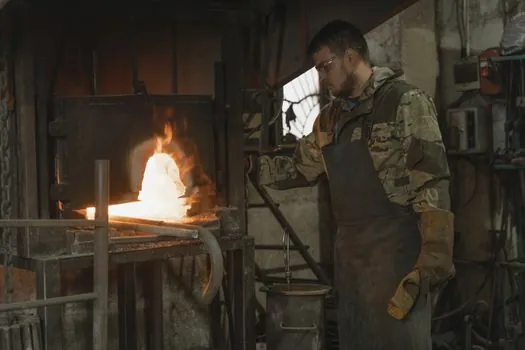
The purchase specification should define alloy, feedstock and return-metal condition, normal and peak metal demand, operating temperature, permitted temperature band, refill quantity, incoming-metal temperature, recovery time, shift pattern, utility requirements, loading and discharge method, layout constraints, maintenance access, safety responsibilities, and acceptance criteria [S5].
Factory testing should verify rated power or burner output, temperature control, temperature uniformity, minimum operating level, normal reserve, maximum bath level, and the alloy-change procedure. At commissioning, measure actual heat-up and refill-recovery time against the production model. The DOE metalcasting energy study identifies alloy melting and holding as major energy requirements and notes that furnace selection affects oxidation losses, metal quality, and maintenance, which makes thermal-performance verification a production issue rather than only an electrical issue [S1][S2].
The next engineering checkpoint is to convert the production schedule into average and peak kg/h, add measured furnace and metal losses, then compare the required recovery duty with each candidate furnace’s rated capacity and site utilities. Track two commissioning values: sustained bath-temperature deviation during multi-machine draw and recovery time after the specified maximum refill.