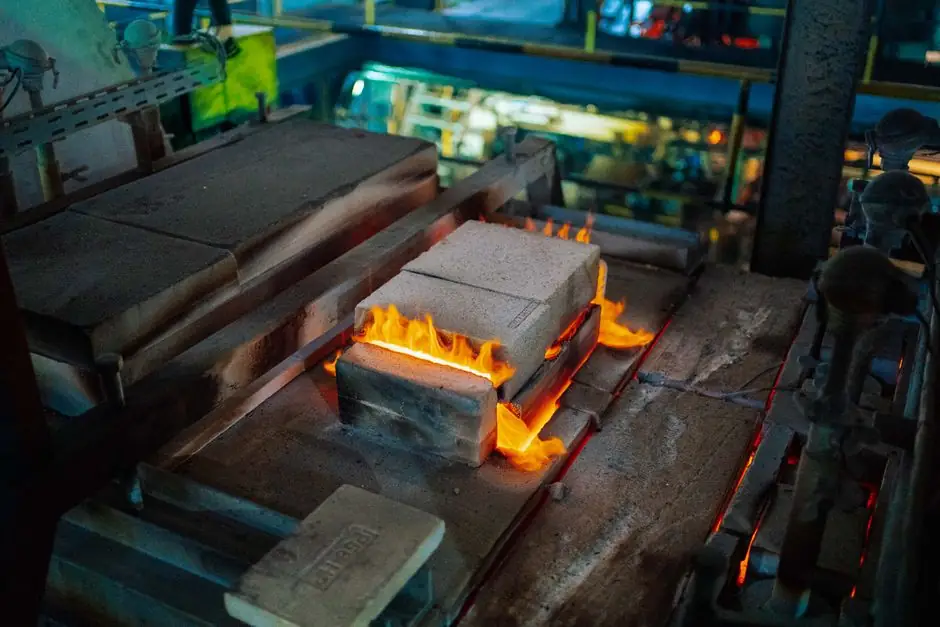
Hot-box machines shoot resin-bonded sand into a heated core box, while shell cores can offer excellent surface quality, dimensional accuracy, hollow geometry, and high-volume production capability.
The choice among core-making processes should consider core shape, surface quality, cores per hour, emissions targets, core size, and the cost effects of heated tooling.
Hot Box or Shell for Lowest Cost per Accepted Core
Hot-box core making shoots resin-bonded sand into a heated core box for controlled binder curing, and hot core shooters are associated with excellent dimensional accuracy.
Choose shell core making when hollow sections, fine surface finish or accurate dimensions justify higher conversion cost, because resin-coated sand forms a cured shell against the heated tool and the uncured interior sand can be drained and reused [S1].
Do not select cold box as the benchmark if the actual production objective is specifically hot box versus shell. Cold box cures at room temperature and may offer lower energy cost, but it introduces amine generation, scrubbing and gas-control requirements that belong in a separate cold-box comparison [S1][S3].
What Drives the Cost per Core
The controllable cost model should divide every hourly and variable expense by good cores produced per hour, not by total cores attempted. A process with a shorter cycle but higher scrap can cost more per accepted core than a slower process with stable first-pass yield. [S3]
These figures establish scale, but they do not establish cycle time or production cost without a measured cycle for the actual core.
Shell processes use phenol formaldehyde thermosetting resins and heated metal tooling operating at 450–650°F, which can affect productivity and cost.
Hot-box machines apply controlled heat to cure the binder and can be configured with automated core handling, tooling, and temperature-control options.
Process Economics by Production Volume
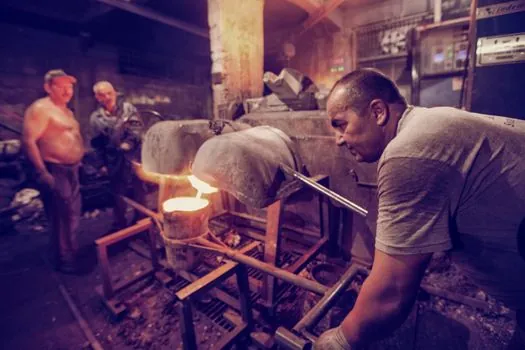
The shell process can still be economical when its hollow geometry reduces sand consumption and when improved accuracy lowers machining, rework or rejection downstream [S1][S3].
A hot-box core machine shoots resin-bonded sand into a heated core box for thermally curing the binder, while a shell core shooter forms cores from resin-coated sand cured by heat.
For small batches, compare the number of good cores per tooling hour, set-up time and expected tool life. For mass production, compare the full hourly cost, including sand, resin, electricity or gas, compressed air, labor, maintenance, scrap and emissions control, divided by good output.
Accuracy, Scrap and Hollow-Core Value
Shell cores can justify a higher conversion cost when they reduce downstream defects, because rigidity supports good dimensional accuracy and surface finish, while hollow cores reduce sand placed inside the casting [S1][S3].
Hot-box cores are used for intricate and detailed shapes with controlled resin curing, and hot core shooters are associated with strong dimensional accuracy. This makes hot box a practical choice when geometry is stable enough that mass production can be repeated without frequent scrap or rework [S4].
Automation and Operating Costs

Hot-box core machines can be configured with automated core handling, tooling, and temperature-control options to suit different core designs, production rates, and plant layouts.
Shell core production uses resin-coated sand cured by heat in a heated core box and can produce hollow cores, while core-shooting equipment can be configured for automated handling.
Utility choice also matters. Electric box heating can reduce natural-gas and compressed-air demand, while proportional gas control is intended to maintain tool temperature with a controlled fuel supply [S2]. Neither option should be credited automatically: use metered electricity, gas or propane cost and measured holding-time demand for the production schedule.
Environmental and Compliance Cost
Shell processing carries a material emissions burden because the phenolic and formaldehyde binders can generate hazardous air pollutants during mixing, coremaking and casting, and shell resin demand is 2–5% [S3]. Cold box avoids heated tooling but requires catalyst handling and an amine scrubber, so its environmental cost is transferred from fuel and thermal load to chemical capture and disposal [S1][S3].
For hot box versus shell, the environmental calculation should include resin quantity, ventilation capacity, furnace exhaust, spent tooling maintenance and downstream core-burning emissions. Shell can still be the better choice where lower sand use and fewer casting defects offset more upstream binder and energy consumption.
Any emissions or workplace assessment must use the exact binder formulation, core mass, operating temperature and local regulatory regime. The process descriptions identify phenol, formaldehyde and amine controls, but they do not provide a universal emission factor suitable for a foundry cost calculation [S1][S3].
Purchase Price Is Not Cost per Core

Do not approve either process from machine price, hopper size or model designation alone. A defensible comparison requires measured good-core rate, cycle time, resin addition, shell thickness, energy consumption, labor, tooling life and downstream casting yield for the same part family. [S1]
Use a 12-month trial calculation with five lines: fixed machine and tooling cost, variable sand and resin cost, utilities, labor and maintenance, and scrap or rework cost. Divide the total by accepted casting cores, then run sensitivity cases for 70%, 85% and 100% first-pass yield rather than hiding variability in one forecast.
For the equipment side, hot box core machine specifications range from a 15 lb core-capacity machine to an HS-22 rated at 50 lb standard or 75 lb optional, with listed electrical service of 120 V, 60 Hz, 10 A and air requirements of 80–120 PSI [S2]. A detailed hot box versus cold box core shooter price comparison can help frame capital cost, but the shell option still requires an operating-cost model based on heated tooling and resin use [S3][S5].
Select hot box for a stable, high-volume solid-core operation when energy and tooling are controlled. Select shell for hollow, surface-sensitive or accuracy-critical cores when sand saving, reduced rework or lower rejection pays for the higher conversion cost. Validate the decision with measured good cores per labor hour and total cost per accepted core, not machine quotations.